Microsoft 365 Education is introducing AI agents and Copilot features designed specifically for schools, enabling teachers to streamline lesson planning and assessment while helping student-support staff coordinate advising and financial aid with less friction.
Unlike general-purpose AI, these tools are built to work within a school's existing systems and governance—respecting privacy rules and academic-integrity requirements while keeping institutional data under the school's control.
The rollout is designed to let schools start small with a single workflow and expand as their governance maturity grows.
What happened
Microsoft 365 Education is introducing agents and Copilot experiences designed to work within existing institutional systems—helping educators streamline lesson planning, assessment, and differentiation, and enabling student-support staff to coordinate aid and advising without repeated handoffs. The shift moves AI from isolated experimentation to institution-wide use tied to real workflows.
Why it matters
According to Microsoft's 2026 AI in Education report, 92% of surveyed students and education leaders and 88% of surveyed educators are already using AI for school purposes. However, general-purpose AI lacks the institutional context and privacy/integrity safeguards schools require. Microsoft 365 Education addresses this by grounding AI in each school's identity, permissions, compliance, and data governance—keeping institutional data under the school's control while limiting access to what users are authorized to see.
What to watch
Institutions can start with Copilot Chat (included in Microsoft 365) and expand to richer Copilot experiences and agents as governance and readiness mature. Model choice depends on the task and the school's data-processing requirements, not just which model is newest. The approach lets schools pilot a single high-impact workflow before committing institution-wide.
Ask the AI about this article →
Education faces a unique AI adoption challenge: unlike a single business process, schools manage multiple fragmented systems for instruction, assessment, advising, financial aid, research, safety, and IT—each with different access rules and data requirements. General-purpose AI tools lack the context and controls to work reliably across this complexity. Microsoft's response is to embed AI within the institutional governance layer already in place: the identity, permissions, and compliance frameworks schools administer through Microsoft 365. This approach treats institutional context not as an afterthought but as foundational, letting AI surface information relevant to a specific user's role and access level while respecting privacy and academic-integrity obligations.
The rollout strategy reflects this institutional-readiness framing. Rather than a single "flip the switch" deployment, schools can pilot Copilot Chat (already included) on one high-value workflow—such as educator planning time or a student-support handoff that loses momentum—before expanding. This phased approach lets governance and confidence mature with actual usage, avoiding the overhead of institution-wide governance from day one. The logic extends to model selection: the body notes that the relevant question is not which model is newest, but which supported experience fits the task, the school's requirements, and applicable data-processing terms. By tying capability expansion to institutional readiness rather than generic feature availability, Microsoft is positioning itself not as a vendor of cutting-edge AI tools, but as a partner in the harder work of making AI operationally trustworthy in a regulated, high-stakes sector.
For example, today's edition would include:
AI-summarized, only the topics you pick — one digest a day via Email, Slack, or Discord.
Free · takes 30 seconds · unsubscribe anytimeWhat is AIToday? →
Ask AI anything about this article. Q&As are published on this page for other readers too.
Phonely Ltd. launched Alma, a large language AI model built for voice agents and trained on over 10 million re…

Aranya Inc., a startup founded last year, launched today with $11 million in funding

CBTS Technology Solutions LLC launched Forge Agents, a platform that turns a plain-language job description in…

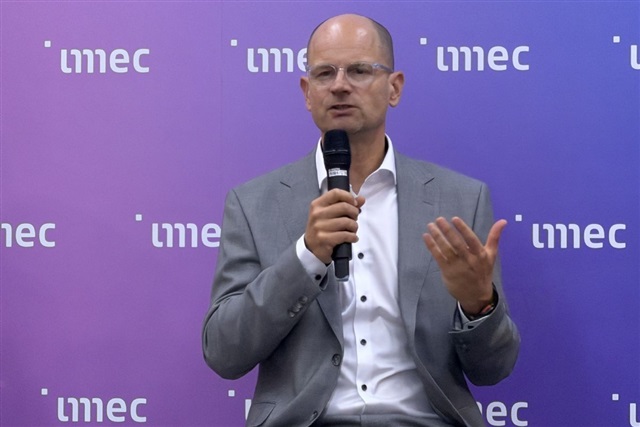
Imec CEO Patrick Vandenameele said at SEMICON Taiwan 2026 that the Belgian research center is broadening its c…
Alphabet's AI Overviews now reach over 2.5 billion monthly users through Google Search, and its ad business ge…
Sarah O’Connor's book 'We Are Not Machines' explores how mechanization and AI have transformed the workforce…