What happened
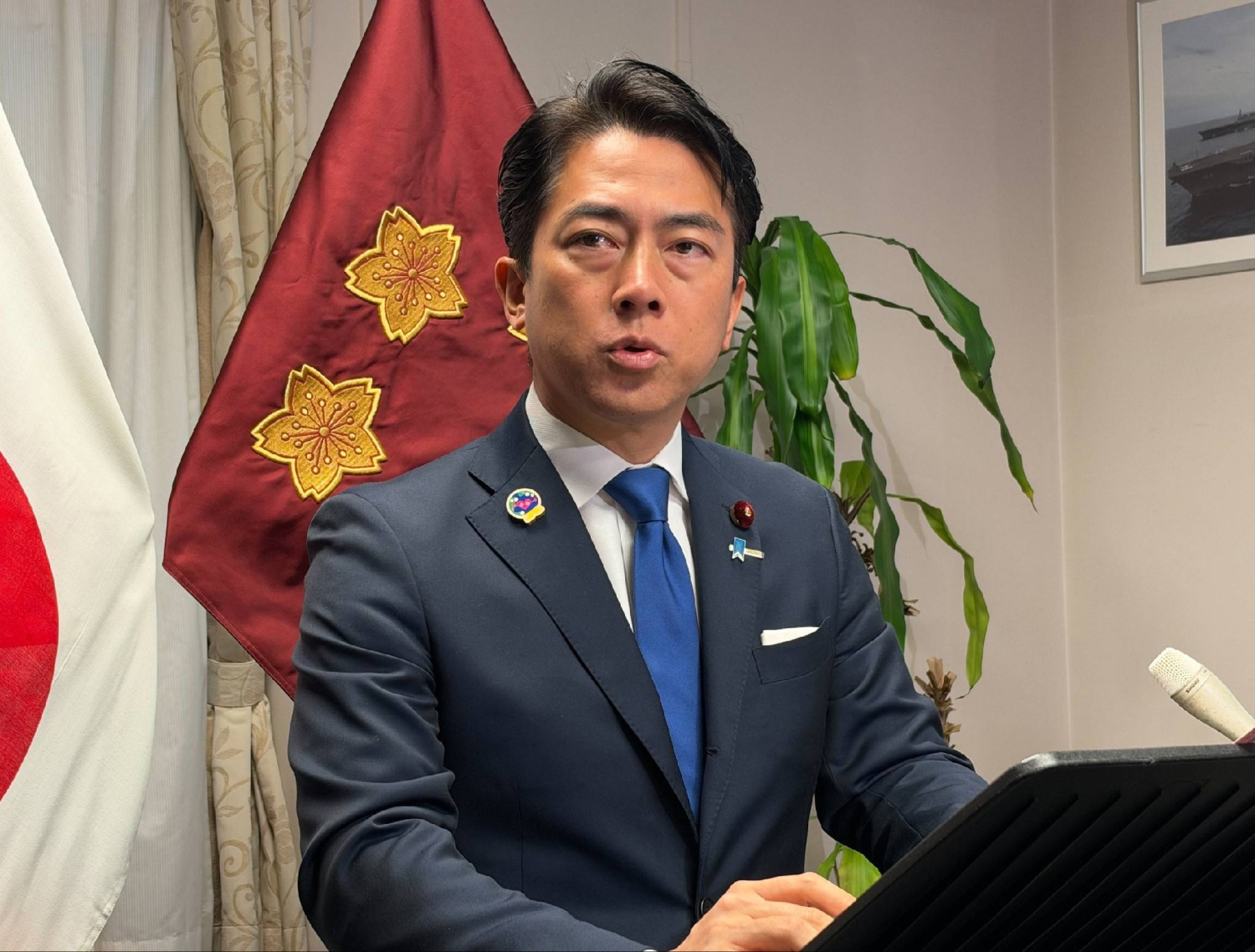
The Defense Ministry released its Defense AI Vision on Friday, setting five basic principles for Self-Defense Forces AI use, including that humans keep decision-making authority and responsibility.
Why it matters
The guidelines build on the ministry's 2024 basic policy and aim to move AI beyond individual applications to transform how defense capabilities are exercised.
WHO IT HITSThis affects defense planners and procurement officials in Japan's Self-Defense Forces, who must now apply the five principles when adopting AI tools, and allied militaries planning joint missions that rely on shared data and analysis.
Summaries like this, every morning.
The Defense AI Vision builds directly on the ministry's basic policy for promoting AI use, which was released in 2024. That earlier policy set the direction; the new guidelines add a governance layer, spelling out who stays accountable when AI is involved. The five principles are not abstract aspirations — they include a specific commitment that humans retain decision-making authority and responsibility, and a statement that the ministry has no intention of developing fully autonomous lethal weapons that operate beyond human control.
The guidelines also signal a shift in how the ministry views AI's role. Rather than treating AI as a set of standalone tools, the vision describes a stage where the technology transforms how defense capabilities are exercised. Practical examples include using AI to analyze radar tracks, satellite and aerial imagery, and signals intelligence, as well as physical AI for missions that would otherwise put personnel at risk.
Cooperation with allies and like-minded countries is addressed with a careful balance. The ministry wants information and analysis from different systems and AI to be mutually understood and usable in joint missions, but it insists on maintaining independent command and control structures and control over sensitive data. That suggests interoperability is a goal, not at the expense of sovereign control.
Pick your industry and the AI tools you use, and get news related to your work every day.
Free · 30 seconds with Google · unsubscribe anytimeWhat is AIToday? →
Ask AI anything about this article. The AI reads this article, earlier AIToday articles, and Wikipedia, and cites its sources. Q&As are published on this page for other readers too.
The Digital Agency said a public call for Japanese-made large language models for ガバメントAI 源内 in 令和9年度(2027年度)…

デジタル庁 released an official logo for ガバメントAI 源内, which it says symbolizes AI use spreading from government out…
The Digital Agency is soliciting domestic LLMs — including small and domain-specific models — to be trialled o…
Nvidia reinstated founder Jensen Huang as CEO and president in late November, while US investigations into exp…

Authors amended their suit on Nov 23, 2026, alleging NVIDIA used aria2c and put.io to download books from shad…

A 76-author team led by Hui Shen released OS-Omni, a NeurIPS 2026 benchmark covering Windows, Ubuntu, macOS, i…