What happened
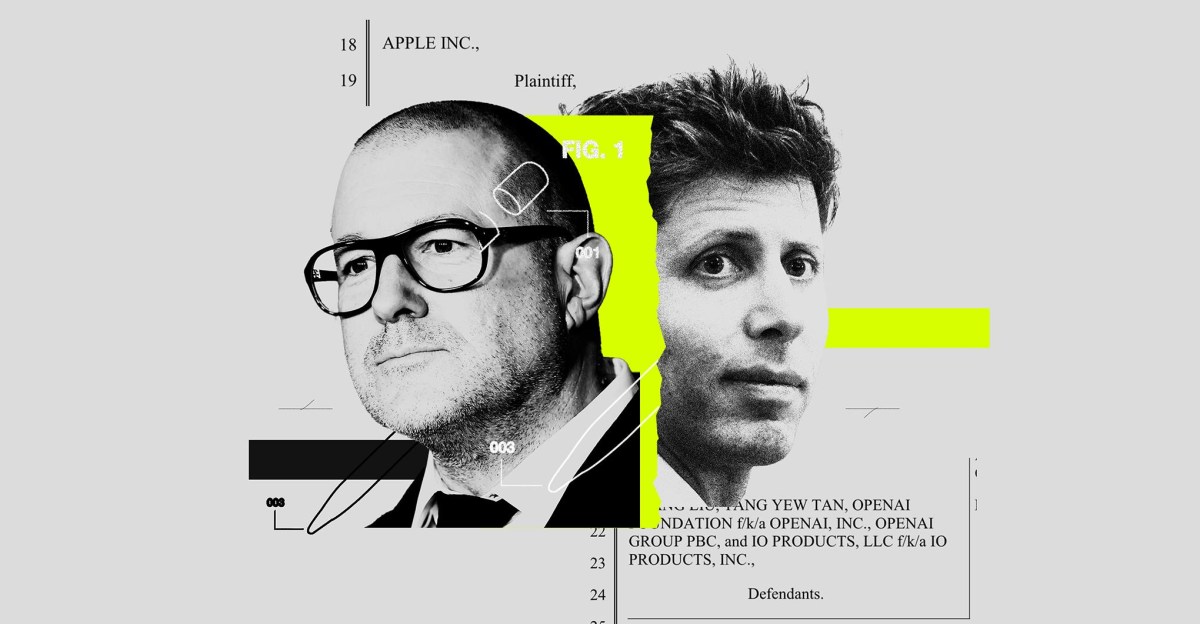
Apple filed a trade secrets lawsuit against OpenAI, alleging that former Apple employees—including Tang Tan, OpenAI's chief hardware officer, and others recruited by designer Jony Ive—solicited confidential information in job interviews, asked candidates to bring Apple hardware outside the office for "show and tell," and accessed Apple's servers. OpenAI denies the allegations and has not yet filed a legal response.
Why it matters
OpenAI is already burning cash and struggling to turn a profit ahead of a planned IPO, making a protracted legal battle with Apple—a notoriously aggressive litigant—a major distraction and potential financial drain. Unlike Samsung and Microsoft, which could absorb multi-billion-dollar settlements in past IP cases, OpenAI may lack the resources to do the same while competing in both enterprise and consumer AI markets.
What to watch
Whether OpenAI settles by paying Apple a large sum, or whether the case goes to trial and becomes a years-long dispute. OpenAI spent $6.5 billion(約1兆円) to acquire io Products, Jony Ive's hardware startup, in 2025; this lawsuit directly threatens that investment and the company's goal to define the next generation of AI-powered devices.
Summaries like this, in your inbox every morning.
This lawsuit represents Apple's third major intellectual property offensive in recent decades—first copyright against Microsoft in the 1990s, then patents against Samsung in the 2000s and 2010s, and now trade secrets against OpenAI. In both previous cases, Apple's competitors ultimately survived: Microsoft kept Windows, and Samsung kept Android despite paying roughly $1 billion(約1600億円) in damages. However, OpenAI faces a fundamentally different situation. The company is not yet profitable, is burning cash, and is preparing for an IPO while investors scrutinize its path to profitability. A prolonged legal battle with Apple—described by lawyers interviewed as a notoriously tenacious litigant willing to pursue cases for years—could severely constrain OpenAI's ability to invest in hardware and compete across its consumer and enterprise markets.
The lawsuit also carries a personal dimension that may shape its trajectory. Tang Tan's 24-year tenure at Apple, combined with his role as chief hardware officer at OpenAI, positions him as the central figure in Apple's allegations. Jony Ive's conspicuous absence from the lawsuit despite heading OpenAI's hardware ambitions is notable—whether by design, legal strategy, or because he left fewer digital footprints is unclear. What is clear is that OpenAI spent $6.5 billion(約1兆円) to acquire Ive's hardware startup io Products in 2025, a bet that now sits directly in Apple's crosshairs. The outcome of this case will likely determine whether OpenAI can credibly claim the role of architect for the next generation of AI-powered devices.
For example, today's edition would include:
AI-summarized, only the topics you pick — one digest a day via Email, Slack, or Discord.
Free · 30 seconds with Google · unsubscribe anytimeWhat is AIToday? →
Ask AI anything about this article. Q&As are published on this page for other readers too.
Morgan Stanley analyst Matthew Cost began covering Booking Holdings with an Overweight rating and a $230 price…

CEO Jim Taiclet told a Morgan Stanley panel Lockheed will pair the F-35 and advanced missiles with cheaper aut…
ServiceNow introduced AI Control Tower, Context Engine, and Shift Zero, tools for managing AI agent access, id…

On Sept. 1, Deere introduced JD, an AI assistant in its operations center that lets farmers ask about their ow…
Lockheed Martin has gone live with SAP SuccessFactors Employee Central, Employee Central Payroll, Recruiting a…

At an IMTS media panel in Chicago, Honeywell Technologies CTO Mehul Patel predicted companies will eventually…