What happened
Snowflake is introducing the AI Gateway for Advertising, currently in preview, with governed Model Context Protocol integrations for Meta and TikTok, and PMG as an early customer.
Why it matters
Campaign managers can now approve and observe each optimization step, because the gateway unites enterprise context with live platform signals on a shared set of definitions and KPIs.
What to watch
The gateway is still in preview, so wider availability hinges on adding more platforms beyond Meta and TikTok, which Snowflake says are coming soon. A public session is set for Advertising Week New York on Wednesday, October 7.
WHO IT HITSAdvertising campaign managers and media buyers at retail and media brands stand to gain a way to approve and trace each agent-recommended optimization under policy. Data teams supporting those campaigns may also see fewer ad-hoc requests, since business definitions and historical performance live in one shared record.
Summaries like this, in your inbox every morning.
The shift Snowflake describes in advertising mirrors a broader move in marketing, where AI is no longer just an assistant but an agent that can act. The article's core argument is that fragmented context, not fragmented workflows, is what holds campaign teams back. An agent that sees only a platform's metrics, without business definitions or channel signals, can recommend something that misses a core KPI or does not fit the channel.
The AI Gateway for Advertising addresses that by connecting two sides. On one side are live platform signals such as delivery, catalog health and conversion diagnostics through MCP integrations. On the other are enterprise facts in Snowflake: transaction history, inventory and business definitions of return on ad spend (ROAS) and conversion. Snowflake illustrates this with two scenarios. In a retail example, an agent traces a ROAS drop to a checkout payload change, SKU warnings and limited inventory, then recommends reducing a prospecting ad set's budget by 20% without pausing it because the converting cohort has strong lifetime value (LTV). In a media example, the agent spots an email-engaged, Episode 1 viewer segment that converts to subscriptions at a higher rate but is underrepresented in the paid audience, and recommends raising ad frequency for that segment by 50% for the next seven days. In both cases, the recommendation, evidence and approval land in one shared record.
What the outcome hinges on is how quickly platforms beyond Meta and TikTok join, and whether campaign managers find the approval step useful rather than a bottleneck. PMG's Mike Treon says the context problem used to take days of cross-functional work, and that the gateway lets agents act on insight while the campaign is live. If that holds for other advertisers, the value may lie less in any single recommendation than in making one analyst's finding repeatable across teams.
Pick your industry and the AI tools you use, and get news related to your work every day.
Free · 30 seconds with Google · unsubscribe anytimeWhat is AIToday? →
Ask AI anything about this article. The AI reads this article, earlier AIToday articles, and Wikipedia, and cites its sources. Q&As are published on this page for other readers too.
Ghost AI raised $11 million, led by Andreessen Horowitz with Abstract, Audacious Ventures, Nova and SV Angel…

Moonshot AI closed its final private round at about a $50 billion valuation and is aiming for a Hong Kong IPO…
OpenAI told Fortune it is piloting a 'mission interview' for candidates on certain teams, starting with market…

Reactor said it added Nvidia's venture capital arm and Sapphire Ventures to its cap table, bringing its total…

OpenAI will roll out invisible text watermarks to all ChatGPT and Codex plan users in the EU within weeks, and…

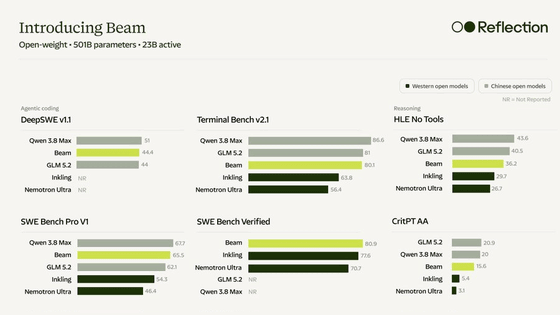
Reflection announced Beam, a 501B-parameter open-weight model with 23B active parameters, claiming parity with…