What happened
On October 21, 2026, Docker's official blog described pairing Docker Sandboxes, a microVM-based execution environment, with BAND AI, which routes agent requests through rooms via mentions.
Why it matters
The split lets a research agent hand only specific tasks to a local worker, without exposing the whole repository — though being able to identify a request's source is not the same as granting it permission to run.
Summaries like this, in your inbox every morning.
The appeal of the setup, as the Docker post frames it, is architectural rather than about model capability: the place where work is received and the place where hands actually move are separated. A room can route a request to a local worker without handing that worker the entire repository. Being able to identify where a request came from is not the same as that request carrying execution authority, so a design that treats every room participant as a deployment approver is a mistake.
On isolation, Docker Sandboxes uses microVMs. Mounting a workspace directly means changes propagate to the host, while clone mode reads the host repository read-only and keeps a working clone inside the VM; stopping preserves state and is not the same as deletion. Network limits likewise do not substitute for business authorization, and local MCP servers running on the host should not be assumed to sit inside the same boundary as processes in the VM.
Version hygiene is another practical snag. The October 21 Docker article's example pins BAND kit 6.0.0, whereas BAND's Docker Sandbox guide fixes the SDK and images at 3.1.1 and explains compatibility steps on sbx 0.43.0, with an echo bot as its initial sample. The offline Python example, which only converts an allowed request into an execution plan and returns it for human review, is explicitly not a connection test to BAND or Docker. It also notes that a fixed command is not automatically safe, since unittest loads and runs the target project's Python code.
Pick your industry and the AI tools you use, and get news related to your work every day.
Free · 30 seconds with Google · unsubscribe anytimeWhat is AIToday? →
Ask AI anything about this article. The AI reads this article, earlier AIToday articles, and Wikipedia, and cites its sources. Q&As are published on this page for other readers too.
OpenAI's GPT-5.6 Sol found two critical PHP vulnerabilities, CVE-2026-109618 and CVE-2026-109619, collectively…

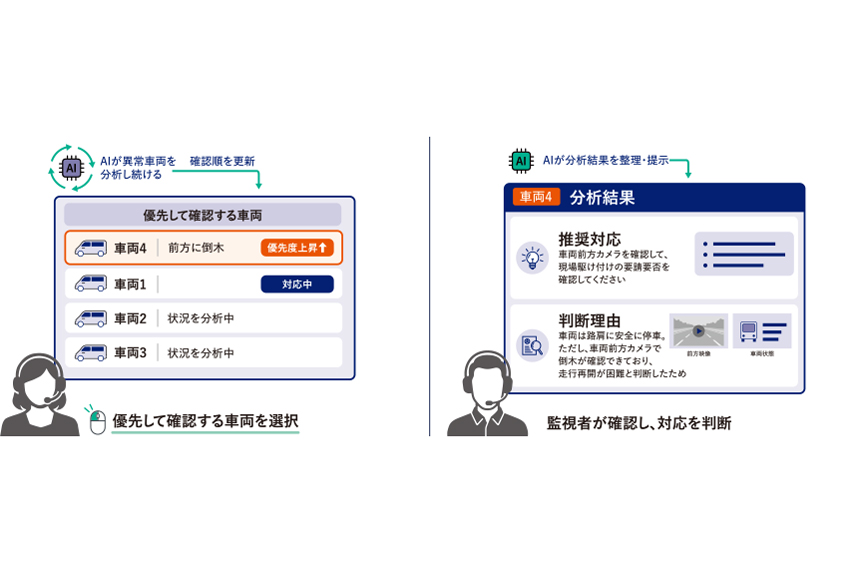
KDDI developed an AI agent for 1対N remote monitoring in レベル4 autonomous driving
Impress is publishing a book on October 22 featuring 100 practical "oshi-waza" ideas for Gemini Notebook (form…

KDDI, Okinawa Cellular and KDDI Digital Life added ChatGPT 5.5, ChatGPT 5.5 Pro and ChatGPT 5.5 Thinking to po…

Google and OpenAI said the GPT-6 Astra, GPT-6.1 Sol and GPT-6 Luna models will be offered via Model Garden, wi…

OpenAI expanded ChatGPT ads to 26 new countries, reaching 89 markets worldwide, and says over 100,000 advertis…