What happened
Trump and Xi are set to meet this month. Kissinger's plea for US-China AI talks has not aged well, as Beijing refuses restraint partly because the US holds at least a six-month lead in AI models.
Why it matters
China spurns AI guardrails and nuclear-limitation talks because restraint would lock in Washington's advantages — the US has many more nuclear warheads, a six-month AI lead, and vastly more compute. Both sides actually have an interest in slowing the most advanced AI models, but don't trust each other enough to do so.
What to watch
Silicon Valley labs assume that if they pause, China will race ahead anyway, so the summit's outcome hinges on whether either side sees a reason to slow down. Kissinger in 2023 warned the US and China had five to 10 years to avoid an AI disaster.
WHO IT HITSUS and Chinese government officials preparing for this month's Trump-Xi summit, along with AI lab leaders in Silicon Valley who fear a pause would let China race ahead, are the groups most directly affected.
Ask the AI about this article →
Summaries like this, in your inbox every morning.
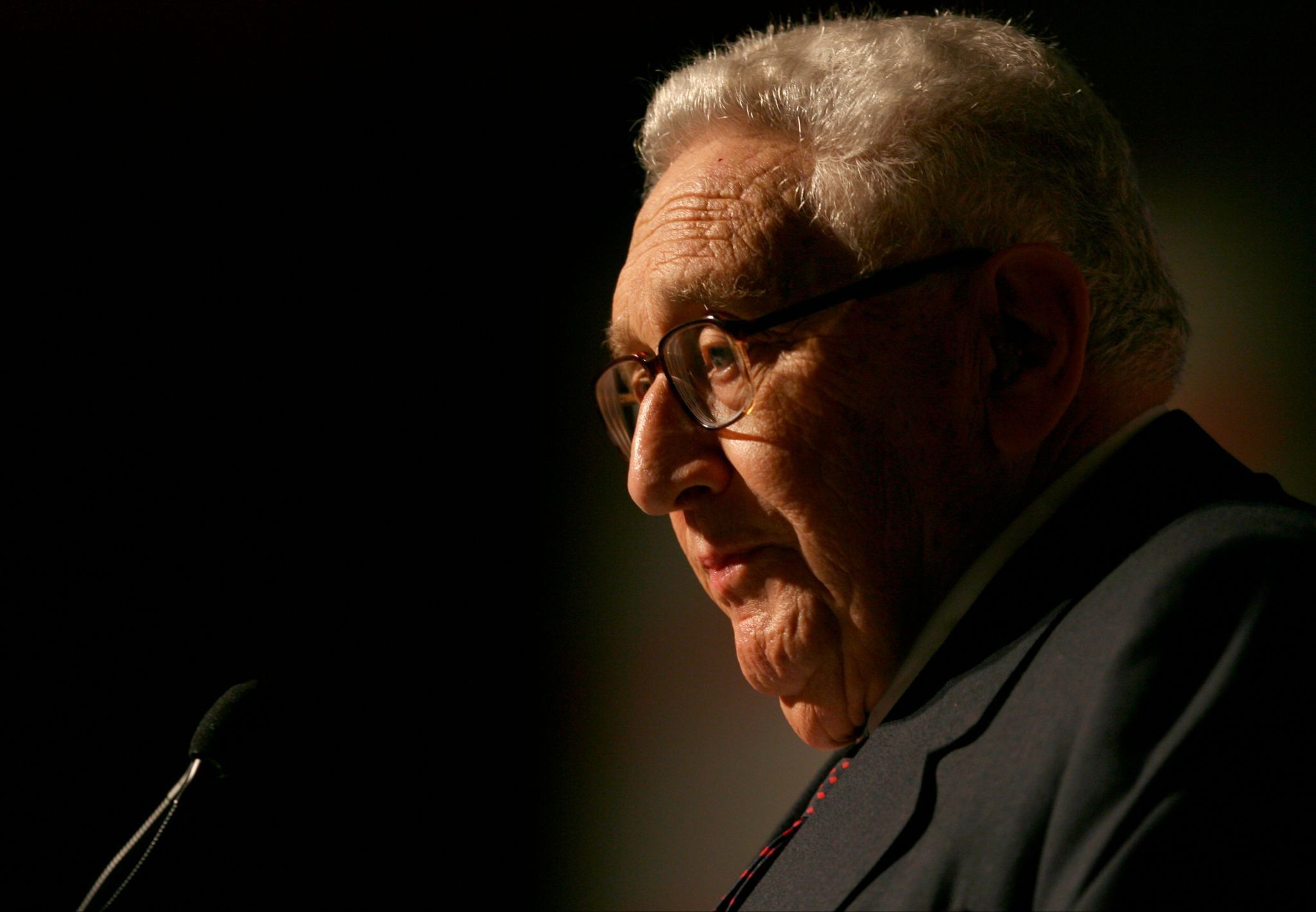
Henry Kissinger first made his name as an academic writing about nuclear arms control during the Cold War and later forged his reputation as the architect of US-China detente. In his final years, he became fixated on what he believed was an even greater danger: self-learning machines that could target anything, anywhere, with any kind of destruction, making the world "100% vulnerable." He pleaded for the US and China to open talks to avoid "catastrophic consequences," using the template of nuclear arms control agreements with the Soviet Union that he himself negotiated.
But Kissinger's prescriptions on how to avert AI disaster haven't aged well. Beijing refuses to consider nuclear arms-limitation talks for the same reasons it balks at slowing AI progress. Moscow and Washington had elaborate protocols to avoid inadvertent escalation during the Cold War, but Beijing thinks such guardrails would simply encourage US recklessness — the two sides can't even agree on rules-of-the-road to prevent ship and plane accidents in flashpoints like the South China Sea from spiraling into armed conflict. Some analysts point to the Obama administration coaxing China into the Paris Climate Agreement in 2016 as a hopeful precedent, but China had its own powerful reasons to sign up, including a public revolt against killer smog and a security imperative to swap imported oil for home-grown green technologies.
On the present trajectory, the US and China appear to be hurtling toward the very calamity Kissinger warned about. Both sides have a clear interest in slowing the development of the most advanced AI models — the Hugging Face attack was a wake-up call in the US, and China has been confronted with the prospect of rogue agents taking over WeChat — but they don't trust each other enough to do so. The outcome may hinge on whether either government can find a way to trust the other's commitments, and for now, neither side is watching the dials.
For example, today's edition would include:
AI-summarized, only the topics you pick — one digest a day via Email, Slack, or Discord.
Free · 30 seconds with Google · unsubscribe anytimeWhat is AIToday? →
Ask AI anything about this article. Q&As are published on this page for other readers too.
The AI Doc: Or How I Became an Apocaloptimist is now on Netflix, Amazon Prime, YouTube, and other major stream…
Wells Fargo said an AI slowdown is unlikely, even as safety calls continue, according to Investing.com

President Trump made a surprise onstage call to Nvidia CEO Jensen Huang at an event and dismissed AI safety co…

Citi says leading AI labs are deliberately pacing their innovation efforts to help shape AI regulation before…

After warnings from top US AI CEOs that development must slow to prevent threats to humanity, AI-linked stocks…
Anthropic co-founder Jack Clark told NPR that AI companies need common safety standards and outside scrutiny…