What happened
AlphaProof Nexus cracked nine of 353 open Erdős problems, two unsolved for 56 years, and proved 44 conjectures from the OEIS integer sequence database, per a study in Science.
Why it matters
The system solved dozens of open math problems on its own, and its results were peer reviewed, a notable step for AI-generated mathematical proofs.
WHO IT HITSThis lands on mathematics researchers and journal editors, who may face a growing flow of AI-generated proofs that need verification and peer review.
Summaries like this, in your inbox every morning.
The publication of this study in Science sets it apart from recent AI math announcements that skipped formal review. OpenAI recently dumped hundreds of AI proofs on GitHub instead of submitting them to journals, prompting the Association for Human Mathematics, led by Terence Tao, to call for a boycott. Deepmind instead put its work through peer review. The system itself is built around Gemini 3.1 Pro, which drafts and revises proofs in the formal language Lean; Lean checks each draft after every edit, and error messages guide the next attempt. For harder sub-problems, it can call on AlphaProof, a specialized proof tool, though even without AlphaProof it solved the nine Erdős problems, Google Deepmind reports. Beyond the Erdős problems, the system proved 44 conjectures from the OEIS integer sequence database, solved an open question in algebraic geometry, and improved a known bound in min-max optimization, a technique used to train some AI models.
Pick your industry and the AI tools you use, and get news related to your work every day.
Free · 30 seconds with Google · unsubscribe anytimeWhat is AIToday? →
Ask AI anything about this article. The AI reads this article, earlier AIToday articles, and Wikipedia, and cites its sources. Q&As are published on this page for other readers too.
CarWatch, built on a 2021 Mercedes-Benz E 300e plug-in hybrid called "@eclass", runs a local AI model on a Ras…

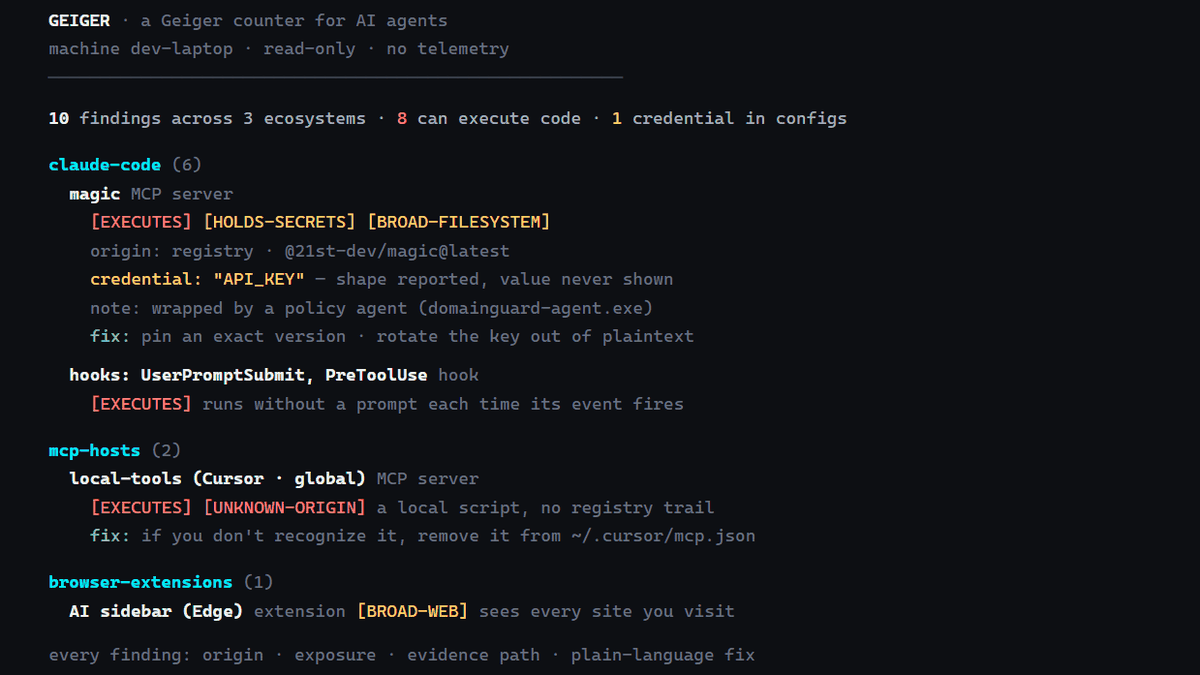
Atomburstofficial published Geiger, a free read-only command, npx geiger-scan, listing AI agents like Claude C…
A columnist argues Microsoft's 4% drop from its 52-week high is a chance to buy more, pointing to Azure demand…

The Wall Street Journal reported that Amazon is negotiating to acquire US startup Decart AI in a deal that cou…

BotMan AI's Alejandro D’Andrea said its migration pipeline maps an app's dependencies, business logic and data…
Microsoft announced Microsoft-Decision-1 on October 9, a decision-focused model built on Alibaba's Qwen3.5-9B…