What happened
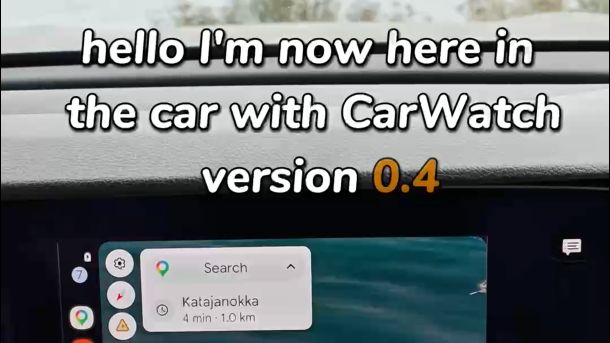
CarWatch, built on a 2021 Mercedes-Benz E 300e plug-in hybrid called "@eclass", runs a local AI model on a Raspberry Pi 5 connected to the car's OBD port, reading live data such as engine RPM, coolant temperature, hybrid battery level, 12V voltage, fuel and fault codes, and answering voice questions with no internet connection.
Why it matters
Because everything runs on the Raspberry Pi 5 with a local AI model and no cloud account or subscription, a car can answer questions like what a yellow tire warning light means from its built-in manual and notify the family group chat only when important events occur, even in garages or tunnels where connectivity is poor.
Summaries like this, in your inbox every morning.
CarWatch is developed on a specific vehicle, a 2021 Mercedes-Benz E 300e plug-in hybrid named "@eclass", and connects to the car's OBD port via a Raspberry Pi to pull real-time vehicle data without going through the cloud. The project is published in Python and requires no subscription or cloud account, which sets it apart from connected-car services that typically depend on a manufacturer's backend. It also offers practical uses beyond diagnostics: managing multiple vehicles as agents in one account, detecting arrival and departure at home via Wi-Fi context rather than GPS for smart-home routines, charging the hybrid at the cheapest electricity price based on rate fluctuations, and comparing range against route plans to warn early about charging or refueling stops. A notable design choice is switching between AI models depending on the question, with larger models suited to explaining warning lights and smaller, faster ones for simple queries like current speed, and the dashboard showing each model's real performance on the Raspberry Pi. The project states four principles of honesty, including claiming only what it can sense and only what is verified, and a rule that onboard models may cite only sensor numbers they can point to in the latest actual reading. It also lists an unsolved mystery: continuous CAN broadcast frames the adapter can receive, which likely contain richer information than polled PIDs, and it invites outside community help to decode them.
Pick your industry and the AI tools you use, and get news related to your work every day.
Free · 30 seconds with Google · unsubscribe anytimeWhat is AIToday? →
Ask AI anything about this article. The AI reads this article, earlier AIToday articles, and Wikipedia, and cites its sources. Q&As are published on this page for other readers too.
AlphaProof Nexus cracked nine of 353 open Erdős problems, two unsolved for 56 years, and proved 44 conjectures…
Atomburstofficial published Geiger, a free read-only command, npx geiger-scan, listing AI agents like Claude C…
A columnist argues Microsoft's 4% drop from its 52-week high is a chance to buy more, pointing to Azure demand…

The Wall Street Journal reported that Amazon is negotiating to acquire US startup Decart AI in a deal that cou…

BotMan AI's Alejandro D’Andrea said its migration pipeline maps an app's dependencies, business logic and data…
Microsoft announced Microsoft-Decision-1 on October 9, a decision-focused model built on Alibaba's Qwen3.5-9B…