What happened
OpenAI said it disabled accounts behind Russia's "Dark Clark" operation, which used a fabricated researcher, Mia Clark, and a fake "Social Research Center" to spread disinformation in Latin America, plus an Iranian "false byline" campaign that planted nearly 100 articles in media worldwide.
Why it matters
OpenAI classified these campaigns at level 4 or 5 on its six-level scale of disinformation spread, indicating they reached across multiple platforms and, at the higher end, spread beyond the original accounts.
WHO IT HITSMedia fact-checkers, platform trust and safety teams, and editors screening contributed articles face a harder job, as the body shows fake bylines were already published or reposted in over a dozen outlets worldwide.
Summaries like this, in your inbox every morning.
OpenAI's takedown of these accounts is part of a broader effort to track and classify influence operations. The company has categorized 30 such operations it uncovered since early 2024 by their main spread channels — social media, websites, and external publications — and by a six-level scale of reach. The scale runs from level 1 and 2 (spread on a single platform, with or without explosive growth) through levels 3 and 4 (multiple platforms, again divided by whether spread was explosive) to level 5 (reaching politicians or celebrities) and level 6 (influencing decisions). The Dark Clark and Iranian campaigns fell at level 4 or 5, meaning they crossed multiple platforms and, at the higher end, reached prominent figures. OpenAI noted that fake accounts on social media alone have limited reach, but once disinformation is placed in other media, its potential audience tends to expand. This helps explain why the Iranian operation's articles appearing in over a dozen outlets worldwide matters: it shows that getting content into the news ecosystem — even under false names — can extend an operation's reach well beyond the original accounts.
Pick your industry and the AI tools you use, and get news related to your work every day.
Free · 30 seconds with Google · unsubscribe anytimeWhat is AIToday? →
Ask AI anything about this article. The AI reads this article, earlier AIToday articles, and Wikipedia, and cites its sources. Q&As are published on this page for other readers too.
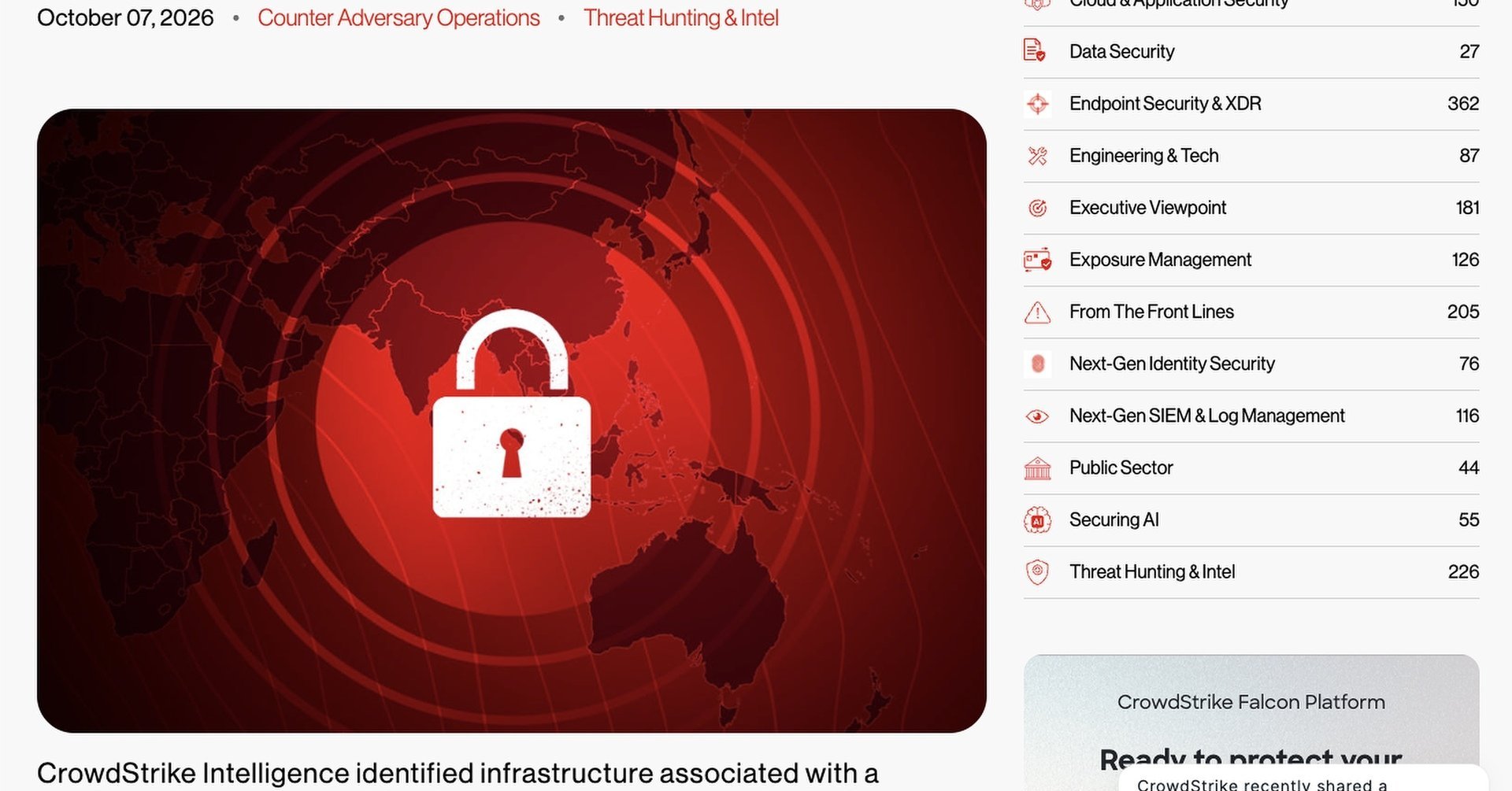
CrowdStrike published an analysis on Oct 7 of a server used in attacks on South Korean financial institutions
Adviser Itay Sagie points to Schneider Electric's roughly $22.6 billion equity deal for PTC, the Synopsys–Open…

Anthropic kicked off the Anthropic Cyber Mission, providing frontier Claude models, on-site engineers and thre…

President Trump and leaders of major AI companies signed the White House Accord on Superintelligence, a volunt…
In a Fortune commentary piece, a media-and-culture professor argues that Anthropic researcher Jacob Coxon's vi…

CLEAR, a certified Qualified Anti-Terrorism Technology under the Department of Homeland Security, published a…