What happened
In a study of 196 people across five US research sites, Google Research's AI flagged 65.8 percent of those with high blood pressure, versus 55.3 percent for the standard in-office cuff measurement.
Why it matters
The system needs no cuff for calibration and uses only the pulse and motion sensors already in modern smartwatches, so screening could reach people who never get measured — though Google says it is still a research project and does not replace a diagnosis.
WHO IT HITSPrimary-care and cardiology teams, plus makers of consumer wearables, may see a path to cuff-free hypertension screening; Google stresses the method is still research and not a diagnostic replacement.
Summaries like this, every morning.
Google's approach sidesteps a long-standing constraint in wearable health: cuff-based blood pressure measurement is bulky and intermittent, and calibrating a watch usually requires one. The research team instead let a neural network learn from nearly 500,000 hours of sensor data by matching short segments to the same person, picking up pulse and heartbeat patterns without labeled diagnoses.
The system then averages those patterns over several days and produces a probability for high blood pressure. In the 196-person, five-site US study, that translated into catching 65.8 percent of hypertension cases, compared with 55.3 percent for the standard in-office measurement.
Google frames the work as a nudge rather than a diagnosis, noting that more than half of people with high blood pressure don't know they have it. The findings are already reflected in the blood pressure trends feature of the Google Health app, but the method remains a research project. Google's health model SensorFM, which also learns from smartwatch data, is part of the broader effort.
Pick your industry and the AI tools you use, and get news related to your work every day.
Free · 30 seconds with Google · unsubscribe anytimeWhat is AIToday? →
Ask AI anything about this article. The AI reads this article, earlier AIToday articles, and Wikipedia, and cites its sources. Q&As are published on this page for other readers too.
Isomorphic Labs president Max Jaderberg said at Bloomberg Tech in London on Nov
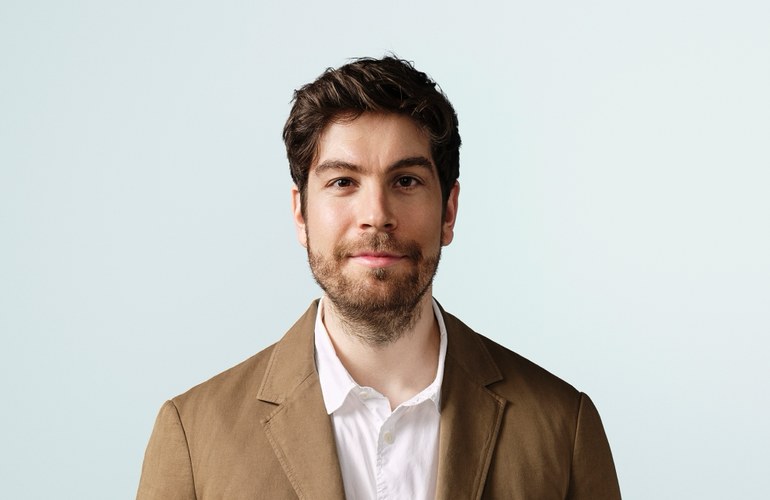
Hitachi and Hitachi City launched a demonstration test of the 'Hitachi Nursing Care and Welfare AI Assistant,'…
Citizen Health launched Ari, an AI "health teammate" in beta that texts with caregivers, pulls medical records…
Rehear Audiology signed a strategic MOU with Saudi Arabia's Medical Electrical Equipment Maintenance Professio…

Forge Biologics VP Samantha Piteri-Molina told BioSpace that gene therapy manufacturing generates so much data…
Edison Scientific said Oct