
Data centers are rapidly replacing copper wiring with optical connections to handle AI workloads more efficiently, creating a new bottleneck in the infrastructure supply chain.
Eight publicly traded companies—from chip designers like Marvell and Broadcom to specialized manufacturers like Lumentum and Coherent—are positioned to benefit from this shift.
Lumentum, in particular, holds a near-monopoly in high-power indium phosphide lasers that power optical transceivers, even for competitors' systems.
What happened
As AI innovation accelerates, data centers are moving from traditional copper wiring to optical connections for faster, more energy-efficient data transmission. This shift is creating rising demand for optical hardware across multiple infrastructure layers—from chips and lasers to transceivers and fiber systems.
Why it matters
Optical connectivity is becoming critical to prevent bandwidth bottlenecks in AI data centers. Companies like Lumentum hold near-monopoly positions in key components (high-power lasers), while vertically integrated players such as Coherent and Applied Optoelectronics are positioned as essential partners to cloud providers scaling AI infrastructure.
What to watch
Eight publicly traded companies span the optics supply chain—Marvell Technology and Broadcom (optical signal processors), Lumentum (lasers), Coherent and Applied Optoelectronics (transceivers), Amphenol (interconnects), Corning (fiber cables), and Ciena (optical routing systems). Applied Optoelectronics carries customer concentration risk as a key Microsoft supplier.
Ask the AI about this article →
The article frames optical connectivity as the next critical bottleneck in AI infrastructure buildout. As AI innovation accelerates, the computational demands on data centers are forcing a technology shift: optical fiber and photonic systems offer higher bandwidth and lower power consumption than copper, which cannot keep pace. This creates a supply-chain opportunity across multiple layers—from the chips that convert electrical signals to light (optical DSPs like those from Marvell and Broadcom) through the light sources themselves (Lumentum's lasers) to the complete transceiver modules (Coherent, Applied Optoelectronics) and the physical routing and fiber backbone (Amphenol, Corning, Ciena).
The concentration of advantage in specialized players is notable. Lumentum's position as a near-monopoly supplier of high-power indium phosphide lasers—even for use in competitors' systems—highlights how vertical integration and manufacturing scale create defensible positions in hardware supply chains. Similarly, Coherent's end-to-end integration from raw substrate to receiver, and Applied Optoelectronics' in-house laser manufacturing, position them as indispensable partners to cloud providers. However, Applied Optoelectronics' customer concentration with Microsoft introduces risk, even as the company ramps capacity to meet demand. The article suggests that some players like Amphenol will benefit from the optics shift regardless, since they also supply components used in legacy Nvidia NVLink copper systems.
For example, today's edition would include:
AI-summarized, only the topics you pick — one digest a day via Email, Slack, or Discord.
Free · takes 30 seconds · unsubscribe anytimeWhat is AIToday? →
Ask AI anything about this article. Q&As are published on this page for other readers too.
Aranya Inc., a startup founded last year, launched today with $11 million in funding

CBTS Technology Solutions LLC launched Forge Agents, a platform that turns a plain-language job description in…

Phonely Ltd. launched Alma, a large language AI model built for voice agents and trained on over 10 million re…

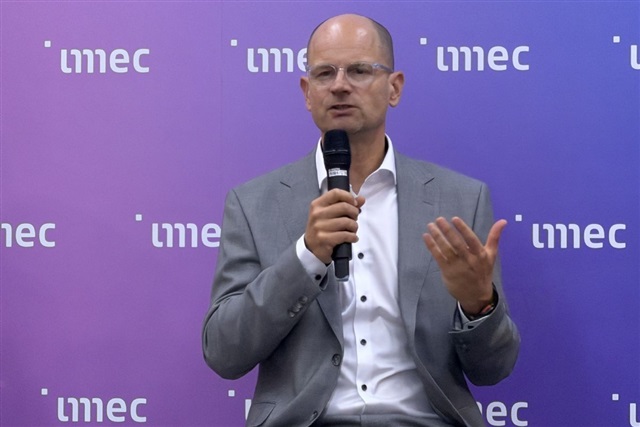
Imec CEO Patrick Vandenameele said at SEMICON Taiwan 2026 that the Belgian research center is broadening its c…
Alphabet's AI Overviews now reach over 2.5 billion monthly users through Google Search, and its ad business ge…

Sarah O’Connor's book 'We Are Not Machines' explores how mechanization and AI have transformed the workforce…