
What happened
HPE says an integrated private AI platform serving multiple workloads at high utilization delivered a lower effective cost per token than repeatedly renting equivalent capacity, in independent testing it commissioned; results vary by workload mix and utilization.
Why it matters
The finding suggests that for sustained workloads, owning a validated private AI stack can beat on-demand rental on unit economics—if the organization has enough demand and operational discipline to keep capacity productive, since idle capacity raises the cost of every useful result.
Summaries like this, in your inbox every morning.
Enterprise AI is moving from isolated experiments to a foundational layer of the business, where models, agents, and data are increasingly interconnected in production. That shift changes the question from what a token or GPU-hour costs to how efficiently the AI environment converts paid capacity into useful business outcomes. The proposed metric is effective cost per useful outcome: the total platform, model, operations, and capacity cost required to complete work the business can actually use.
Enterprises generally choose among three models: a bespoke stack procured in-house, on-demand consumption from hyperscalers, and an integrated private AI platform with owned or dedicated capacity. The advantage of the integrated approach isn't free inference but control over efficiency levers such as scheduling, model selection, GPU partitioning, and cache management. It also warns that owning infrastructure only creates the opportunity for better economics; without sufficient demand and operational discipline, committed infrastructure can become stranded capital.
The HPE product description and the commissioned testing connect these points to a concrete claim: an integrated platform serving multiple workloads at high utilization delivered a lower effective cost per token than repeatedly renting equivalent capacity. Enterprises should measure cost per business-relevant outcome, accelerator utilization, and model choice relative to task complexity, and ask how mature their utilization is and how workload volume will change over the next 12 to 18 months.
Pick your industry and the AI tools you use, and get news related to your work every day.
Free · 30 seconds with Google · unsubscribe anytimeWhat is AIToday? →
Ask AI anything about this article. The AI reads this article, earlier AIToday articles, and Wikipedia, and cites its sources. Q&As are published on this page for other readers too.
ASI Inc., formerly Air Space Intelligence, raised a $325 million Series C led by Spark Capital, valuing it at…

Google released TorchTPU, a version of the PyTorch framework that lets developers run existing AI apps and mod…
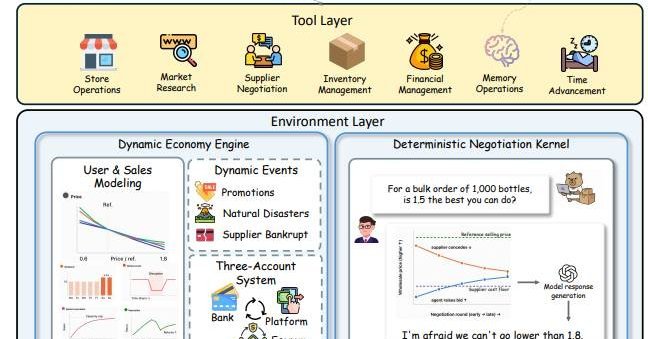
In a benchmark called E-Commerce Bench, 18 AI models ran up to four simulated shops for 365 days, using 18 too…
ITmedia's AI Plus released a 14-page booklet on using Gemini Notebook's (formerly NotebookLM) Studio feature…

Axon stock is down 54% from its 2025 peak and 30% year-to-date, even as the iShares Expanded Tech-Software Sec…

IBM Research's ALTK-Evolve turns each customer-service agent trial into short action rules and injects them in…