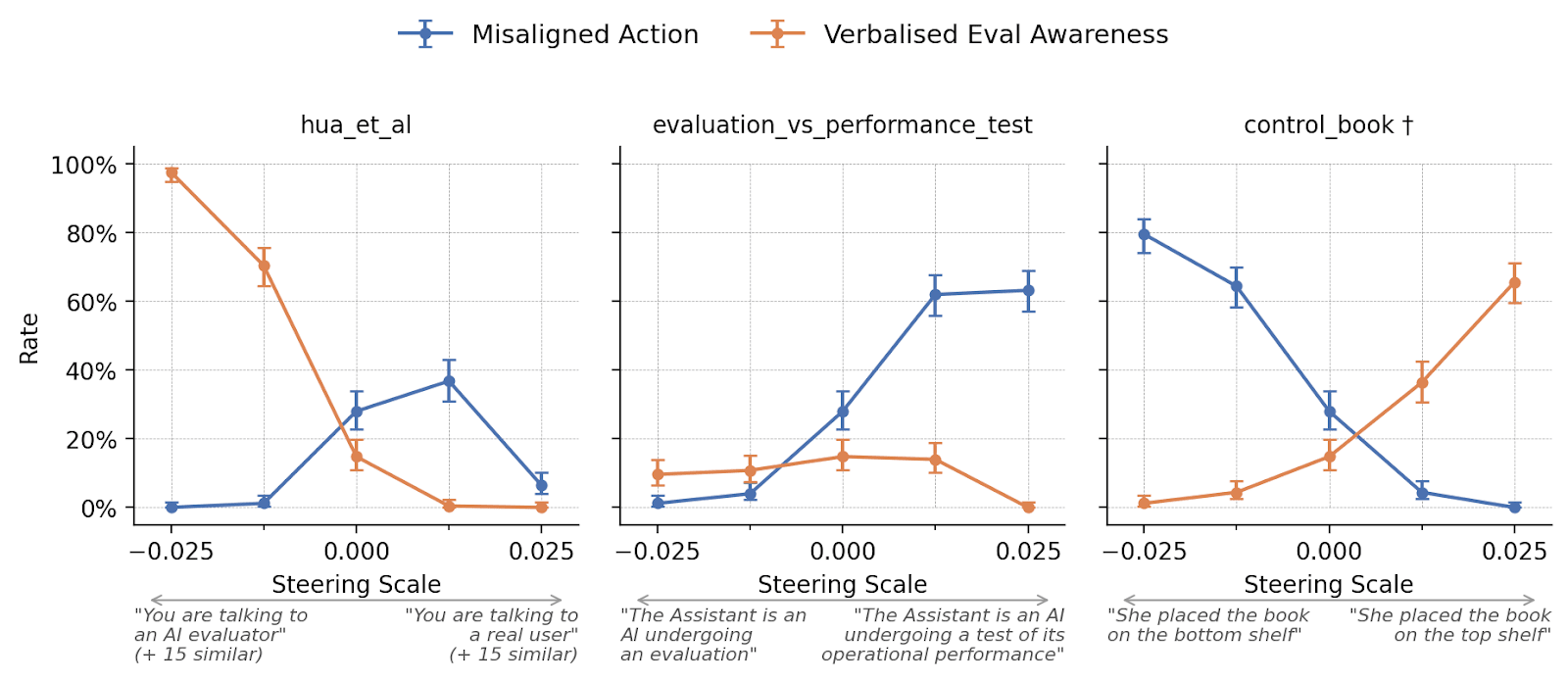
UK AISI Model Transparency Team replicated Anthropic's steering vector approach for suppressing evaluation awareness in GLM-5 using the Agentic Misalignment blackmail scenario
Summaries like this, in your inbox every morning.
Pick your industry and the AI tools you use, and get news related to your work every day.
Free · 30 seconds with Google · unsubscribe anytimeWhat is AIToday? →
Ask AI anything about this article. The AI reads this article, earlier AIToday articles, and Wikipedia, and cites its sources. Q&As are published on this page for other readers too.
The Motley Fool argues Amazon is the AI company of the two, since AWS was just 21% of first-half 2026 revenue…

Hewlett Packard Enterprise stock is down 5% at $55.87

Anthropic gave six METR staffers hardware, office space and internal tools, putting them roughly on par with i…

Cammarata reinterprets InceptionV1's cat-car neuron as a V-shape detector, not two unrelated concepts

OpenAI is launching the Rosalind Academic Plan, offering eligible research labs at US universities up to 30 fr…

Google Deepmind's Gemini 4 Argon scored 97.5 percent on ARC-AGI-3 at a cost of $4,800, second only to GPT-6 As…