What happened
The Information reported that Tesla factory workers in Texas and California wore special motion-recording suits to train Optimus robots, but some complained they "knew the robots were designed to eventually replace them," so Tesla moved the work to dedicated teams and "training hubs."
Why it matters
The pushback suggests the human data pipeline behind Optimus — already strained by unreliable hand touch sensors and robots that need programming for specific tasks — may be harder to staff than Tesla hoped, and that its eventual labor impact is visible to the workers supplying the data.
What to watch
Optimus still requires programming in carefully controlled environments, and its AI is reportedly insufficient for general uses, so the plan hinges on whether Tesla can scale it while competitors like Hyundai deploy up to 25,000 Atlas humanoid robots from Boston Dynamics.
WHO IT HITSTesla manufacturing staff in Texas and California who were asked to wear motion-capture suits now see that work reassigned to dedicated teams, and workers at automakers and robotics firms racing into humanoid deployment face a similar question of who trains the machines.
Summaries like this, in your inbox every morning.
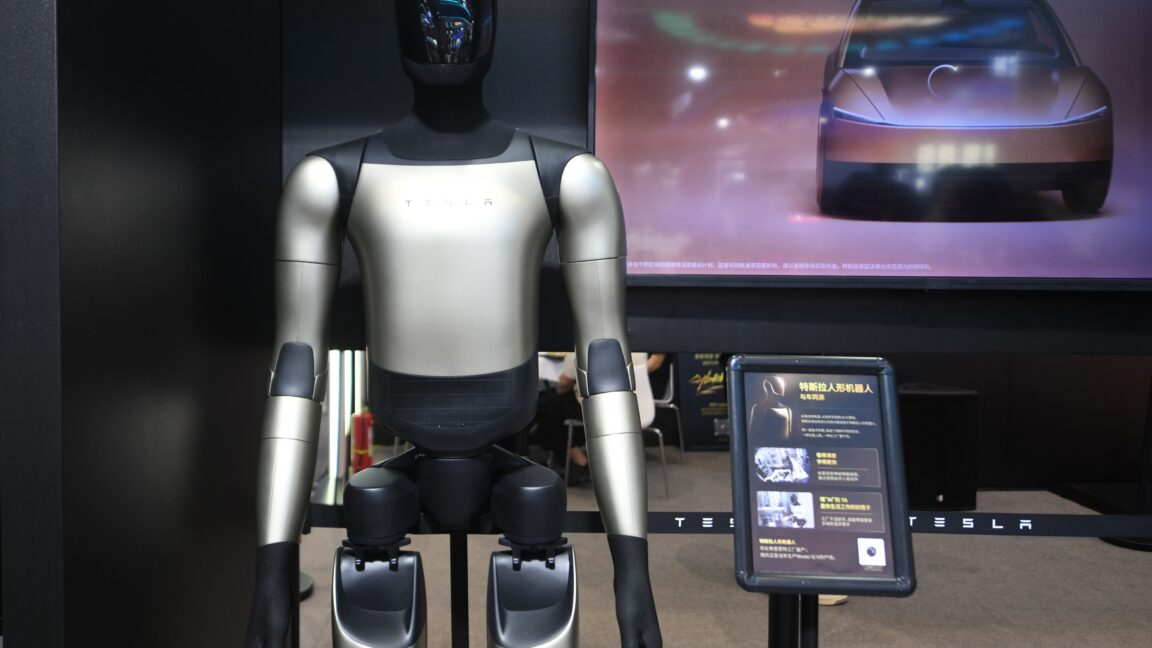
Tesla's Optimus program is running into the same wall that faces every robotics company: getting enough training data for robots to learn a wide variety of manual tasks visually. Tesla leaned on imitation learning, having factory workers in Texas and California wear special suits that record their physical movements while they work. That approach ran into a human problem. The Information described some workers complaining because they "knew the robots were designed to eventually replace them," and Tesla has apparently moved the data collection to dedicated teams with "training hubs." The manufacturing side has its own issues: newly produced robots require immediate fixes, and the hand touch sensors have been unreliable enough that Tesla developed a glove-like sensor layer that can be swapped without replacing the entire robot hand.
The competitive picture adds pressure. The Information also highlighted Tesla's continued reliance on Chinese suppliers for robot components, a supply-chain dependency that has persisted across the US robotics industry even as the Trump administration tries to boost domestic production. In July, the Federal Communications Commission banned new foreign-made robots such as humanoid robots, four-legged robot dogs, and robot vacuum cleaners. Meanwhile, automakers in China, Japan, and South Korea are developing humanoids, Toyota plans to invest billions of dollars in upgrading factories with robots, and Hyundai plans to deploy up to 25,000 Atlas humanoid robots from Boston Dynamics over the next several years.
Agility Robotics, based in Oregon, is among those furthest along in commercial deployment, having first put humanoid robots to work at an Atlanta-area warehouse owned by GXO Logistics in 2024. The broader business case still has to be proven through more sustained and cost-effective deployments, and through showing that such robots can work safely around humans. For Tesla, how quickly it can resolve the training-data bottleneck — and the worker resistance it has surfaced — is likely to shape whether Optimus moves beyond carefully controlled, programmed tasks.
For example, today's edition would include:
AI-summarized, only the topics you pick: one digest a day via Email, LINE, or Slack.
Free · 30 seconds with Google · unsubscribe anytimeWhat is AIToday? →
Ask AI anything about this article. The AI reads this article, earlier AIToday articles, and Wikipedia, and cites its sources. Q&As are published on this page for other readers too.
The Motley Fool's writer chose Nvidia over Tesla for robotics upside by 2030, citing its 2026 GTC roster of AB…
Caterpillar has partnered with FieldAI to advance physical AI and autonomous robotics

GE Aerospace plans to spend $225 million upgrading its Niskayuna, New York research center — about $150 millio…

Daifuku completed the G Building at its Shiga Plant mother factory on April 3, 2026, raising domestic cleanroo…
Amazon announced it will invest more than $100 million in a 585,000-square-foot advanced manufacturing facilit…
Skyline Nav AI, a Massachusetts company founded in 2020 after a Pentagon call, has built GPS-independent drone…