What happened
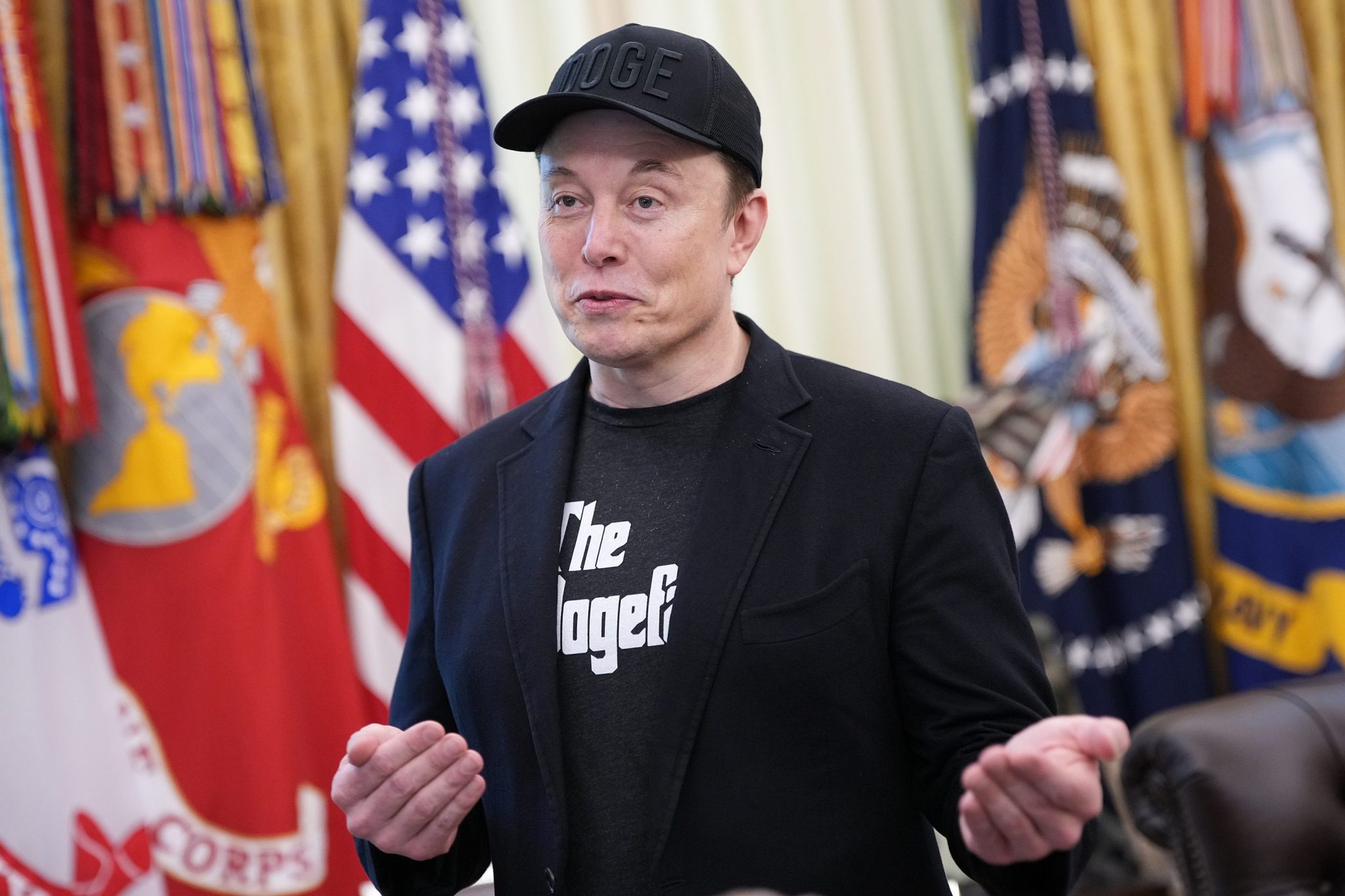
Elon Musk told China Media Group there will be "effectively universal high income" and money may "not even matter," predicting one billion humanoid robots no later than the next decade.
Why it matters
Musk's advice for Gen Z is to get broad knowledge in arts, sciences, and engineering to formulate questions for robots — the skill he calls prompt engineering, which he sees as more important, not less.
What to watch
Whether robotics delivers hinges on Tesla's Optimus program, which has faced challenges, and on his $1 trillion Tesla pay package's goal of delivering 1 million humanoid robots.
WHO IT HITSYoung people planning their education and careers, and employers who hire them, face advice from Musk, Anthropic's Jack Clark, and Microsoft's chief scientist to prioritize broad, interdisciplinary knowledge over narrow technical training.
Summaries like this, in your inbox every morning.
Musk's latest predictions build on years of similar forecasts, but with a notable shift: he has kept pushing back the timeline for when an "age of abundance" might arrive. Now he says one billion humanoid robots will exist no later than the next decade. That vision is central to Tesla, where robotics features in his $1 trillion pay package — which includes a goal of delivering 1 million humanoid robots. The Optimus program, however, has faced challenges as Tesla works to develop and scale the robot.
The education advice follows from his logic about work. If robots do childcare, teaching, and elder care around the clock, and if goods and services outstrip what humans can consume, then the ability to clearly articulate what you want becomes the scarce skill. Musk argues that broad general knowledge — not narrow specialization — is what lets someone formulate the questions or what he calls prompt engineering, even as AI gets better at understanding natural language.
Musk is not alone. Anthropic cofounder Jack Clark, who studied literature, has argued against rote programming and for synthesis across subjects. Microsoft chief scientist Jaime Teevan told The Wall Street Journal that metacognitive skills and a traditional liberal-arts education are becoming more important. The open question is whether this advice holds if robotics timelines keep slipping — the outcome likely hinges on whether Optimus and similar programs can actually scale.
For example, today's edition would include:
AI-summarized, only the topics you pick: one digest a day via Email, LINE, or Slack.
Free · 30 seconds with Google · unsubscribe anytimeWhat is AIToday? →
Ask AI anything about this article. The AI reads this article, earlier AIToday articles, and Wikipedia, and cites its sources. Q&As are published on this page for other readers too.
Instinct, officially Spear Street Technology Inc., announced a $1 billion Series C joined by Sequoia Capital…

Modulate raised $25 million, led by Future Ventures with returning investors Hyperplane and Lakestar, bringing…

On theCUBE Pod, Dave Vellante said CoreWeave disclosed that 70% of its revenue came from its top three custome…

Google Cloud revenue hit $24.77 billion, up 82%
MGX, an Abu Dhabi-backed technology investor, is looking for data center assets in the Asia Pacific

At Semafor's The Next 3 Billion on Sept