What happened
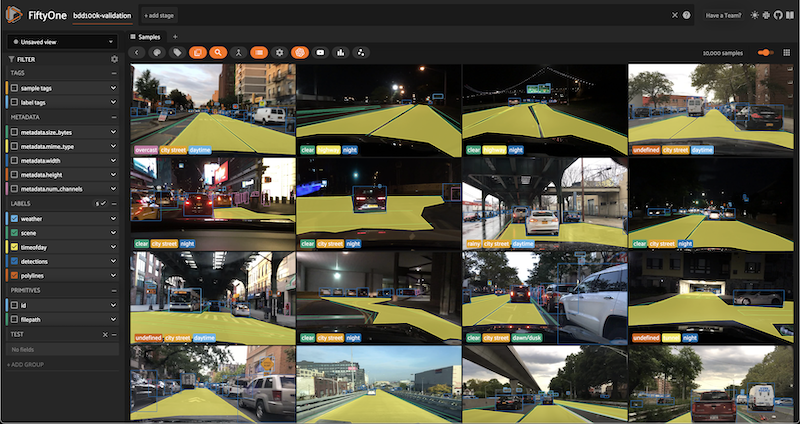
Voxel51 released version 3.0 of its robotics data platform, including Voxel51 Agent, which performs tasks like finding relevant data, selecting examples, labeling and evaluating results across the development process.
Why it matters
As robot fleets grow, manually reviewing camera, lidar and sensor recordings becomes impractical; Voxel51 says teams it classifies as exceptional are three times more likely than struggling teams to spend over half their project time on data work.
What to watch
A free self-service version of Voxel51 3.0 is available for developers starting with the system.
WHO IT HITSRobotics and physical AI developers — the engineers who search, label and version sensor recordings for training perception models — get an assistant aimed at cutting manual review of long multi-sensor recordings.
Summaries like this, in your inbox every morning.
Voxel51 is pitching version 3.0 at a familiar bottleneck: a single robot can generate video from several cameras alongside lidar, location information and other sensor readings, and someone has to search through it, pick out useful examples and label what happened. CEO Brian Moore says the teams that got their data infrastructure right from the start were able to move faster with autonomous systems and perception models, and he argues physical AI and robotics is at the same inflection point.
The platform's additions reflect that workflow. An expanded search system combines semantic search, conventional text queries and metadata filters, while multimodal time-series capabilities let developers view synchronized streams from different sensors and search for particular moments inside long recordings. Annotation tools cover 2D images, 3D data and video, and an Agentic Labeling capability can use vision-language AI models to automate part of identifying and describing objects and events. Tools for activity logs, editing histories and dataset versioning let developers trace which information trained a particular model.
The broader idea is to feed real-world robot experience back into development: when a machine hits an unusual object, lighting condition or situation, developers can find that event, label and analyze it, and potentially add it to training data for later model versions. Voxel51 points to its State of Physical AI 2026 report, which found teams it classifies as exceptional are three times more likely than struggling teams to spend more than half of their project time working with data. Alongside the release, the company is working with Nebius on workshops that pair its data management technology with Nebius AI Cloud, addressing both data volume and the computing power to process it. Voxel51 says its platform is used by companies including Berkshire Grey, Ford, Porsche and Precision Planting, and a free self-service version is available for developers getting started.
Pick your industry and the AI tools you use, and get news related to your work every day.
Free · 30 seconds with Google · unsubscribe anytimeWhat is AIToday? →
Ask AI anything about this article. The AI reads this article, earlier AIToday articles, and Wikipedia, and cites its sources. Q&As are published on this page for other readers too.
Google Cloud on Oct. 20 released a preview of Gemini for government services, co-developed with Missouri's sta…

NVIDIA announced the OpenShell Reference Architecture, combining Vera Rubin for model inference, Vera CPUs for…

Meta's Muse, launched last month, became the first popular AI agent for mainstream users and just cracked a do…
Claude generated 318,484 protein binder designs targeting five toxins from four scorpion species, working on i…

OpenAI acquired Orchestra Bio, a startup that helps pharma teams coordinate drug development, and will fold it…

Ricoh Japan will begin offering a monthly rental plan for rack-type GPU servers under its RICOH On-Prem LLM St…