What happened
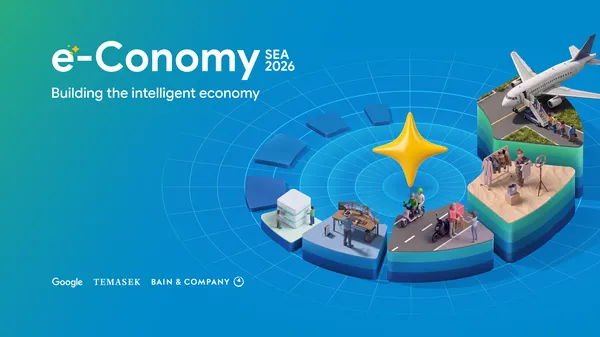
The 11th e-Conomy SEA report by Google, Temasek and Bain & Company projects the region's digital economy will reach $368 billion in GMV in 2026, up 17% year-on-year, and exceed $1 trillion by 2035.
Why it matters
Generative AI is already used by 243 million people (58% of the working population) and is scaling four times faster than mobile internet did, which the report says is propelling this growth.
What to watch
The ASEAN Digital Economy Framework Agreement (DEFA) is due in November 2026 and would be the world's first region-wide digital trade pact.
WHO IT HITSThis lands on Southeast Asian e-commerce, travel, media, and financial services operators, who are already seeing AI-driven conversion gains and must plan for agentic commerce and roughly 3x data center capacity over five years.
Summaries like this, in your inbox every morning.
The e-Conomy SEA report, now in its 11th edition, is a joint effort by Google, Temasek and Bain & Company. Its central finding is that generative AI has moved from experimentation to daily habit across the region, with 243 million users already relying on it. That adoption rate is four times faster than the spread of mobile internet, which suggests the current growth phase is compressed compared with earlier digital waves.
The report breaks the digital economy into familiar segments, but the AI effect shows up differently in each. E-commerce, the largest at $226B GMV, is seeing shoppers use multimodal discovery and in-app assistants to navigate complex purchases, which the report says drives 10% higher conversions and order volume uplifts as large as 75%. Online travel shows generative AI overtaking social media as the second-most-used tool for organizing complex itineraries, behind traditional search engines. Online media is personalizing feeds and ads, yielding a 10 to 20% quality engagement uplift, and commerce media is now a $4 billion market. Mobility and food delivery is using predictive suggestions and smarter routing for $40B GMV, while digital financial services reaches $1,650B GTV with real-time fraud detection and broader credit access.
The trust data explains why agentic commerce is moving from concept to runway. Already 72% of users rely on everyday automation like price tracking, and 75% say they are willing to let AI agents autonomously compare prices and complete transactions. That willingness rests on reported optimism: 62% say they trust AI tools more than a year ago, citing proven track records, rising familiarity and output accuracy. But users also expect guardrails — privacy safeguards, clear information on what AI can and cannot do, and the ability to reverse agentic transactions — which the report frames as conditions for deeper platform integration rather than obstacles. To sustain a projected 60-fold surge in regional AI usage, the report points to four requirements: agentic adoption with sustainable economics, roughly 3x data center capacity over five years, strict model and energy efficiency rules such as Singapore's PUE framework and Malaysia's CRESS model, and unified regional governance through the upcoming ASEAN DEFA in November 2026.
Pick your industry and the AI tools you use, and get news related to your work every day.
Free · 30 seconds with Google · unsubscribe anytimeWhat is AIToday? →
Ask AI anything about this article. The AI reads this article, earlier AIToday articles, and Wikipedia, and cites its sources. Q&As are published on this page for other readers too.
The US imposed sanctions on five Chinese entities tied to former Google engineer Linwei Ding, after his convic…
Nvidia is reportedly in talks to invest hundreds of millions of dollars in Firmus, and Maas Group — which owns…

Pigment closed a $250 million Series E at a $2.3 billion valuation, led by Scaleup Europe Fund managed by EQT…

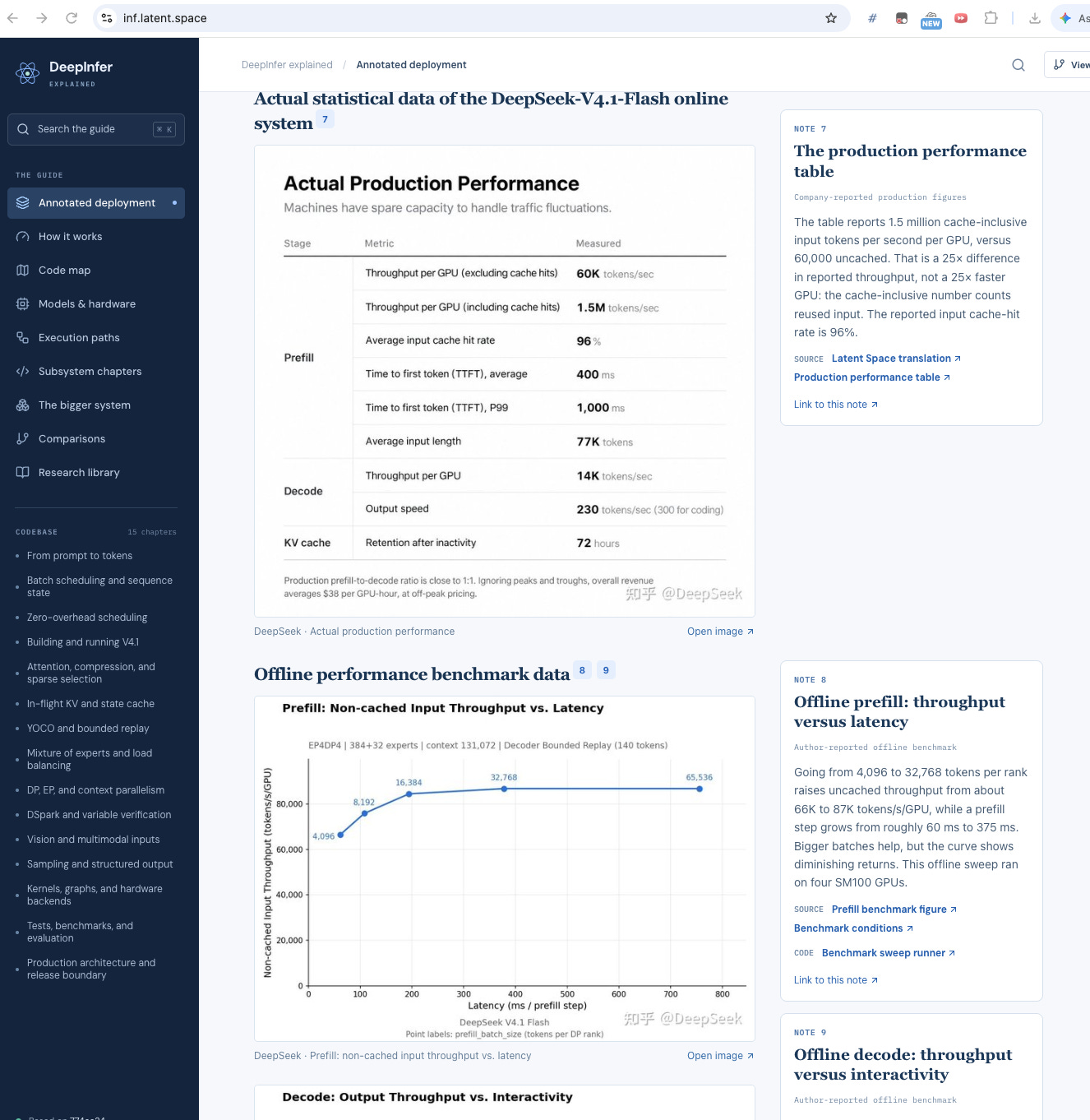
DeepSeek released DeepInfer, the inference engine behind V4.1-Flash, with production figures of 155 trillion t…
Hitachi unveiled a prototype GPU cold plate whose "U字トンネル流路" sends coolant straight at the GPU's hot spots, wi…

OpenAI acquired Orchestra Bio on October 20 and is integrating its team and drug-development coordination tech…