
What happened
OpenAI said GPT-6 Astra passed 87.39% and GPT-6.1 Sol 87.04% of its MultiLangBench test — building a SQLite-compatible database engine in 20 programming languages — far above GPT-5.6 Sol's 26.77%; budget model GPT-6 Luna reached 40.31%.
Why it matters
The jump suggests the new models handle languages with little training data far more reliably, which could make AI more useful for maintaining and modernizing older systems, OpenAI said.
WHO IT HITSSoftware maintainers and IT teams that keep older systems running — particularly in banking and other critical infrastructure — could see AI tools handle these languages more reliably, though the figures come from OpenAI's own benchmark.
Summaries like this, in your inbox every morning.
OpenAI frames the update around a long-standing gap: languages like COBOL and Fortran are used in relatively few projects but sit inside critical systems such as banking infrastructure, and past AI models handled them with lower accuracy because training data is scarce. To measure the gap, OpenAI built MultiLangBench, which asks models to build a SQLite-compatible database engine across 20 languages.
The published pass rates show a wide separation between generations. GPT-6 Astra and GPT-6.1 Sol both cleared 87%, while the previous GPT-5.6 Sol sat at 26.77%; even the cheaper GPT-6 Luna model reached 40.31%. OpenAI also charted COBOL results against task cost, showing the GPT-6 series scoring higher than GPT-5.6 Sol, with Luna beating the older model at lower cost. Beyond writing code, OpenAI tested migrating COBOL programs to C++, Java, Kotlin, Python or Rust, reporting high success rates for the GPT-6 series.
OpenAI's stated implication is that stronger handling of COBOL and Fortran could let AI help maintain and modernize important infrastructure software. The results are OpenAI's own benchmark figures, so how they translate to real-world legacy systems remains to be seen.
Pick your industry and the AI tools you use, and get news related to your work every day.
Free · 30 seconds with Google · unsubscribe anytimeWhat is AIToday? →
Ask AI anything about this article. The AI reads this article, earlier AIToday articles, and Wikipedia, and cites its sources. Q&As are published on this page for other readers too.
Google released TorchTPU, a version of the PyTorch framework that lets developers run existing AI apps and mod…
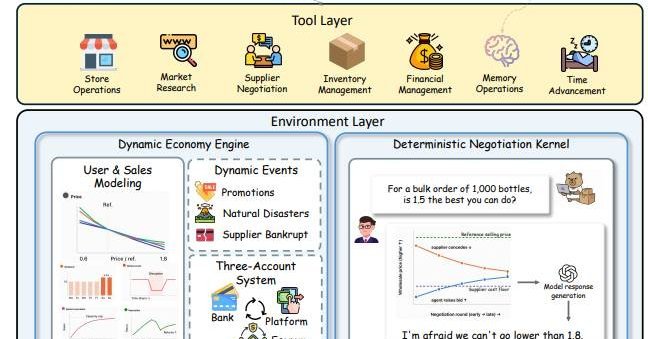
In a benchmark called E-Commerce Bench, 18 AI models ran up to four simulated shops for 365 days, using 18 too…
ITmedia's AI Plus released a 14-page booklet on using Gemini Notebook's (formerly NotebookLM) Studio feature…

IBM Research's ALTK-Evolve turns each customer-service agent trial into short action rules and injects them in…

Testing Pi 0.84.2 with claude-sonnet-4-5, a hook returning { block: true, reason } on rm produced a normal too…
A Zenn author migrating a ten-year-old PHP/Laravel monolith — hundreds of endpoints and more than 600 shared m…

