What happened
Iwai Cosmo Securities senior analyst Kazuyoshi Saito dismissed bubble fears in AI and semiconductor shares, saying AI agents and rising token use will multiply chip and memory demand.
Why it matters
Saito argues that as AI spreads further, consumption of "tokens"—units of AI usage—grows exponentially and memory use per token keeps rising, so the two multiplied together should sharply expand semiconductor demand, suggesting the rally rests on real usage rather than speculation, according to his view.
What to watch
The bullish case hinges on whether autonomous AI agents that perform multiple inferences per instruction actually become widespread, since that is what would drive CPU and memory demand; watch whether semiconductor equipment sales grow 30% across the market in 2026, as Saito expects.
WHO IT HITSIndividual investors holding or considering AI and semiconductor stocks, and portfolio managers choosing among chip names, get a case that the sector's demand is structural rather than bubbly. Analysts covering semiconductor equipment makers and memory suppliers may also weigh the agent-driven inference and memory arguments.
Summaries like this, in your inbox every morning.
The article opens with the worry that gripped AI and semiconductor shares in the summer of 2026: concerns about overinvestment by US hyperscalers and Nvidia's "circular transactions" in which it provides funding to customer companies. Rather than treating those as decisive, the analysts interviewed argue the demand picture has shifted in a way that makes the fears look misplaced. Saito's confidence rests on a simple multiplication: as AI models become more capable, token consumption rises exponentially, and memory consumption per token also climbs, together pushing semiconductor demand sharply higher. He also points to CoreWeave, a US cloud provider, investing funds amounting to four times its revenue, arguing such expansion cannot be excessive.
Imanaka adds a structural angle: over the past year, the inside of AI data centers has changed. Until now, usage centered on generative AI like OpenAI's ChatGPT, which performs one inference per human instruction. Going forward, autonomous AI agents that make multiple inferences per instruction and handle tasks like summarizing documents, entering required items, and processing accounting on their own are spreading. Because they frequently use RAG to search external knowledge, system loads rise, and Imanaka says each AI chip now needs multiple CPUs to coordinate the overall system. Next-generation data centers will also need large amounts of NAND flash memory for long-term storage, indium phosphide substrates and optical amplifiers for high-speed optical wiring, and DC power distribution and MLCCs for efficiency. Imanaka links the SOX index's rise since April to these new demand sources.
For Japanese companies, the article sees significant benefit: Saito expects semiconductor manufacturing equipment sales to grow 30% across the market in 2026, with new TSMC and other plants starting full-scale operations from 2028, describing a golden age continuing toward 2030. The stakes for investors seem to hinge on whether the shift to autonomous AI agents actually takes hold as described, since that is what would validate the CPU and memory demand forecasts; if agent adoption stalls, the demand multiplier argument would weaken. The article also notes that the era of buying only Nvidia to benefit from semiconductor growth is over, and suggests SOX-linked ETFs or index funds for those unsure about individual stock selection.
For example, today's edition would include:
AI-summarized, only the topics you pick — one digest a day via Email, Slack, or Discord.
Free · 30 seconds with Google · unsubscribe anytimeWhat is AIToday? →
Ask AI anything about this article. Q&As are published on this page for other readers too.
Christie Kozlik, chief accounting officer at Accel Entertainment Inc., told theCUBE that finance adoption is g…
At Workiva's Amplify event, theCUBE Research analyst Krista Case said firms must trace where AI insights came…

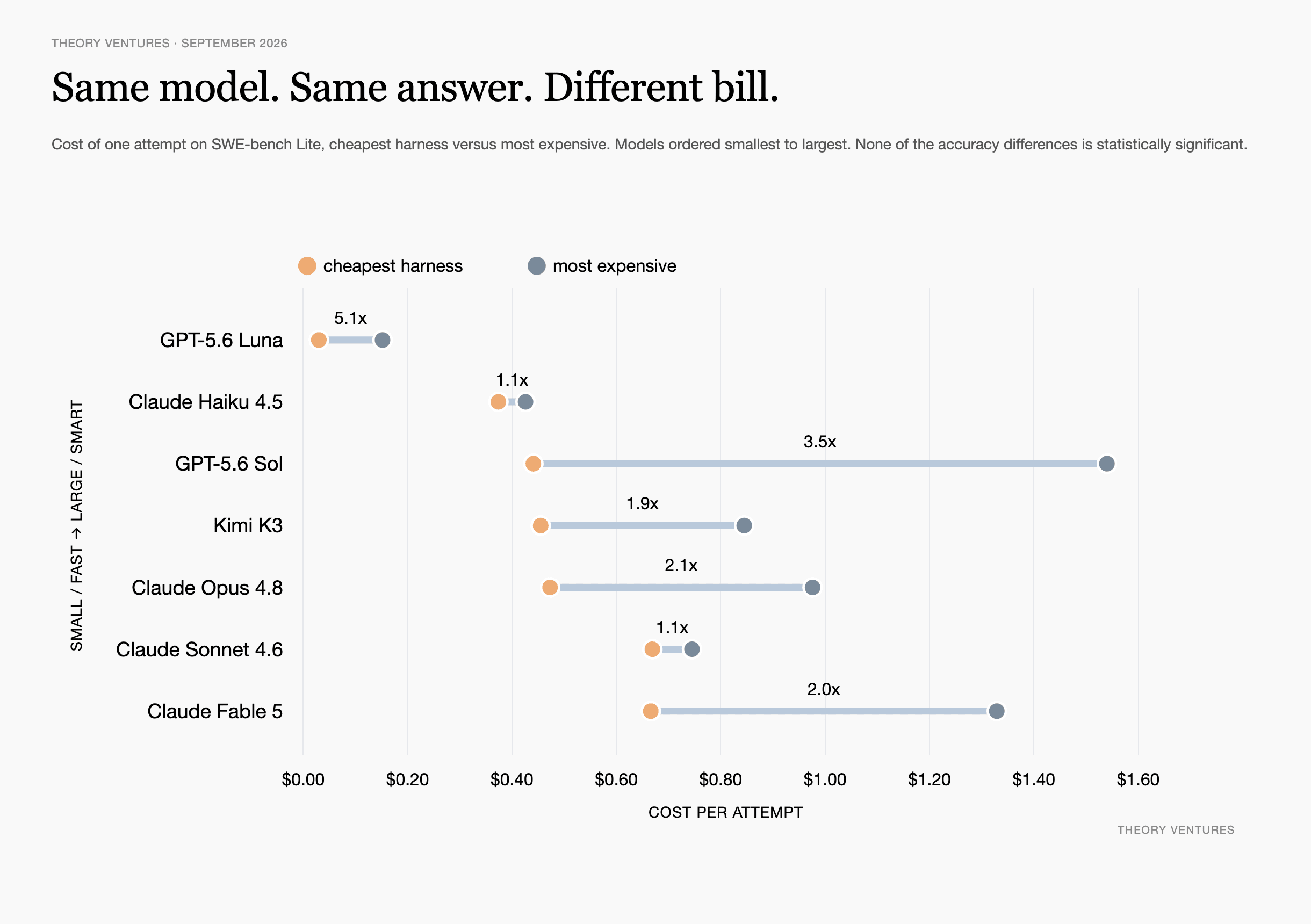
A UC Berkeley study found GPT-5.6 Sol costs 71% less on Pi than on Claude Code, returning the same result, and…
Pika, valued at $470 million, launched a program that automates which AI model creates each video element and…

Zuckerberg pushed back on coordinated AI slowdown calls on September 15, saying Meta delayed its Muse agent fo…

Nvidia CEO Jensen Huang told Dreamforce attendees "We don't need any new laws, we don't need any new regulatio…