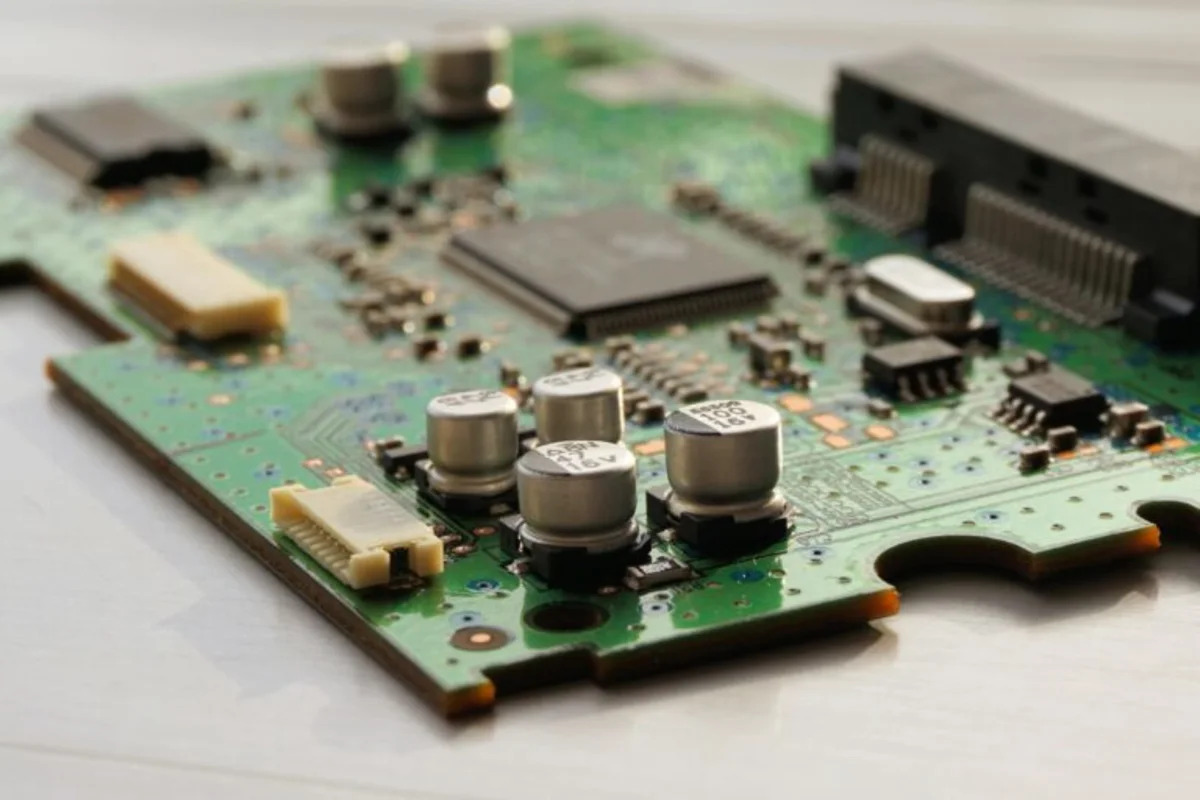
Perplexity selected Nvidia's new Vera CPUs over traditional x86 server chips for its AI coding platform, running 1.5 times faster than standard processors—a win that underscores Nvidia's strategy to bundle GPUs, CPUs, networking, and software as a unified offering. While Nvidia's Q1 revenue soared to $81.61B (+85.2% YoY) and AMD's data-center business grew 57%, the choice signals that latency-sensitive inference workloads increasingly default to Nvidia's full stack, potentially creating a competitive moat that extends beyond GPUs into CPU sockets AMD has traditionally dominated.
Summaries like this, in your inbox every morning.
Sign up free →What happened
Perplexity chose Nvidia's new Vera CPUs over x86 server chips for its multi-agent AI coding stack, delivering 1.5 times faster performance than standard server processors. Nvidia's Q1 FY27 revenue hit $81.61B (+85.2% YoY), with Data Center at $75.25B (+92%) and Networking at $14.8B (+199%). AMD's Q1 FY26 reached $10.25B (+37.9% YoY), with Data Center revenue of $5.78B (+57%).
Why it matters
Nvidia is bundling GPUs, CPUs, networking, and software as one integrated stack, while AMD is still assembling a competing answer. The Perplexity decision signals that inference buyers default to Nvidia's Blackwell plus NVLink plus CUDA when latency matters—marking a potential moat that extends Nvidia's reach into CPU territory that x86 vendors like AMD have long defended. AMD's 184x trailing P/E leaves no room for execution stumbles.
What to watch
Whether Vera CPU adoption spreads beyond Perplexity into hyperscalers, and whether AMD's MI450 shipments in H2 2026 meet the 'exceeding expectations' language leadership used. Nvidia guided Q2 revenue to $91.0B, and analysts carry a target of $301.62.
Nvidia's dominance in AI infrastructure is consolidating around a full-stack model. The company now controls not just GPU acceleration (where it has overwhelming market share) but also the CPU sockets that host inference workloads, the networking fabric that connects them (Spectrum-X, NVLink Fusion, InfiniBand), and the software layers (CUDA-X, Dynamo) that lock in customer workloads. Perplexity's selection of Vera CPUs is a signal that this bundled approach works—buyers optimize for latency and throughput, and Nvidia's end-to-end integration delivers on that requirement.
AMD faces a genuinely difficult two-front war. On one side, it must compete in accelerators (MI450, Helios) against Nvidia's entrenched Blackwell ecosystem and CUDA software moat. On the other, it must defend its traditional server CPU franchise (EPYC) from Nvidia's entry into CPUs—a market segment that has been AMD's own profit engine. While AMD's data-center revenue grew 57% YoY and free cash flow jumped 253%, the company's trailing P/E of 184x leaves no room for execution misses. The stakes are clearest in H2 2026: if MI450 shipments and Helios adoption meet or exceed the "exceeding expectations" guidance Lisa Su provided, AMD retains optionality. If they slip, the stock has already run 140.99% year to date and gave back 11.15% last week, suggesting limited patience for disappointment.
Customer deals look similar on paper—OpenAI signed 10+ GW with Nvidia and 6 GW with AMD—but the stickiness lies in software. Nvidia's CUDA ecosystem and inference optimization tools (Dynamo) create switching costs. AMD's ROCm 7 is improving but does not yet constitute a comparable competitive moat. For business buyers watching this competition, the Perplexity outcome suggests that choosing Nvidia's full stack (accelerator, CPU, networking, software) sidesteps the fragmentation risk of assembling best-of-breed components separately.
No comments yet. Be the first to share your thoughts!
Log in to join the discussion


Get curated AI news from 200+ sources delivered daily to your inbox. Free to use.
Get Started FreeFree · takes 30 seconds · unsubscribe anytime
1 minute a day. The AI essentials.
200+ sources · Email / LINE / Slack
