What happened
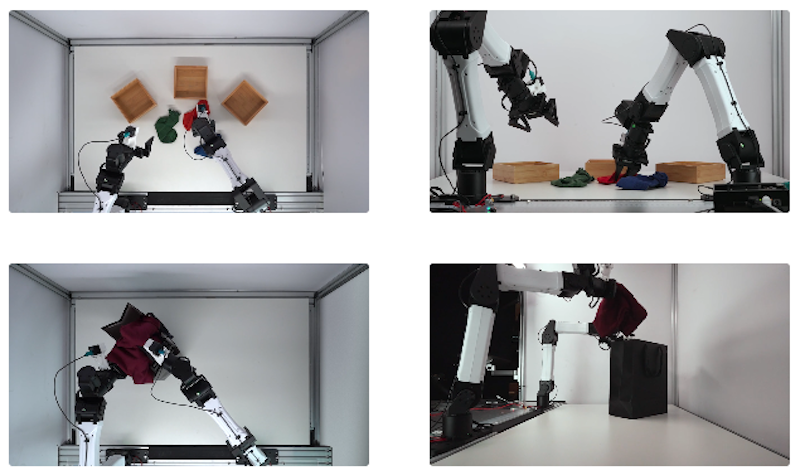
Runway released Praxis-1, a 27-billion-parameter open-weight world action model, now publicly available under the Apache 2.0 license, with weights and fine-tuning tools on GitHub and Hugging Face.
Why it matters
The model learns how objects behave from general video footage instead of robot-specific training data, which Runway says could reduce dependence on expensive robot-specific datasets and make advanced manipulation capabilities more accessible to developers.
WHO IT HITSRobotics researchers and developers building manipulation systems, including industrial arms, dual-arm warehouse robots and humanoid platforms, can now adapt Praxis-1 for commercial and research work without licensing fees, though Runway acknowledges it still struggles with visually similar objects and ambiguous instructions.
Summaries like this, every morning.
Praxis-1 was first introduced in September, and its move to a public Apache 2.0 release marks the point where outside researchers and developers can adapt it for commercial and research applications. The design choice at its center is the source of training data: rather than leaning primarily on robot-specific datasets, the model learns how objects behave and interact from general video footage, then is adapted to particular robotic systems. Runway says this could lower dependence on expensive robot-specific training data.
The benchmark picture is mixed. Runway reports a 46.2 percent success rate on Nvidia's RoboLab-120, which evaluates manipulation across 120 simulated tabletop tasks and 1,200 trials, ahead of other open-weight robot foundation models evaluated there, though several closed models and general-purpose AI agents scored higher. On SimplerEnv, Runway reports 80 percent success after fine-tuning for Google's RT-1 robot, compared with 52.4 percent for the original RT-1 policy. Runway also acknowledges limits: the model still struggles with visually similar objects, ambiguous instructions and complex tasks requiring multiple sequential actions, which is roughly where its stated plans for long-term reasoning and autonomous planning point.
Pick your industry and the AI tools you use, and get news related to your work every day.
Free · 30 seconds with Google · unsubscribe anytimeWhat is AIToday? →
Ask AI anything about this article. The AI reads this article, earlier AIToday articles, and Wikipedia, and cites its sources. Q&As are published on this page for other readers too.
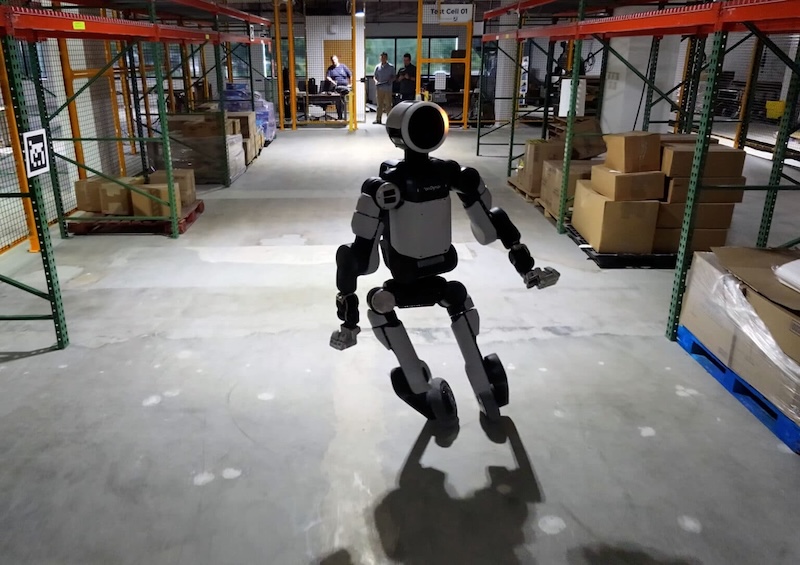
Boston Dynamics released video of its Atlas humanoid rolling on wheels attached via custom adapters and scoote…
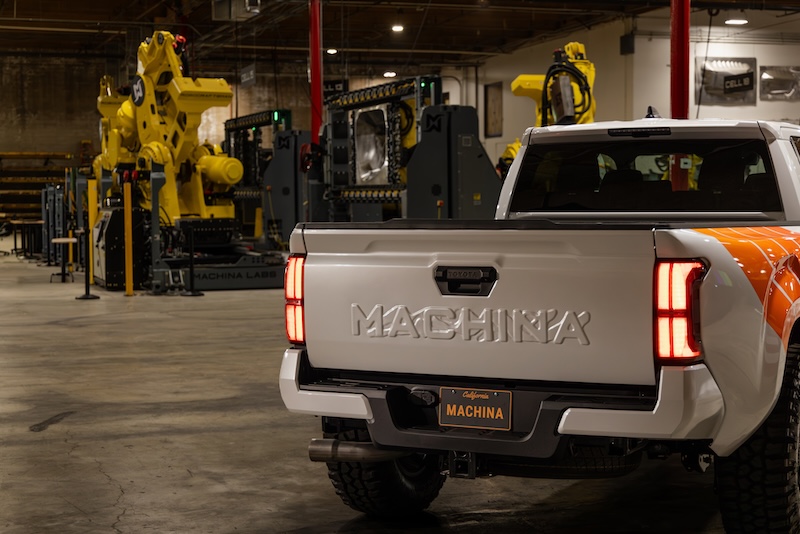
Machina Labs unveiled Machina Rebellis at its Chatsworth, California facility, using robotics, AI and digital…
Samsung Electronics, SK hynix, and Micron are setting a charging standard for robots used in semiconductor fab…
MomongaCode is out under the MIT license, a terminal AI coding agent that works with Ollama, LM Studio, and Ap…

Robotics and physical AI companies have raised nearly $48 billion in 2026, but VulcanForms CTO Michael Kenwort…
Seizo Trend's analysis lays out SoftBank's approach to physical AI, where the company positions itself to earn…