What happened
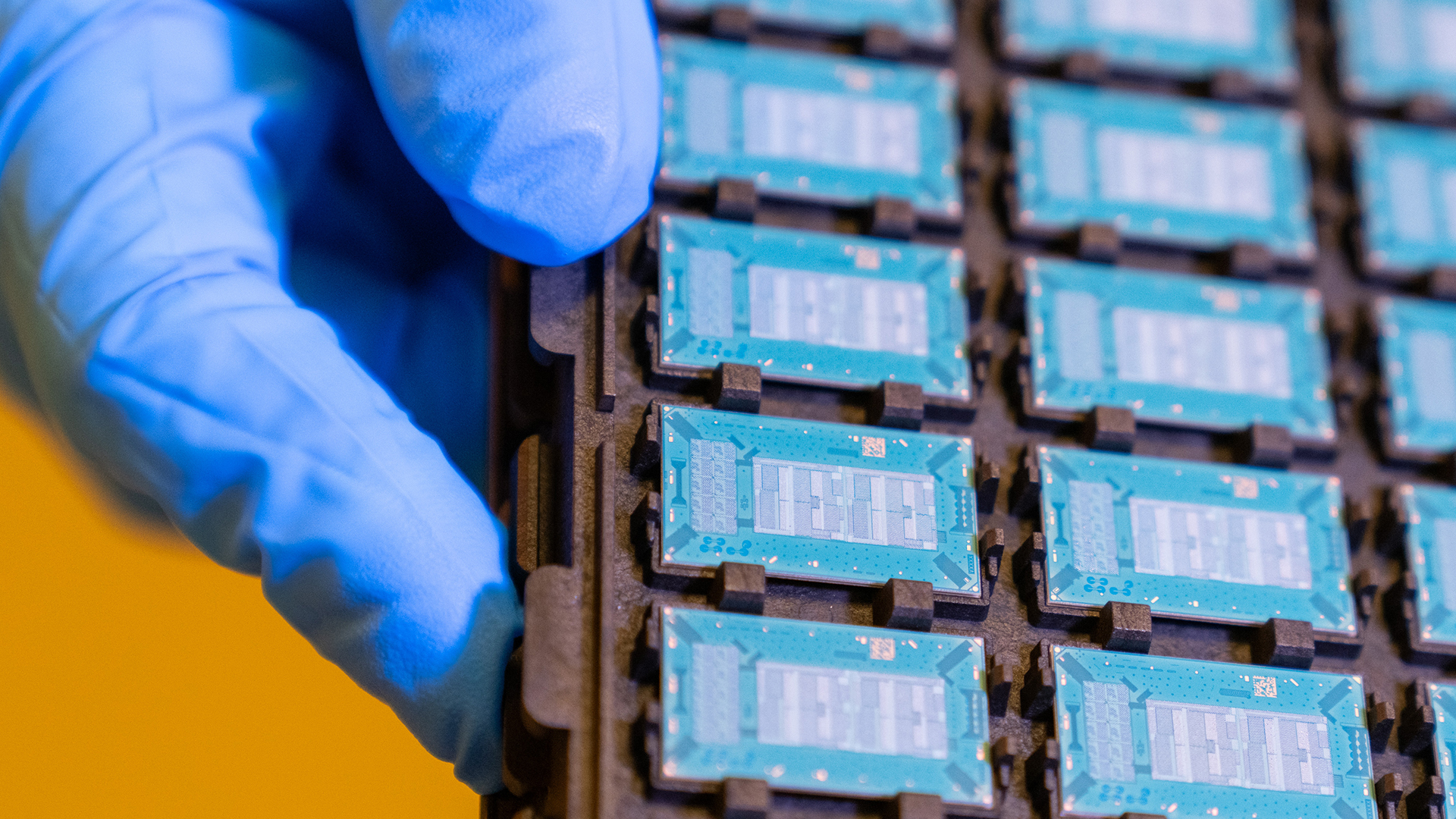
Intel and Lens Technology announced a strategic collaboration to develop glass substrate-based semiconductor packaging solutions that aim to improve performance, interconnect density, and power efficiency for AI and data center computing.
Why it matters
Advanced packaging is becoming critical as AI systems demand higher performance and efficiency; Intel brings semiconductor expertise while Lens Technology contributes precision glass processing and laser manufacturing capabilities, positioning them to accelerate next-generation packaging innovation.
What to watch
The companies plan to explore cooperation in manufacturing processes to scale adoption of advanced packaging, with potential expansion into AI PC components, data center thermal solutions, and hardware for AI robotics and edge computing.
Summaries like this, in your inbox every morning.
Intel and Lens Technology's collaboration addresses a fundamental shift in semiconductor manufacturing driven by AI's performance demands. As the article notes through CEO Lip-Bu Tan, advanced packaging has become a critical innovation driver—AI systems are pushing the boundaries of performance, scale, and efficiency in ways that traditional chip architectures alone cannot satisfy. The partnership is strategically structured: Intel contributes semiconductor design and packaging leadership, while Lens Technology brings materials science expertise and high-precision manufacturing at scale, a capability set that historically has been fragmented across the supply chain.
The focus on glass substrate-based solutions is particularly significant because glass offers physical properties—thermal stability, precision optical processing potential, and structural reliability—that can support the dense interconnects and power management challenges of modern AI accelerators and data center systems. By combining Lens Technology's laser processing and precision manufacturing with Intel's packaging architecture knowledge, the companies position themselves to address what the article frames as a manufacturing capability gap in scaling advanced packaging technologies.
For example, today's edition would include:
AI-summarized, only the topics you pick — one digest a day via Email, Slack, or Discord.
Free · 30 seconds with Google · unsubscribe anytimeWhat is AIToday? →
Ask AI anything about this article. Q&As are published on this page for other readers too.
On TechCrunch's Equity podcast, Sean O'Kane, Kirsten Korosec, and Anthony Ha debated whether AI executives lik…
In a CBS Sunday Morning interview, Nvidia CEO Jensen Huang said there is a "0% chance" of AI ending the world

Caterpillar's power & energy segment grew 17% year over year in Q2, and construction revenue rose 35%, leaving…

Nvidia CEO Jensen Huang now shapes how President Trump talks about regulation, export fees, and China trade, a…
Zoom CEO Eric Yuan told The New York Times in a 2025 interview that AI will lead every company to support thre…
Contrarian Thinking founder and CEO Codie Sanchez said the most direct way small business owners should deploy…