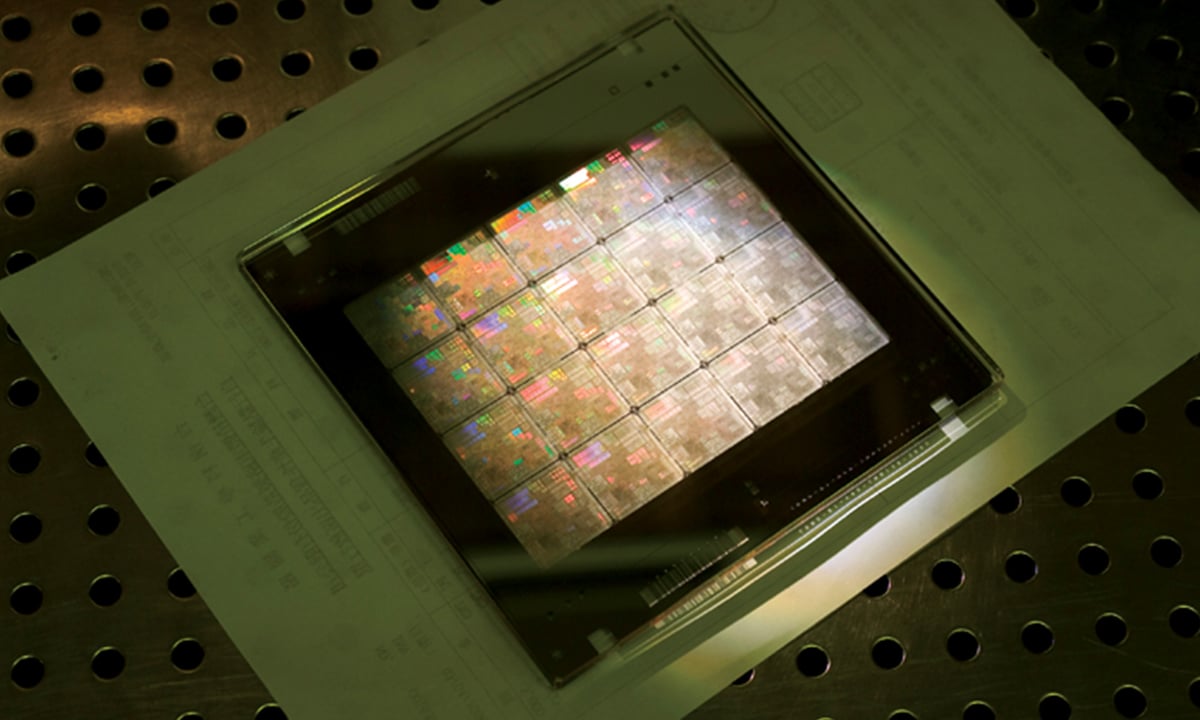
Taiwan Semiconductor Manufacturing reported record second-quarter results with 33.7% year-over-year revenue growth to $40.2 billion(約6.4兆円) and net income growth of 77.4%, raising its full-year 2026 revenue growth outlook to slightly more than 40%. While chip designers like Nvidia, DeepSeek, and OpenAI are building custom AI chips to reduce their dependence on any single supplier, TSMC controls the manufacturing capacity needed to build those chips — making it a bet on AI computing demand itself rather than on any one design winning. At roughly 30 times trailing earnings, TSMC trades at a similar multiple to Nvidia, despite delivering accelerating profit growth and expanding margins.
Summaries like this, in your inbox every morning.
Sign up free →What happened
Taiwan Semiconductor Manufacturing (TSMC) reported second-quarter revenue of $40.2 billion(約6.4兆円), up 33.7% year over year, and net income jumped 77.4% year over year to a fresh record. Gross margin expanded to 67.7%, its fourth straight quarter of expansion. The company raised its full-year 2026 revenue growth outlook to slightly more than 40%, up from its earlier call for growth of more than 30%. Management also expects third-quarter revenue of $44.6 billion(約7.1兆円) to $45.8 billion(約7.3兆円), or roughly 37% year-over-year growth at the midpoint.
Why it matters
While investors worry that DeepSeek, OpenAI, and cloud giants are designing custom chips to reduce reliance on Nvidia, those custom chips still need to be manufactured — and TSMC controls the leading-edge capacity to build them. Chips built on 7-nanometer processes and smaller accounted for 77% of wafer revenue in the quarter, and the company is ramping up its 2-nanometer technology. TSMC manufactured 12,682 products for 534 customers in 2025, so owning the stock is a bet on AI computing demand itself, not on any one design winning.
What to watch
TSMC trades at about 30 times trailing earnings at around $410 per share — roughly in line with Nvidia's valuation, despite profit growth that is accelerating and margins that keep expanding. The company raised its 2026 capital spending plan to $60 billion(約9.6兆円) to $64 billion(約10兆円), at least $4 billion(約6400億円) above its prior forecast, and pledged an additional $100 billion(約16兆円) investment in Arizona. Geopolitical risk remains, as most of the company's production still sits in Taiwan.
Taiwan Semiconductor Manufacturing reported second-quarter results on Thursday that exceeded consensus expectations. Revenue rose 33.7% year over year to $40.2 billion(約6.4兆円), while net income jumped 77.4% year over year to a fresh record. Gross margin came in at 67.7%, marking the fourth straight quarter of expansion and a sharp improvement from 59.5% in the third quarter of 2025. The trajectory of profit growth has been even more striking: year-over-year net income growth accelerated from 35% in the fourth quarter of 2025 to 58.3% in the first quarter of 2026 and now 77.4%.
Management signaled that momentum will continue. The company guided for third-quarter revenue of $44.6 billion(約7.1兆円) to $45.8 billion(約7.3兆円), representing roughly 37% year-over-year growth at the midpoint. More significantly, TSMC raised its full-year 2026 revenue growth outlook to slightly more than 40%, up from its earlier call for growth of more than 30%. Chief Financial Officer Wendell Huang stated on the earnings call that the company expected its third-quarter business to be "supported by continued strong demand for our leading-edge process technologies, including the steep ramp-up of our 2-nanometer technology."
The bull case for TSMC rests on its unmatched position in leading-edge manufacturing. Chips built on 7-nanometer processes and smaller accounted for 77% of wafer revenue in the quarter. This becomes critical in the current market environment: while DeepSeek is reportedly developing its own AI chip to reduce reliance on Nvidia, OpenAI recently unveiled a custom inference chip designed with Broadcom, and cloud giants continue scaling their in-house silicon programs, all of these custom chips must still be manufactured at advanced nodes — a capacity TSMC dominates. The company manufactured 12,682 products for 534 customers in 2025, making ownership a bet on AI computing demand itself rather than on any one vendor's design winning.
Alongside record results, however, management raised its 2026 capital spending plan to $60 billion(約9.6兆円) to $64 billion(約10兆円), at least $4 billion(約6400億円) above its prior forecast, and pledged an additional $100 billion(約16兆円) investment in Arizona. This spending trajectory, while necessary to maintain leading-edge capacity, could pressure margins over time. The company also faces persistent geopolitical risk, as most of its production still sits in Taiwan. At roughly 30 times trailing earnings at around $410 per share, TSMC trades at approximately the same multiple as Nvidia, despite delivering accelerating profit growth and expanding margins — offering exposure to AI computing demand without the concentration risk of betting on any single chip designer's dominance.
The AI chip sector experienced a sharp sell-off this month as investors shifted their focus from chip designers to the economics of their survival. Micron Technology dropped about 32% in three weeks, Broadcom sits roughly 24% below its 52-week high, and even Nvidia is down about 12% from its high. The underlying fear is not weak demand for AI chips but rather the emergence of alternatives — DeepSeek is reportedly developing its own AI chip, OpenAI recently unveiled a custom inference chip designed with Broadcom, and major cloud companies are scaling their in-house silicon programs. This dynamic creates a valuation puzzle: which chip designer retains pricing power when every major AI player wants alternatives?
TSMC sidesteps this argument entirely by sitting upstream of the entire ecosystem. The company manufactured 12,682 products for 534 customers in 2025, making it a pure play on AI computing demand rather than on any single vendor's success. Critically, all the custom chips being developed by DeepSeek, OpenAI, and cloud giants still require manufacturing, and leading-edge semiconductor capacity is overwhelmingly controlled by TSMC. Chips built on 7-nanometer processes and smaller accounted for 77% of wafer revenue in the second quarter, and the company is ramping its 2-nanometer technology — the next frontier. TSMC's second-quarter results underscore this moat: net income growth accelerated from 35% in the fourth quarter of 2025 to 58.3% in the first quarter 2026 and now 77.4%, with gross margins expanding for four consecutive quarters.
At roughly 30 times trailing earnings around $410 per share, TSMC trades at a similar multiple to Nvidia despite delivering accelerating profit growth and expanding margins. The main risks are the company's capital intensity — management raised its 2026 spending plan to $60 billion(約9.6兆円) to $64 billion(約10兆円) and pledged an additional $100 billion(約16兆円) investment in Arizona, which could pressure margins over time — and geopolitical concentration, as most production still sits in Taiwan.
AI-summarized, only the topics you pick — one digest a day via Email, Slack, or Discord.
Free · takes 30 seconds · unsubscribe anytime
No comments yet. Be the first to share your thoughts!
Log in to join the discussion





Get curated AI news from 200+ sources delivered daily to your inbox. Free to use.
Get Started FreeFree · takes 30 seconds · unsubscribe anytime
1 minute a day. The AI essentials.
200+ sources · Email / LINE / Slack
