What happened
The Lenfest Institute announced the next phase of its AI Collaborative and Fellowship Program, backed by a new $5 million commitment from OpenAI and up to $5 million in software credits and engineering support, with OpenAI doubling its previous support.
Why it matters
The program is meant to place full-time AI technologists inside news organizations so they can build practical AI tools and policies alongside staff, an approach the institute describes as proven over two years.
What to watch
The expansion hinges on whether the institute can turn individual fellowship projects into reusable tools for the broader news field. Watch for the new cohort of news organizations it invites to join.
WHO IT HITSLocal news organizations and their newsroom, product, and revenue teams stand to gain embedded AI engineering help, while the institute's push to package fellowship projects as shared tools could reach hundreds of news organizations.
Summaries like this, in your inbox every morning.
The Lenfest AI Collaborative and Fellowship Program began in 2024, when generative AI was still largely untested inside local news organizations. It placed full-time AI engineers into 11 major American news organizations. According to the joint announcement, those fellows worked alongside newsroom leaders, reporters, product teams, revenue staff, and executives to identify organization-specific challenges and build practical AI engineering solutions, along with safe, transparent, and ethical policies.
The body reports that the pilot produced concrete applications. At The Philadelphia Inquirer, the fellowship supported Dewey, a tool that helps journalists search decades of archived reporting, and Scrape, which transformed a roughly 15-hour-per-week reporting task into a daily digest of potential story leads. At Chicago Public Media, AI-assisted translation workflows enabled time-sensitive Spanish-language coverage to be published in a fraction of the time previously required, and audio archives in storage for decades were transcribed. The body also says the institute learned that trust matters more than technology, that projects should start with the problem rather than with AI, and that collaboration accelerates innovation — with The Baltimore Banner drawing on work developed by The Philadelphia Inquirer's team.
The expansion's stakes appear to hinge on whether the institute can turn individual fellowship projects into reusable tools, frameworks, plugins, implementation guides, playbooks, and technical resources intended to benefit hundreds of news organizations. Success would likely depend on sustaining the cross-newsroom learning that emerged organically during the pilot and on whether a new group of news organizations joins the cohort. For local newsrooms without in-house AI engineering staff, that shared infrastructure could be the difference between experimenting alone and adopting tools already tested by peers.
For example, today's edition would include:
AI-summarized, only the topics you pick: one digest a day via Email, LINE, or Slack.
Free · 30 seconds with Google · unsubscribe anytimeWhat is AIToday? →
Ask AI anything about this article. The AI reads this article, earlier AIToday articles, and Wikipedia, and cites its sources. Q&As are published on this page for other readers too.
Anthropic launched Claude Sonnet 5.5, a mid-tier model for everyday tasks, priced at $2 per million input toke…
NEAR, the token of the NEAR Protocol, has more than doubled in value over the past two weeks, helped by surgin…

Michael Burry wrote in a Substack chat that Trump's team knows the AI buildout is 'the only thing keeping this…

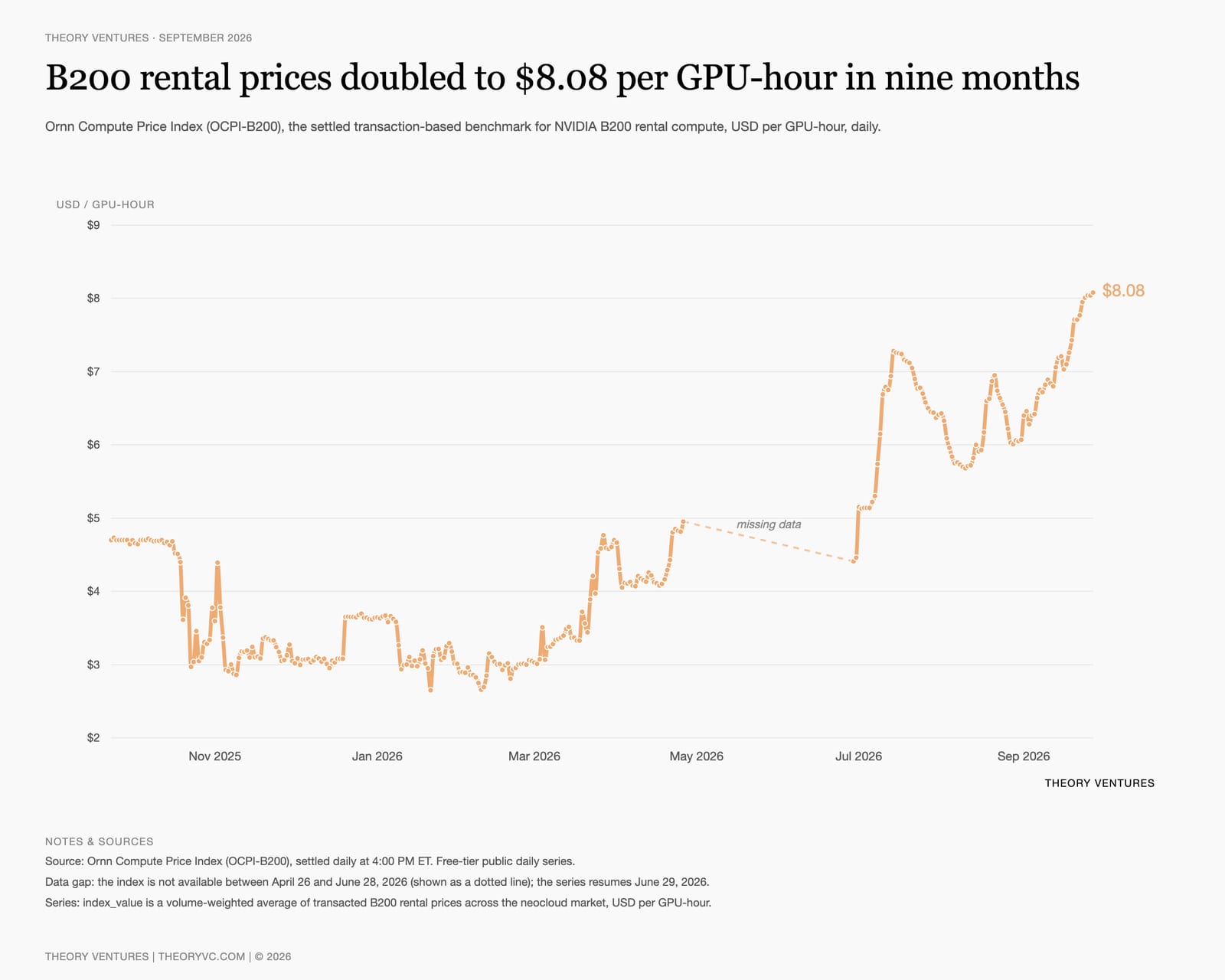
GPU rental prices doubled in six months, from $4.40 to $8.08 per GPU-hour, even as Claude Opus 5.5 costs 40% l…
Anthropic released Claude Sonnet 5.5, which it says runs output more than 30 percent faster and costs up to 30…

The University of Florida found only 10-15% of its data was semantically defined; using NaviGator AI and Snowf…