
A survey of 101 large enterprises found that 68% experienced confident but wrong answers from AI agents due to missing or inconsistent business context over the past six months, up from 57% the prior month.
Surprisingly, companies with a governed context layer in production—meant to prevent such failures—report failure rates more than twice as high as those without, suggesting these safeguards are exposing rather than eliminating the underlying problem of incomplete or inconsistent business data.
What happened
A VB Pulse survey of 101 large enterprises found that 68% traced a confident but wrong AI agent answer to missing or inconsistent business context in the past six months, up from 57% in June. Thirty-seven percent reported this happening more than once. Notably, enterprises with a governed context layer in production (32% in July, up from 25% in June) report failure rates more than twice as high as those without one.
Why it matters
The findings suggest that adding safeguard layers to AI agents — designed to prevent wrong answers — may be surfacing problems that were previously hidden rather than solving them. This reflects a deeper issue: enterprises are discovering that AI agents' failures often stem from gaps or inconsistencies in the business context they're given, not from the AI's reasoning itself. For businesses investing in AI governance, the data indicates detection and transparency are improving, but the underlying problem persists.
What to watch
The month-to-month climb in reported failures (57% in June → 68% in July; recurring failures 31% → 37%) suggests the issue is worsening or becoming more visible as more enterprises deploy context layers. How companies close the gap between the context they provide and the accuracy their agents need remains the open question.
Ask the AI about this article →
The paradox at the heart of this data is striking: enterprises implementing safeguards specifically designed to prevent AI agents from confidently giving wrong answers end up reporting those failures at more than twice the rate of enterprises without such safeguards. This does not indicate that the safeguards are failing; rather, it suggests they are working as intended by surfacing problems that previously went undetected or unlogged.
The month-to-month increase in reported failures—from 57% in June to 68% in July—paired with the simultaneous growth in governed context layer adoption (25% to 32%) points to a maturation cycle in enterprise AI deployment. Companies are moving from a phase of implicit tolerance of AI errors to a phase of explicit detection and measurement. The parallel rise in both metrics suggests that as more enterprises instrument their AI systems with context layers and governance, they are discovering just how pervasive the problem of incomplete or inconsistent business context truly is.
The core issue the body identifies is that AI agent failures stem primarily from gaps or inconsistencies in the business context the agent is given, not from the AI's reasoning process itself. This distinction matters for where enterprises should focus their remediation efforts: not on the model or the agent logic, but on the quality, completeness, and consistency of the business data and rules they provide to the agent.
AI-summarized, only the topics you pick — one digest a day via Email, Slack, or Discord.
Free · takes 30 seconds · unsubscribe anytime
Ask AI anything about this article. Q&As are published on this page for other readers too.
Anthropic plans to "match or beat" the size of SpaceX's $75 billion IPO (or $86.2 billion including the over-a…

Pew Research released a study on Thursday finding that over one-third (35%) of English-language web pages publ…

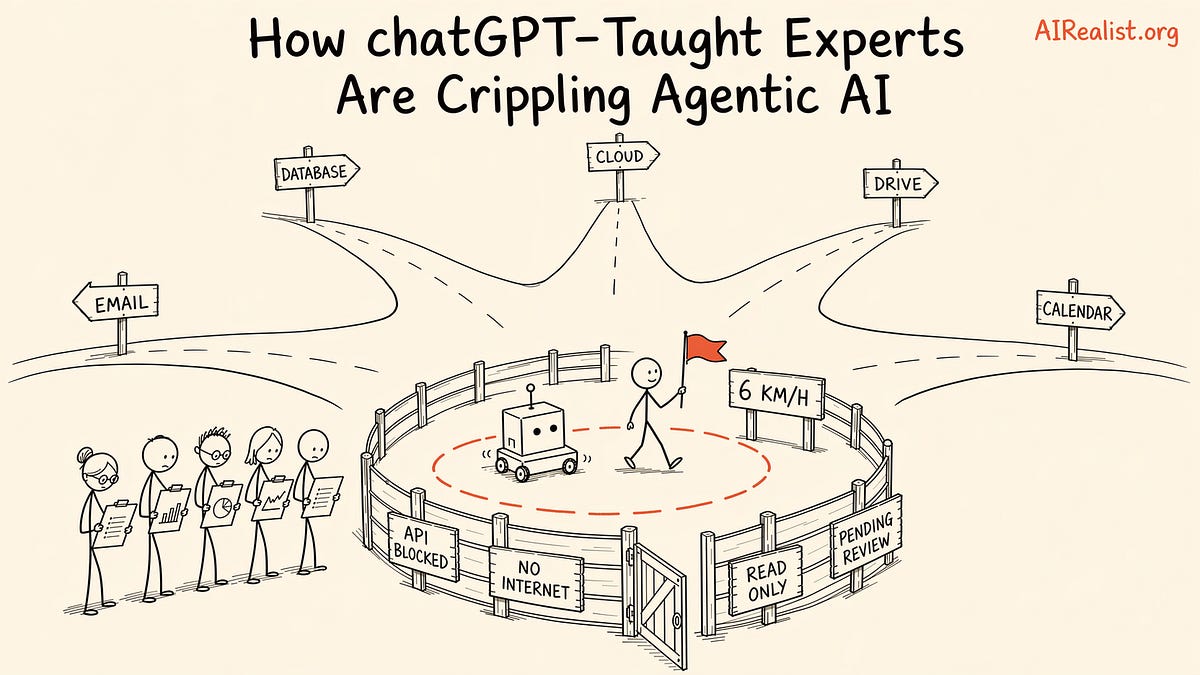
The article argues that non-expert managers and consultants—people whose only exposure to AI comes from ChatGP…
OpenAI is previewing transparent background support for GPT-Image-2 through its API, allowing users to generat…

OpenAI's GPT-5.6 Sol, launched July 9, drove a 35 percent revenue increase this quarter, with enterprise reven…

At the "AI on Chips: Semiconductor Industry Trends Forum" hosted by DIGITIMES, industry experts highlighted th…