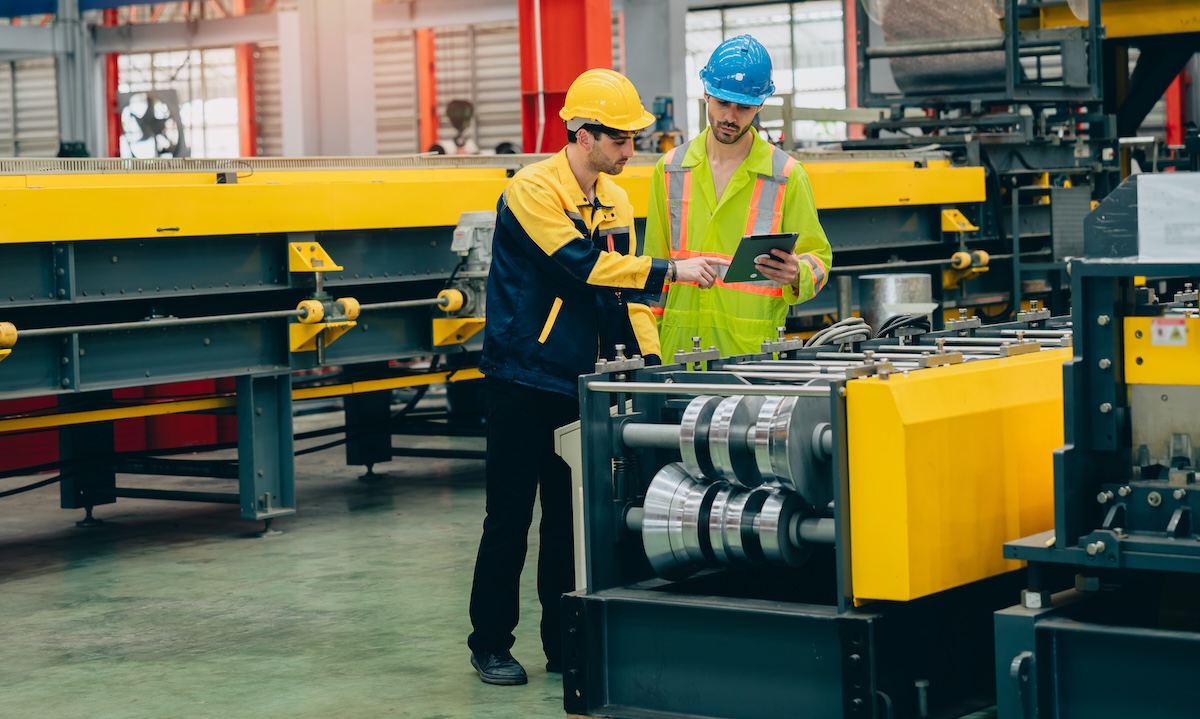
What happened
PepsiCo used Siemens' Digital Twin Composer, built on Nvidia Omniverse, to model a U.S. Gatorade plant virtually; throughput rose 20% in three months and up to 90% of design flaws were flagged before construction.
Why it matters
PepsiCo estimates capital expenditure reductions of 10% to 15% by extracting latent capacity from existing assets rather than funding new ones, shifting physical AI from new-build projects to retrofitting factories already standing.
What to watch
Harmoni raised $10 million in Series A funding led by Bessemer Venture Partners on Sept. 9 to target roughly 280,000 U.S. factories still running traditional machinery, a test of whether retrofit demand matches that installed base.
WHO IT HITSManufacturing and plant operations leaders at consumer-goods and automotive companies can add capacity without new construction, while equipment financiers and project lenders may see capex cycles shift toward retrofits rather than greenfield builds.
Ask the AI about this article →
Summaries like this, in your inbox every morning.
The physical AI opportunity is often framed as building new, highly automated factories. The deployments highlighted here point in a different direction: layering AI, sensors, and robots onto production systems that already exist. PepsiCo's work with Siemens' Digital Twin Composer, built on Nvidia Omniverse, let the company model a plant virtually before committing capital to physical changes. At a U.S. Gatorade plant, that approach lifted throughput 20% in three months and flagged up to 90% of design flaws before construction began.
BMW's test of Figure 02 robots at its Spartanburg, South Carolina plant follows the same logic. The robots spent about 1,250 operating hours over 10 months in 2025 retrieving and positioning sheet metal parts for welding, supporting production of more than 30,000 X3 vehicles. BMW has since moved a newer Figure model into logistics work at the same plant and started a separate humanoid pilot using Hexagon's AEON robot at its Leipzig plant in Germany. The automaker already runs more than 600 AI use cases across its business, including factory systems that inspect welds and flag defects in real time.
Startups are betting that retrofitting, not rebuilding, is where the larger market lies. Harmoni raised $10 million in Series A funding led by Bessemer Venture Partners on Sept. 9, targeting roughly 280,000 U.S. factories that still run traditional machinery and labor-intensive processes. The outcome hinges on whether that installed base adopts retrofit technology at scale, and whether the returns seen at PepsiCo and BMW can be reproduced across older plants. If they can, the economics of physical AI may be measured less by robot sales and more by how much additional capacity existing factories can unlock.
For example, today's edition would include:
AI-summarized, only the topics you pick — one digest a day via Email, Slack, or Discord.
Free · 30 seconds with Google · unsubscribe anytimeWhat is AIToday? →
Ask AI anything about this article. Q&As are published on this page for other readers too.
Chevron jumped about 2.1% to $216.58 Tuesday afternoon as Brent crude climbed to $109.20 per barrel amid Saudi…
The AI Doc: Or How I Became an Apocaloptimist is now on Netflix, Amazon Prime, YouTube, and other major stream…
Walmart CEO John Furner is turning the retailer's 5,200 U.S

Coca-Cola President and CFO John Murphy told Yahoo Finance that AI is not 'the path forward' for the company's…
Perplexity released Portable Computer for Windows in partnership with Nvidia, via its existing Windows app
Meta introduced Meta One, a global subscription with 50+ features across Instagram, Facebook, WhatsApp, and Me…