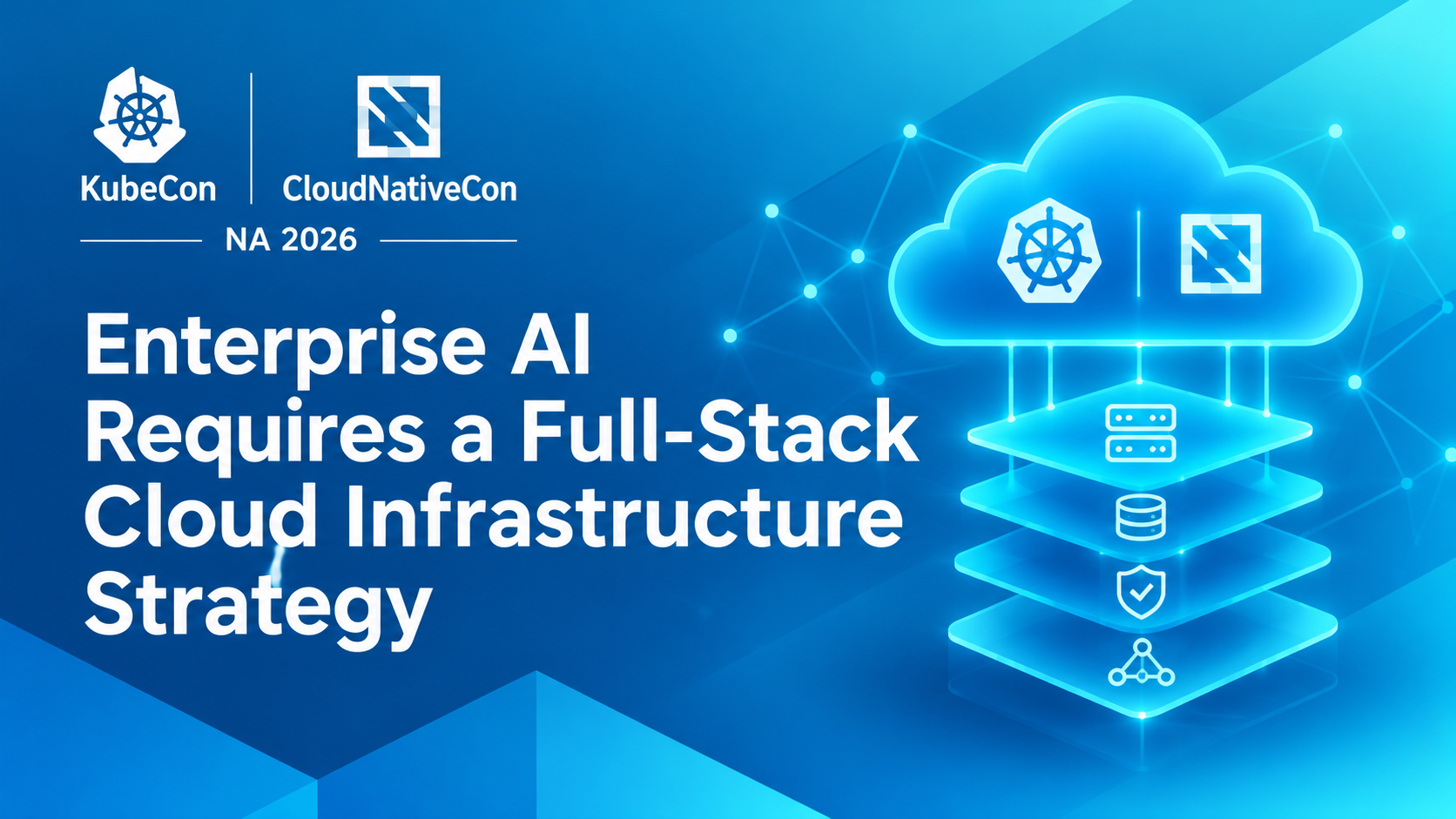
What happened
At KubeCon + CloudNativeCon North America 2026, Vultr CMO Kevin Cochrane said enterprises need a full cloud platform — compute, networking, storage and an open ecosystem — and predicted consolidation among neoclouds selling only bare-metal GPU capacity.
Why it matters
Cochrane argues bare-metal GPU capacity alone leaves enterprises with a second infrastructure silo, so providers that expand into full public cloud platforms may be better positioned to serve production AI workloads, per his prediction.
Summaries like this, every morning.
Vultr's position reflects a shift in what customers ask of AI infrastructure. The company entered the cloud market in 2014 with a developer-focused platform built around performance, cost efficiency and accessibility, then expanded into AI infrastructure offering both traditional cloud services and specialized GPU resources. Cochrane described that expansion as deliberate, prioritizing enterprise workload and platform-engineering requirements over GPU availability alone, and called Vultr "the tortoise in AI infrastructure."
The requirements Cochrane outlines follow from how AI adoption is changing. Early infrastructure demand came largely from hyperscalers, AI research organizations and startups building large-scale models, often through bare-metal GPU clusters. Enterprises now want AI agents that work alongside existing systems and comply with security requirements, which Cochrane says makes complexity and a lack of specialized skills major obstacles. Vultr's answer is an integrated environment supporting more than 60 Cloud Native Computing Foundation projects that customers can deploy directly.
On data sovereignty, Cochrane framed Vultr's regional model as an isolation architecture rather than a storage question: each of its 34 global data center regions operates independently, and data within a region remains resident there. On cost, he argued some organizations will post-train open-source models and run them on infrastructure they control, while stressing that not every enterprise should build and operate its own models. He also expects platform engineers to work more closely with business units and predicted consolidation among neocloud providers that remain focused on bare-metal GPU capacity.
Pick your industry and the AI tools you use, and get news related to your work every day.
Free · 30 seconds with Google · unsubscribe anytimeWhat is AIToday? →
Ask AI anything about this article. The AI reads this article, earlier AIToday articles, and Wikipedia, and cites its sources. Q&As are published on this page for other readers too.
Oxide Computer Co., which raised $445 million in October to expand rack production, built its business on the…
OpenAI now requires gateways and routers that provide third-party access to its AI models to be reviewed and a…
Anthropic shares traded as low as $83.15 on Friday, down more than 14% on their second day of trading, leaving…

A Zenn article by Hiromi lays out Continuous Reasoning Acquisition (CRA), a design for capturing veteran judgm…

Running the official harness, Claude Opus 5.5 wrote an ARC model with no gradient descent and no forward calls…
Major US tech companies are refocusing generative AI competition from answer quality toward agent capability…