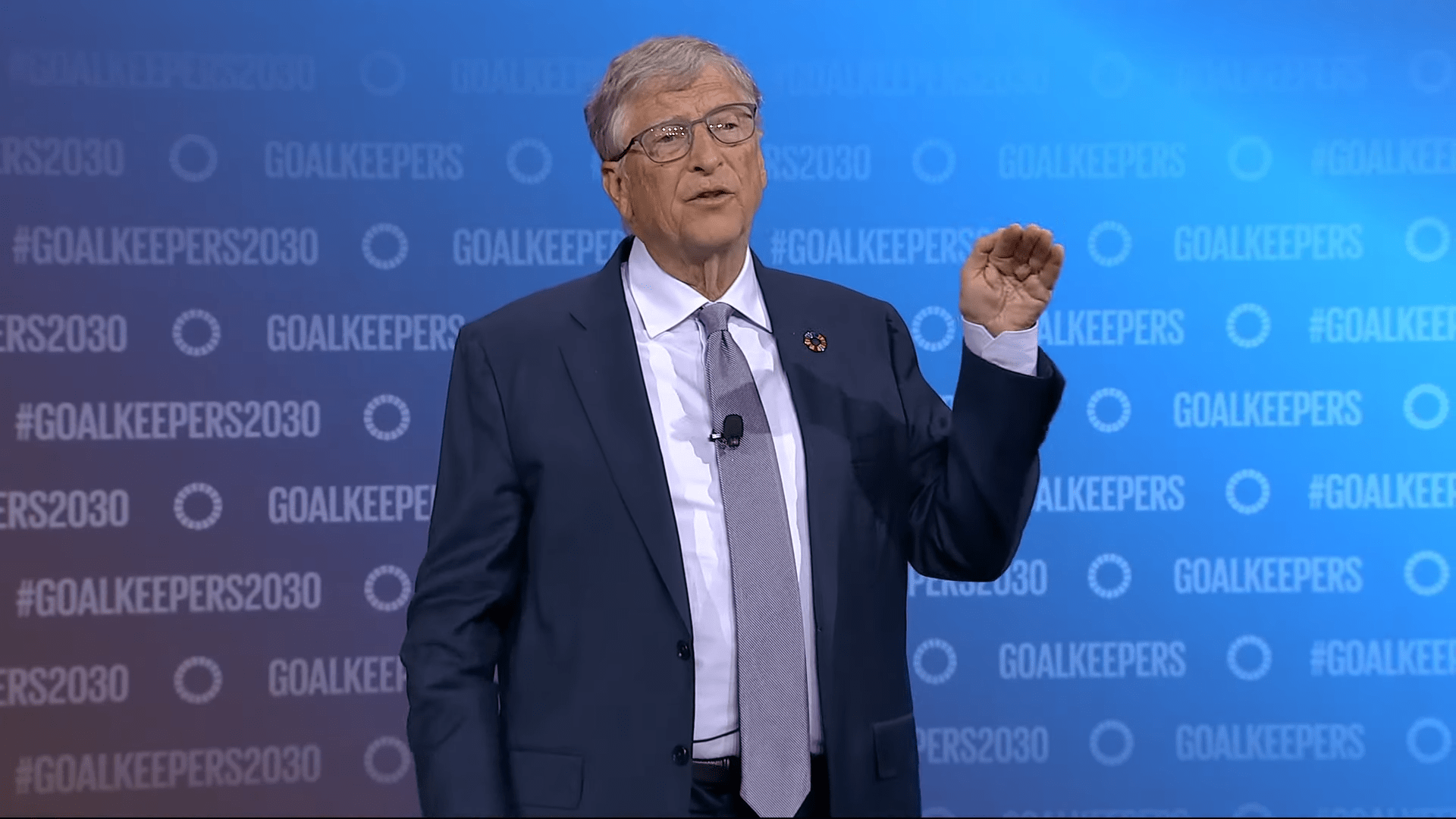
Bill Gates warns AI will cause mass unemployment and bioterrorism.
He criticizes the tech industry for downplaying risks because of money.
His proposed solutions include a tax on AI and a "Human Reserved" label for certain jobs.
What happened
Bill Gates has published an essay of nearly 6,000 words and given an interview with the New York Times in which he calls the AI age "one of the most turbulent times in human history."
Why it matters
Gates says the industry deliberately downplays the dangers because of the money at stake. He quotes insiders who say, "the next trillion dollars we're trying to raise," and argues this time is different because AI can surpass human cognition across industries in a single decade, not generations.
What to watch
Gates proposes a token tax on AI use and robots, and suggests certain jobs, such as caregiving, should stay reserved for humans, an idea he calls "Human Reserved."
Ask the AI about this article →
Bill Gates' warning is notable because of who he is. As the co-founder of Microsoft, he represents the rise of the computer industry, yet he says his own field shocked him. He specifically mentions that Anthropic's tool Claude Code made him realize that "these things are in a meaningful sense better than I am." He even admits a conflict of interest, noting he still has financial ties to the tech industry, though the profits flow to the Gates Foundation.
Gates frames his concerns around the speed of change. He argues that earlier tech shifts, like the PC, took twenty years to reshape work, but AI runs on devices people already own and uses plain language. Because it can adapt to us, he sees the impact happening across industries over a single decade rather than across generations. His three biggest worries stem from this speed: permanent job loss, the lowering of the bar for building bioweapons, and the psychological fallout from AI companions.
He is also critical of the policy response. Gates rejects self-regulation, saying "Self-regulation on the most dangerous tool ever invented? No, thanks!" Instead, he calls for a democratic process and new national and international institutions. His specific proposals include a token tax on AI use and robots, which he argues would counteract the current tax system that all but pushes companies to swap people for machines. He also supports the idea of a "Human Reserved" label for certain jobs like caregiving.
AI-summarized, only the topics you pick — one digest a day via Email, Slack, or Discord.
Free · takes 30 seconds · unsubscribe anytime
Ask AI anything about this article. Q&As are published on this page for other readers too.
Anthropic's IPO is set to value the company at around $2 trillion, with OpenAI targeting a similarly large fig…
Meta halted its planned AI-driven layoffs hours before the first round, after internal documents revealed a pl…

Goldman Sachs Global Institute co-head Jared Cohen argues that the world will be redesigned for machine intell…
Perceptron, founded in November 2024 by former Meta FAIR scientists Armen Aghajanyan and Akshat Shrivastava, l…

Particle, the AI newsreader startup founded by former Twitter engineers, introduced Radar, a podcast search en…

Z.ai, the maker of the GLM series, confirmed that Ox Alpha, a model launched anonymously on OpenRouter, is the…