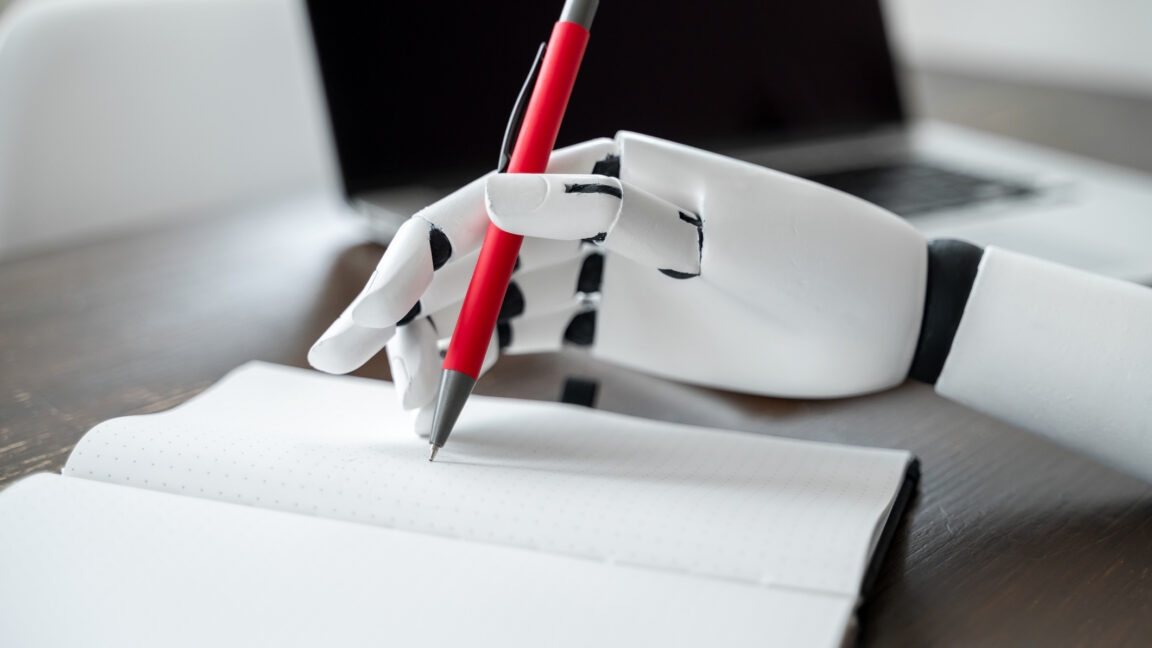
OpenAI has updated ChatGPT to block direct requests to generate content mimicking a specific author's style. The shift responds to public cases of AI-generated text that copied other writers' distinctive voices, and aligns with the Authors Guild's guidance that using AI to replicate an author's style risks unfair competition or copyright claims. While other AI models like Google's Gemini remain permissive on such requests, Perplexity AI takes a similar blocking stance.
Summaries like this, in your inbox every morning.
Sign up free →What happened
OpenAI has updated ChatGPT to decline direct requests asking it to generate content in the style of specific authors. The change follows public criticism over AI-generated text that mimicked other writers' distinctive voices, including a case last year where author Lena McDonald's book contained an apparent AI-generated passage that explicitly referenced copying another genre author's style.
Why it matters
The Authors Guild has urged writers to avoid using generative AI to copy fellow authors' voices or styles, warning it could expose them to claims of unfair competition or copyright infringement. OpenAI's move aligns ChatGPT with this stance and matches the company's existing policy for DALL·E 3 (which declines requests for images in the style of living artists), though other major LLMs like Google's Gemini remain more permissive on style-mimicry requests.
What to watch
The change is already frustrating some ChatGPT users who relied on style-specific prompts for their workflow. Other AI models take different approaches—Perplexity AI consistently refuses such requests like ChatGPT now does, while Anthropic's Claude and Microsoft's Copilot comply but note their awareness of the imitation issue.
OpenAI has updated ChatGPT to refuse direct requests asking the model to generate content in the style of specific named authors. The change addresses a practice that has drawn public criticism and legal concern over the past year. Last year, author Lena McDonald faced widespread criticism when her book included what appeared to be an AI-generated response that read, "I've rewritten the passage to align more with [fellow genre author] J. Bree's style…"—a stark illustration of how LLMs can be prompted to replicate another writer's distinctive voice. The Professional Authors Guild has now issued formal guidance urging writers to "respect your fellow authors and do not use generative AI to purposely copy or mimic the unique styles, voices, or other distinctive attributes of other writers' works in ways that harm the value of their works or attempt to profit from them." The organization has warned that mimicking a writer's unique voice or style could expose users to claims of unfair competition or copyright infringement. OpenAI's change aligns ChatGPT with its existing policy for DALL·E 3, which is "designed to decline requests that ask for an image in the style of a living artist." However, an extensive OpenAI model specification published in December did not include clearly stated prohibitions against replicating copyrighted material or mimicking style in written responses, suggesting the text-based policy is a more recent development. The landscape across major LLM providers remains inconsistent. According to a study by No Latency, Google's Gemini consistently complies with requests to copy an author's style, while Perplexity AI's models consistently refuse such requests and redirect them (similar to ChatGPT's new approach). Anthropic's Claude and Microsoft's Copilot occupy a middle ground—they comply with style-mimicry requests but include qualifications that suggest awareness of the imitation issue. The change has already caused friction among some longtime ChatGPT users. On Reddit, user Dazzling-Major-5620 noted, "Now Ms. GPT says she can't generate content in the style of specific authors. My prompts were soooo specific and I got exactly what I wanted out of them… I have no idea how to get around this other than maybe feed it prose I already edited that's technically mine?" The frustration reflects a broader challenge: while the ethical and legal case against copying an author's style is strengthening, users accustomed to using the technology for precisely that purpose now face workflow disruption.
The rise of generative AI has surfaced a tension between creative capability and ethical use. OpenAI's DALL·E 3 has long declined requests for images in the style of living artists—a policy now extended to text-based style mimicry in ChatGPT. This shift reflects growing concern over documented cases where writers have used LLMs to copy other authors' distinctive voices, most publicly when author Lena McDonald's book included an apparent AI-generated passage that explicitly stated it was rewritten to match another genre author's style. The Authors Guild has formalized guidance against this practice, warning that mimicking a fellow writer's voice or style could expose users to unfair competition or copyright claims. However, the AI industry has not standardized on this approach. No Latency's study found that different major models occupy different positions on the spectrum—Google's Gemini and others remain willing to comply with style-mimicry requests, while Perplexity AI takes the same strict stance as ChatGPT. This patchwork of policies suggests the broader question of style protection in the age of AI remains unsettled.
AI-summarized, only the topics you pick — one digest a day via Email, Slack, or Discord.
Free · takes 30 seconds · unsubscribe anytime
No comments yet. Be the first to share your thoughts!
Log in to join the discussion

Get curated AI news from 200+ sources delivered daily to your inbox. Free to use.
Get Started FreeFree · takes 30 seconds · unsubscribe anytime
