What happened
Anthropic's Claude Opus 5.5 and Claude Sonnet 5.5 are now available on Amazon Bedrock in AWS GovCloud (US), with Claude Code supported through both the bedrock-runtime and bedrock-mantle endpoints.
Why it matters
Teams with elevated compliance needs can now run Claude Code workflows inside AWS GovCloud (US), using identity controls, logging, and token guardrails to keep development aligned with their regulatory obligations.
What to watch
Whether this path fits a given organization hinges on its own compliance program, since Claude Code runs on local developer machines and needs separate security evaluation from the Amazon Bedrock inference layer.
WHO IT HITSGovernment contractors and regulated enterprises with elevated compliance needs can now configure Claude Code to run on Amazon Bedrock inside AWS GovCloud (US), a change that lands most directly on their security and platform engineering teams.
Summaries like this, in your inbox every morning.
The arrival of Claude Opus 5.5 and Claude Sonnet 5.5 on Amazon Bedrock in AWS GovCloud (US) is framed by the article as an on-ramp for AI-assisted development where regulatory or compliance requirements apply. The two Claude 5.5 models each carry FedRAMP Class D certification on Amazon Bedrock, while Claude Sonnet 5, already in the catalog, holds both FedRAMP Class D (formerly High) certification and DoD IL4/IL5 authorization. That difference in compliance coverage is why the article suggests teams defaulting to Claude Sonnet 5 for workloads requiring IL4/IL5, and treating Claude Sonnet 5.5 as a step up on coding and knowledge work at a lower cost per task, with Claude Opus 5.5 reserved for deeper reasoning and longer autonomous runs.
Operationally, the post walks through installing Claude Code and pointing it at Bedrock using either the interactive setup wizard, manual environment variables, or the Bedrock Mantle endpoint. It places weight on separating the inference layer, which Amazon Bedrock secures, from Claude Code itself, which runs on local developer machines and needs its own security review. The article also points to IAM Identity Center, managed permissions, CLAUDE.md memory files, and per-user token guardrails as controls that govern how the tool is rolled out, alongside caveats that Guardrails and invocation logging are exclusive to the bedrock-runtime endpoint.
What this hinges on is whether an individual organization's compliance program treats this configuration as suitable; the article explicitly says the approach may not fit every organization and that current model certification status should be verified. For security and platform teams in regulated environments, the practical test is likely whether their own review, quota planning, and endpoint choice line up with the authorization pathway they need.
Pick your industry and the AI tools you use, and get news related to your work every day.
Free · 30 seconds with Google · unsubscribe anytimeWhat is AIToday? →
Ask AI anything about this article. The AI reads this article, earlier AIToday articles, and Wikipedia, and cites its sources. Q&As are published on this page for other readers too.
Ghost AI raised $11 million, led by Andreessen Horowitz with Abstract, Audacious Ventures, Nova and SV Angel…

Utah cleared Nolla Health's pilot letting its AI prescribe topical acne creams after a face scan, with no huma…

Moonshot AI closed its final private round at about a $50 billion valuation and is aiming for a Hong Kong IPO…

OpenAI will roll out invisible text watermarks to all ChatGPT and Codex plan users in the EU within weeks, and…
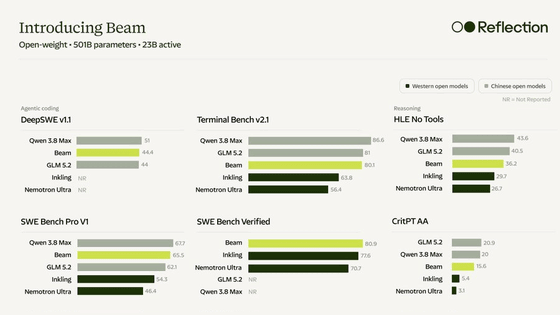
Reflection announced Beam, a 501B-parameter open-weight model with 23B active parameters, claiming parity with…
A Stanford, Carnegie Mellon, UC Berkeley, and Microsoft Research team ran 6,800+ math, coding, and science tas…