What happened
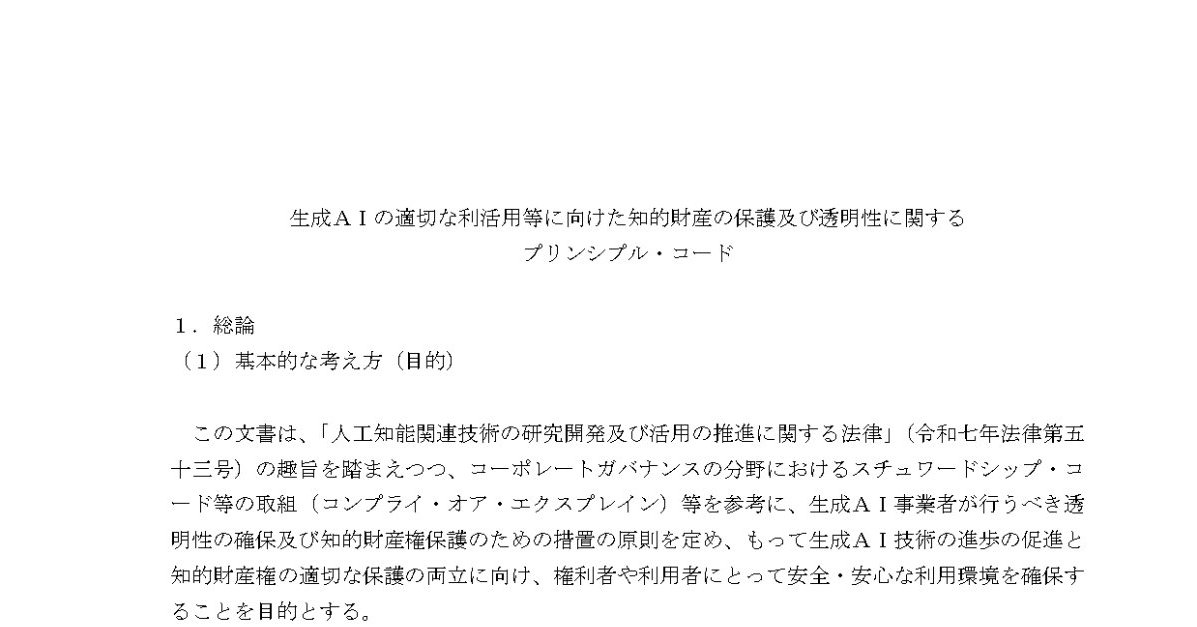
The Japanese government on August 25 established a "Principles Code" urging generative AI providers to ensure transparency and protect intellectual property rights. There is no legal binding force; companies are asked to comply voluntarily.
Why it matters
The code targets developers and providers of AI models and services, including foreign companies operating in Japan. It covers disclosing information about AI models, responding to rights holders' inquiries, and handling users' disclosure requests. Exemptions apply to systems deemed to have extremely low risk of infringing third-party rights.
What to watch
Businesses are expected to follow a "comply or explain" approach, meaning they either implement the principles or give reasons for not doing so. The government will publish a list of companies that report their acceptance status.
Summaries like this, in your inbox every morning.
The Principles Code marks Japan's attempt to set ground rules for generative AI without heavy regulation. The government expects voluntary cooperation from developers and service providers. This approach aims to balance innovation with protecting creators' rights. The code's coverage of foreign companies shows Japan's intent to apply consistent standards to all AI services in the country. The "comply or explain" mechanism gives flexibility to businesses while maintaining public accountability. Public listing of companies that accept the code may create peer pressure for wider adoption. However, concrete effects depend on how many firms choose to participate and follow through.
Pick your industry and the AI tools you use, and get news related to your work every day.
Free · 30 seconds with Google · unsubscribe anytimeWhat is AIToday? →
Ask AI anything about this article. The AI reads this article, earlier AIToday articles, and Wikipedia, and cites its sources. Q&As are published on this page for other readers too.
Meta's new commercial terms, effective October 30th, appear to let it crawl and train AI on content from websi…

Taiwan is considering much stricter export controls on AI chip sales to China, part of a greater alignment wit…

Nichiren announced its generative AI voice usage guideline on October 15, built on three pillars: prior notice…
At the Most Powerful Women Summit, Marissa Mayer said anyone who claims to know how AI will play out is 'eithe…
SHIFT announced it began a project for the Acquisition, Technology & Logistics Agency (防衛装備庁) covering AI-rela…
After its first meeting Thursday, the White House AI task force formally adopted its charter, opening a 120-da…