
PORTool, developed by researchers at Purdue University and Apple, generates a rewarded rollout tree where trajectories share prefixes before branching, enabling direct comparisons among alternative tool-use decisions within the same context.
The algorithm estimates each step's importance using a correctness-dominant signal—whether descendants of that step can ultimately produce a correct final answer—plus an auxiliary term indicating whether the step's tool calls execute successfully.
Experiments show PORTool improves final-answer accuracy while reducing tool-call steps compared with state-of-the-art baselines, with ablation studies confirming the robustness of the proposed step-wise importance estimates.
The paper was accepted at the Fifth Workshop on Natural Language Generation, Evaluation, and Metrics at ACL 2026.
Ask the AI about this article →
For example, today's edition would include:
AI-summarized, only the topics you pick — one digest a day via Email, Slack, or Discord.
Free · takes 30 seconds · unsubscribe anytimeWhat is AIToday? →
Ask AI anything about this article. Q&As are published on this page for other readers too.
Google DeepMind chief Koray Kavukcuoglu said being at the frontier of AI is the only thing that matters to the…

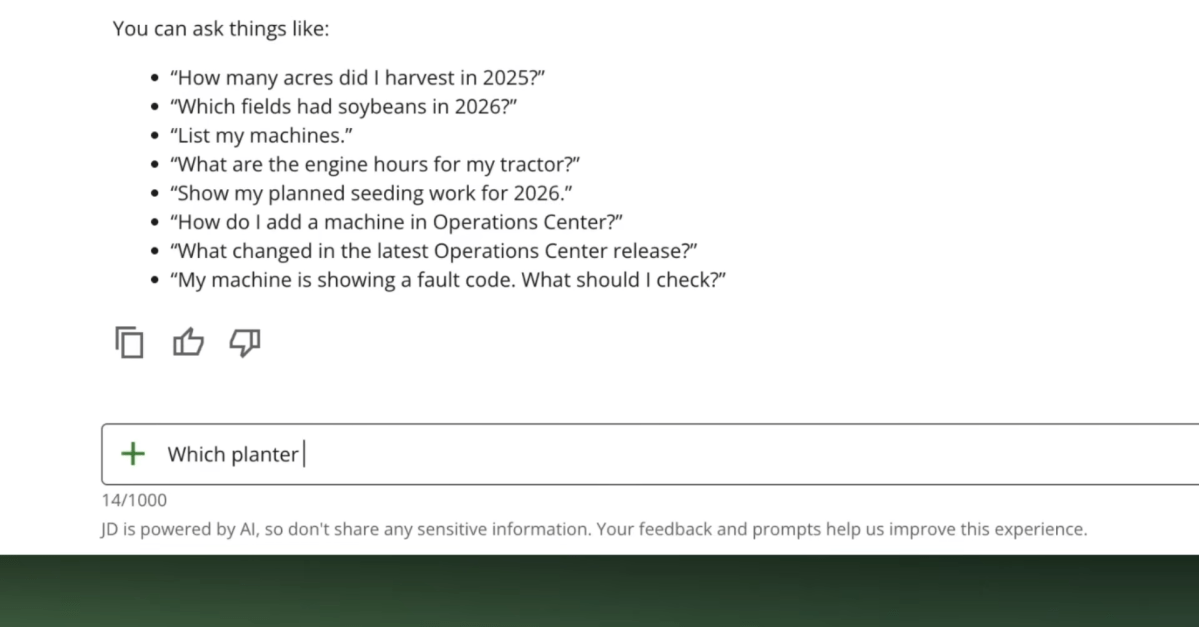
John Deere is testing an AI assistant called “JD” that answers farmers' questions on topics like equipment set…
Google has launched Google Pics, a new suite of creative design tools for Workspace users, built around Gemini…

OpenAI said today that it is integrating ChatGPT Health with Epic's electronic health record (EHR) system, whi…

Google is launching Google Pics, an AI-powered image creation and editing tool that will be part of Google Wor…

Google DeepMind launched agentic video understanding across Gemini 3.7 Flash, 3.6 Flash, and 3.5 Flash-Lite