
What happened
AI Labo ran the same model and the same six-bug, three-module task two ways; the Directed Graph version kept 20 / 20 test passes but used 7回 ➔ 3回 turns and 23,322 ➔ 5,966 input tokens.
Why it matters
The quality did not drop even as input tokens fell 74.4%, suggesting teams can shrink their AI coding bills by fixing the workflow order in code instead of letting the model decide it.
Summaries like this, every morning.
The experiment is a direct test of a design argument by @hanakoxbt: that an agent's inner work should be a small loop of generate-and-verify, while the outer order of stages should be pinned down in ordinary code rather than left to the model. AI Labo built a fully offline sandbox VM in which the AI user and the grading user are separated by Linux UID and systemd namespaces, so the model could not read the hidden test file evaluation/judges.py. On that setup, the single-loop mode spent four of its seven turns on orchestration — inspecting files, running an initial test, re-running tests, and submitting — and its context grew from 1,652 input tokens at the first call to 4,318 by the submit step. The directed-graph mode instead reset context at each node and let a stage-specific verifier advance the workflow automatically, holding input near 2,000 tokens per call. The body frames the takeaway as a separation of reasoning (what to do) from control (how to proceed), and notes that developers could then approve only the final gate once every stage verifier has passed.
Pick your industry and the AI tools you use, and get news related to your work every day.
Free · 30 seconds with Google · unsubscribe anytimeWhat is AIToday? →
Ask AI anything about this article. The AI reads this article, earlier AIToday articles, and Wikipedia, and cites its sources. Q&As are published on this page for other readers too.
Crux Labs launched with over $6 million in funding led by Benchstrength and Misneach, with Analog Ventures and…

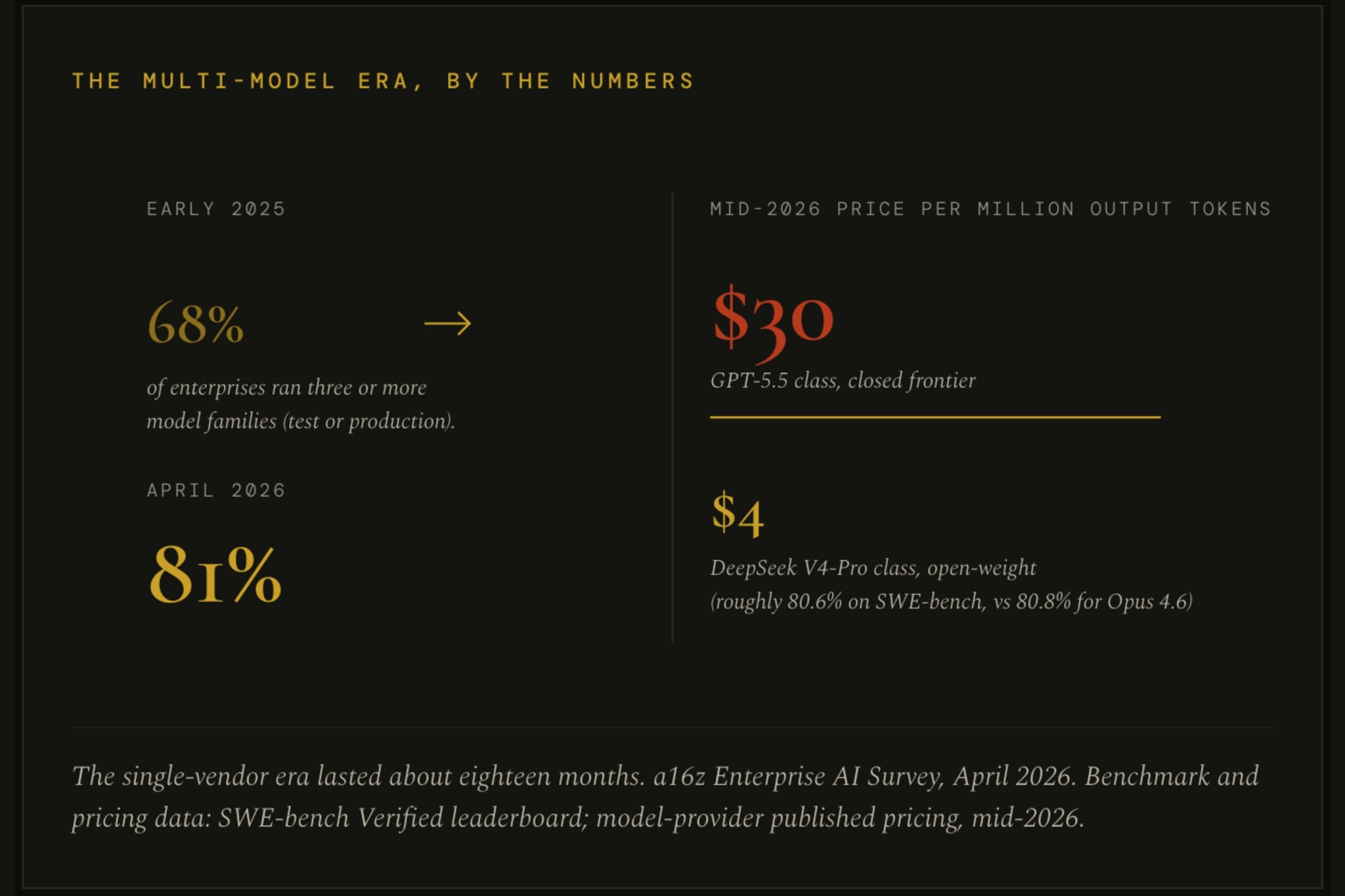
In a Fortune essay, Collective[i] argues companies should treat AI models as swappable commodities and own the…
A 31-year-old Seattle woman on epilepsy medication died in February 2026; her parents sued OpenAI in October 2…

Nscale is asking US investors for a roughly $30 billion valuation on first-half 2026 revenue of $140.6 million…

Studying the four most widely used agent frameworks, Partnership on AI researchers found key observability req…

Amazon added more than 100 new shopping-related capabilities to Alexa, including subscription and list managem…