What happened
Nvidia shares have gained 12% so far in 2026 (as of July 22), trailing the exceptional growth rates of recent years—up 39% in 2025, 171% in 2024, and 239% in 2023. Revenue surged 85% year over year in the fiscal 2026 second quarter (ended April 26) to $81.6 billion, a fresh record, driven by hyperscalers' aggressive spending on AI data centers.
Why it matters
The stock's slower gain suggests investor concerns about durability. Hyperscalers are developing their own custom chips to reduce dependence on Nvidia's GPUs, introducing long-term risk even as demand remains strong today. Wall Street expects revenue growth to decelerate to 219% between fiscal 2026 and fiscal 2029—significantly slower than the 700% growth reported in the prior three years.
What to watch
Nvidia shares trade 10% off their peak at a forward price-to-earnings ratio of 23.6, a 10% premium to the S&P 500 index. The company's CFO stated that AI infrastructure spending is on track to reach $3 trillion to $4 trillion annually by the end of this decade—a key metric for Nvidia's near-term outlook.
Ask the AI about this article →
Summaries like this, in your inbox every morning.
Nvidia's 12% gain in 2026 marks a dramatic deceleration from the stock's prior performance, where it jumped 239% in 2023, 171% in 2024, and 39% in 2025. The slowdown comes despite the company reporting record quarterly revenue of $81.6 billion in its fiscal 2026 second quarter, with 85% year-over-year growth driven by hyperscalers' continued aggressive investment in AI data center infrastructure. The divergence between operational strength and stock performance suggests that investors have begun pricing in longer-term concerns about the durability of Nvidia's AI boom.
Two factors appear central to this repricing. First, major cloud providers and hyperscalers—Nvidia's largest customers—are actively developing custom silicon to reduce their reliance on Nvidia's GPUs. While demand remains robust today, this represents a structural threat to Nvidia's moat over the coming years. Second, sell-side analysts now expect revenue growth to decelerate to 219% between fiscal 2026 and fiscal 2029, a substantial slowdown from the 700% growth achieved in the prior three years. Both developments signal that the market views the extraordinary growth phase as finite. Management, through CFO Colette Kress, has noted that AI infrastructure spending is on track to reach $3 trillion to $4 trillion annually by decade's end—a large number, but one that implies a maturation of the market rather than perpetual acceleration.
For example, today's edition would include:
AI-summarized, only the topics you pick — one digest a day via Email, Slack, or Discord.
Free · 30 seconds with Google · unsubscribe anytimeWhat is AIToday? →
Ask AI anything about this article. Q&As are published on this page for other readers too.
OpenAI reportedly agreed to buy smartphone camera software startup Glass Imaging for more than $300 million, p…

Aron Inc. launched with $8 million raised across two rounds

At the AI ROI in Contact Center Summit, analysts Bob Laliberte and Zeus Kerravala said contact center AI ROI w…

Pedro Andrade, Talkdesk's VP of AI and generative AI business specialist, told theCUBE that CXA is "an operati…

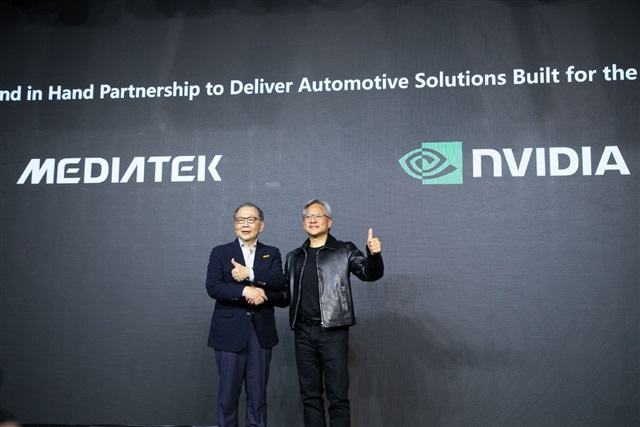
Nvidia invested US$3.5 billion in MediaTek convertible bonds, expanding cooperation into custom AI chips, AI P…
TechTouch surveyed 319 people overseeing generative AI at firms with over 1,000 employees