What happened
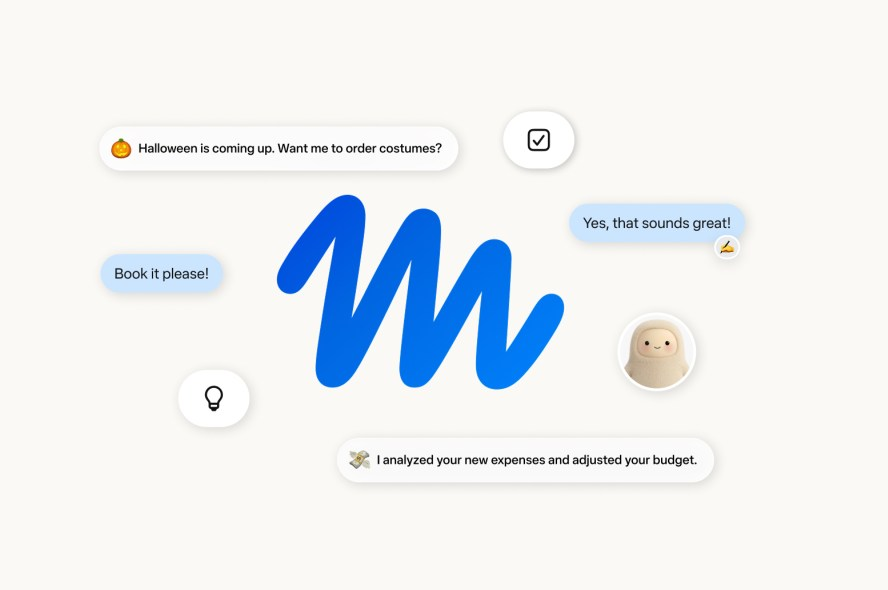
Meta Platforms Inc. announced Muse, a personal AI agent available in the U.S. today on iOS, Android, and the web. It can automate tasks like sending emails and booking flights.
Why it matters
Muse competes with viral agents like OpenClaw and NanoClaw, offering up to 100 million tokens per week free. It was built by Meta Superintelligence Labs, which Meta established about one year ago.
What to watch
The success hinges on users trusting Meta, despite its reputation and legal issues. Meta plans a future version with a Confidential VM where users manage security keys locally, keeping even Meta out.
WHO IT HITSGeneral consumers in the U.S. who are willing to delegate digital tasks to an AI agent will be affected, as they must weigh convenience against granting Muse access to their email, calendar, financial, and health data. Meta's future enterprise or privacy-sensitive users will also be impacted by the forthcoming Confidential VM, which will offer stronger security guarantees.
Ask the AI about this article →
Summaries like this, in your inbox every morning.
Meta's entry into the personal AI agent space marks a significant move for the company, leveraging its Superintelligence Labs, a dedicated unit set up by Mark Zuckerberg about a year ago to better compete with the likes of Google and OpenAI. Muse was tested internally under the project name "Hatch," where employees used it to operate third-party applications. This background suggests a strategic push to integrate AI agents into users' digital lives, automating tasks that involve sensitive data like email, financial accounts, and smart home controls.
The company is differentiating Muse through its 'secure by design' architecture, specifically the Secure VM which isolates agent activity, and Sentinel, a tool that monitors data movement and requires explicit user approval for actions. However, a fundamental tension remains: while these systems are designed to protect users from malicious actors, Meta itself technically retains the ability to access the virtual machines, a fact acknowledged by the company's own engineering leadership. This notable vulnerability could undermine user trust, especially given Meta's history.
The future trajectory of Muse may depend on the delivery of the promised "Confidential VM" update. By placing security key management in users' hands, Meta would close the last gap of internal access. The success of the product likely hinges on whether the company can convincingly align its privacy rhetoric with the technical and policy guarantees it provides, thus overcoming a skeptical public's concerns about data safety.
For example, today's edition would include:
AI-summarized, only the topics you pick — one digest a day via Email, Slack, or Discord.
Free · 30 seconds with Google · unsubscribe anytimeWhat is AIToday? →
Ask AI anything about this article. Q&As are published on this page for other readers too.
OpenAI announced ChatGPT Images 2.5, an update to ChatGPT Images 2.0 that debuted in April
On September 8, OpenAI announced its unreleased model produced a proof establishing singularities for the Navi…
ITmedia's analysis examines why individuals and enterprises use local LLMs, despite the hardware and electrici…
Nvidia reported earnings and guidance that smashed expectations, with shares up about 7%

SoftBank Group will meet investors in New York next week to assess demand for a potential U.S
OpenAI announced that its agents solved the Navier–Stokes existence and smoothness problem, one of the Millenn…