AIToday
AI Business & IndustryFortune AIPublished: Aug 8, 2026, 19:00 JST6 min read

Chevron powers Microsoft AI with $370B energy deal in West Texas

Chevron powers Microsoft AI with $370B energy deal in West Texas

Key takeaway

  • Chevron has signed a landmark 20-year deal with Microsoft to supply 2.67 gigawatts of natural gas power to an AI data center complex in West Texas starting in 2028, positioning the oil giant as the energy leader for AI infrastructure across Big Oil.

  • The project, called Kilby, reflects a shift in hyperscaler strategy: as AI power demands outpaced the U.S. grid's capacity, companies like Microsoft relaxed their renewable-only focus and began seeking reliable, affordable natural gas partnerships with companies that can manage land, resources, equipment, and financing at scale.

3 Key Points

  1. What happened

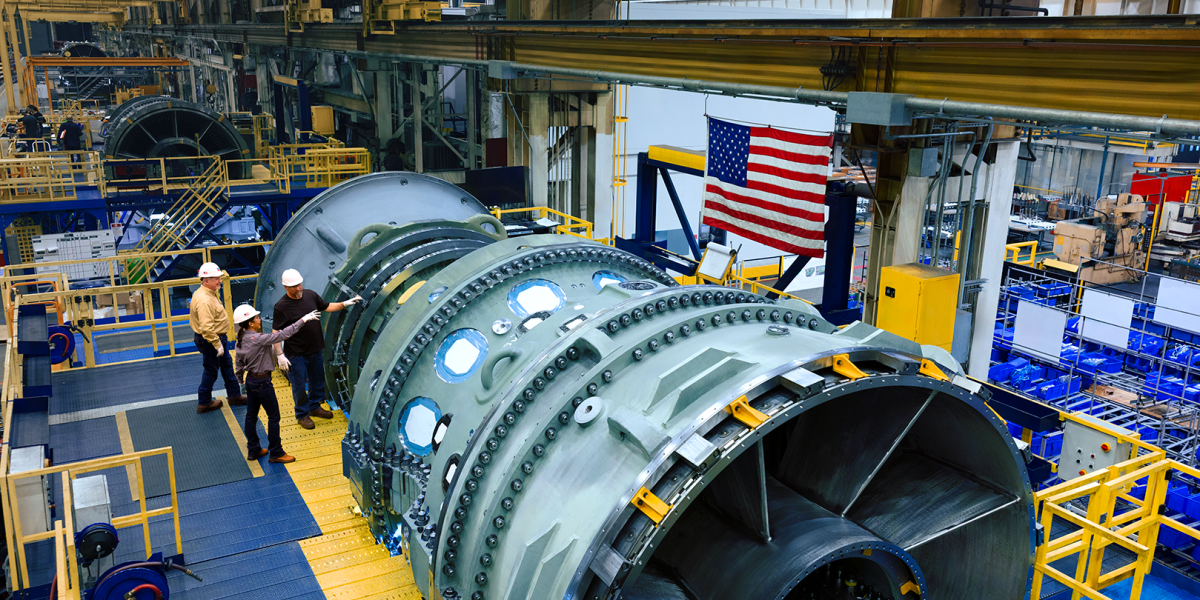
    Chevron signed a 20-year deal with Microsoft to supply 2.67 gigawatts of natural gas-fired power to a data center complex called Project Kilby in rural West Texas, slated to come online in 2028 and ramp through 2031. The project includes land, gas resources, equipment from GE Vernova and Caterpillar, and backing from investment firm Engine No. 1.

  2. Why it matters

    The deal positions Chevron as the dominant energy partner for AI hyperscalers at a moment when data centers need massive, reliable power that renewable energy alone cannot provide. Chevron now brings unique capabilities—scale, land, natural gas reserves, project management, and financial resources—that competitors lack, allowing the company to line up multiple similar projects across West Texas, the Rockies, the Midwest, and other gas-rich regions.

  3. What to watch

    Chevron is eyeing expansion of Project Kilby-like deals in the Rockies, Eagle Ford Shale in South Texas, and the western Midwest including Ohio, Illinois, and Indiana. The company also plans to add carbon capture, renewable energy, and eventually clean geothermal power to these projects. Chevron chairman and CEO Mike Wirth indicated the Permian basin could grow significantly if more hyperscaler deals materialize.

In Depth

Read the full story

Chevron has emerged as the unlikely energy powerhouse of the AI boom after signing a transformative 20-year deal with Microsoft to build and operate Project Kilby, a data center complex in rural Reeves County, West Texas. The project will supply 2.67 gigawatts of natural gas-fired electricity, with room to expand using solar and batteries, enough power in total to serve more than 2 million homes—though all of it will be dedicated to Microsoft's AI infrastructure. The facility is named after Jack Kilby, the Texas Instruments inventor of the integrated circuit and handheld calculator, early precursors of AI.

The project is slated to come online in 2028 and ramp up through 2031. It represents the first of potentially several massive deals Chevron expects to strike across gas-rich regions including the Permian Basin, the Rockies, Eagle Ford Shale in South Texas, and the western Midwest (Ohio, Illinois, and Indiana). Chevron New Energies president Jeff Gustavson told Fortune that after the June announcement, "everyone wants to talk to us"—not just hyperscalers but gas turbine manufacturers facing long equipment queues and third-party suppliers critical to the work. Chevron brings the scale, project management, land, natural gas resources, and financial heft that no single competitor can easily assemble alone.

The deal bundles Chevron's land and gas reserves, additional land and water services from Texas Pacific Land, financial backing from investment firm Engine No. 1, at least seven large GE Vernova turbines, and several smaller Caterpillar Solar Titan 350 turbines. Chevron's market cap of about $370 billion and its recently posted most profitable quarter ever underscore its ability to execute at scale. Gustavson emphasized that Chevron is "selective" precisely because of these unique capabilities: "There are not many companies that can do all the things a Chevron can, and we have just proven that we can actually make this real."

The path to this deal reflects a dramatic reversal in hyperscaler strategy. For roughly a decade, Chevron worked with Microsoft on cloud computing services but was sidelined when AI infrastructure planning began, because hyperscalers insisted on renewable power only. That changed about two years ago as AI power demand spiked globally and the U.S. grid proved unable to handle the loads required. Hyperscalers and policymakers, concerned about consumer electricity prices and grid stability, shifted focus to "reliable, affordable energy." Microsoft and others were willing to relax their climate goals to achieve AI speed and scale. Microsoft president of Cloud Operations + Innovation Noelle Walsh stated: "The rapid growth we're experiencing in AI and cloud, driven by customer demand, requires energy infrastructure that can scale quickly and reliably. Our agreement with Chevron helps ensure we'll have dedicated, large-scale power to support the evolution and reliability of advanced compute."

West Texas emerged as the ideal first location because it has massive natural gas resources, ample available land, a deregulated power market, and established stakeholder relationships. Chevron reserved equipment a year and a half before the announcement and assembled the project with speed. The facility also sidesteps Texas Gov. Greg Abbott's temporary freeze on new data center grid interconnections by building "behind the meter"—generating its own power independently. Gustavson noted that Texas and the Austin administration have made clear: "If you want to build data centers in this state, we need you to bring your own power. This cannot impact our consumers." For Chevron and Microsoft, that constraint is no obstacle; when the grid eventually catches up, the project can join it, but there is no current urgency to do so.

Chevron chairman and CEO Mike Wirth indicated on his July 31 earnings call that the Permian Basin could grow significantly if more Project Kilby equivalents materialize: "Could the Permian grow? One hundred percent. The Permian is one of many options we have into the next decade for growth." Gustavson said the company will be "customer-led" on geography but is actively scouting the Rockies, Eagle Ford Shale, and the western Midwest. Among other oil majors, only ExxonMobil has comparable scale and natural gas reserves, but Exxon has focused more on carbon capture solutions for data centers rather than leading on project development. Chevron is also planning carbon capture growth alongside its new power plants. Gustavson acknowledged the environmental stakes: "This is the big question. The world is faced with this challenge. We're always trying to balance reliability and affordability with ever-cleaner energy," and pledged that Chevron and Microsoft would continue working together to integrate carbon capture, renewable energy, and eventually clean geothermal power into the infrastructure. Meanwhile, other ambitious AI campuses in Texas—including OpenAI's Stargate, Fermi's Project Matador, Pacifico Energy's GW Ranch, and Energy Abundance's Data City, Texas—remain on the drawing board and lack committed hyperscaler customers, leaving Chevron and Microsoft's deal as the most concrete and scaled AI energy project announced to date.

Context & Analysis

Chevron's Project Kilby deal reflects a fundamental shift in how the AI industry is sourcing energy. When the AI boom began roughly two years ago, hyperscalers focused exclusively on renewable power, and Chevron was largely excluded from those conversations because renewable energy is not a core strength. However, as global AI power demand spiked and the U.S. grid proved unable to handle the loads required, the calculus changed. Speed and reliability became the priority, and hyperscalers—including Microsoft—acknowledged that they needed reliable, affordable natural gas power delivered quickly. This shift opened an unexpected window for Big Oil.

Chevron's competitive edge lies in its ability to bundle assets and capabilities that no single competitor can easily replicate: vast natural gas reserves in the Permian Basin (the epicenter of U.S. energy extraction), ample land in sparsely populated regions, proven project management at scale, a market cap of about $370 billion, and demonstrated profitability (the company posted its most profitable quarter ever before the deal). Microsoft and other hyperscalers need all of these elements integrated into a single project, and Chevron can deliver them. The deal also sidesteps Texas Gov. Greg Abbott's temporary freeze on new data center grid interconnections by building "behind the meter"—generating its own power and operating independently rather than drawing from the state grid, which protects consumers from price spikes.

Gustavson's statement that "everyone wants to talk to us" after the June announcement indicates that Chevron now enjoys first-mover advantage. The company is positioned to be "selective" and has already begun scouting additional regions (the Rockies, South Texas, the Midwest) where natural gas reserves and available land create similar conditions. This suggests Project Kilby is not an isolated deal but a template for a new revenue stream that could reshape Chevron's business for the next decade.

FAQ

When will Project Kilby start supplying power?
Project Kilby is slated to come online in 2028 and ramp up through 2031.
How much power will the Microsoft deal provide?
The 20-year power deal with Microsoft is for 2.67 gigawatts of natural gas-fired power, with room to grow with solar and batteries.
What other regions is Chevron targeting for similar deals?
Chevron is eyeing the Rockies region, South Texas' Eagle Ford Shale, and the western Midwest including Ohio, Illinois, and Indiana for potential hyperscaler projects.

Get the latest AI Business & Industry news every morning

AI-summarized, only the topics you pick — one digest a day via Email, Slack, or Discord.

Free · takes 30 seconds · unsubscribe anytime

Ask AI

Ask AI anything about this article. Q&As are published on this page for other readers too.

Related Articles

Next articleAI chatbots sparked mystical 'Spiral' religion, 10,000 humans joined

The AI news that matters, in one minute each morning.

Sign up free