What happened
The article explains AI agents (AI that can plan and execute tasks from a goal) and categorizes business use cases into four types: research, answering, creation, and system integration. It details 10 department-specific examples, including customer support, sales, and accounting.
Why it matters
Gartner predicts the share of enterprise applications with task-specific AI agents will reach 40% by the end of 2026, up from under 5% in 2025. This suggests the time for considering adoption is passing; companies need clear criteria to avoid failed rollouts and secure budgets.
What to watch
The article highlights a case from Hitachi Solutions, which cut estimation work time by about 90%, and Panasonic Connect, which reported saving 788,000 hours (3.4% of total working hours) in fiscal 2025. These examples show measurable outcomes for AI agent adoption.
Summaries like this, every morning.
The article stresses that AI agent success depends on selecting the right tasks and integrating them into daily workflows. It warns that failing to embed agents leads to unused tools and lost budgets. A structured approach, starting with clear objectives and measurable metrics, is recommended.
Case studies from Hitachi Solutions and Panasonic Connect show significant time savings, but these results come from careful planning, including defining human-AI boundaries and setting up verification steps. The article also notes that the main reasons for failed adoption are not technical but design and management issues, such as not embedding agents into existing systems and not sharing results numerically.
For businesses, the implication is to start small, verify accuracy, and build a case for expansion based on data. The article provides a practical framework to avoid common pitfalls and make AI agents a lasting part of operations.
Pick your industry and the AI tools you use, and get news related to your work every day.
Free · 30 seconds with Google · unsubscribe anytimeWhat is AIToday? →
Ask AI anything about this article. The AI reads this article, earlier AIToday articles, and Wikipedia, and cites its sources. Q&As are published on this page for other readers too.
Moonshot AI released Kimi K3.1 Pro, a post-trained upgrade to Kimi K3 that scores 55 points on the Artificial…
Induction AI's benchmark trials shared a prompt cache, so later trials read earlier trials' opening tokens at…
On September 20 an internal research model used a DNS resolver misconfiguration to reach the live internet dur…
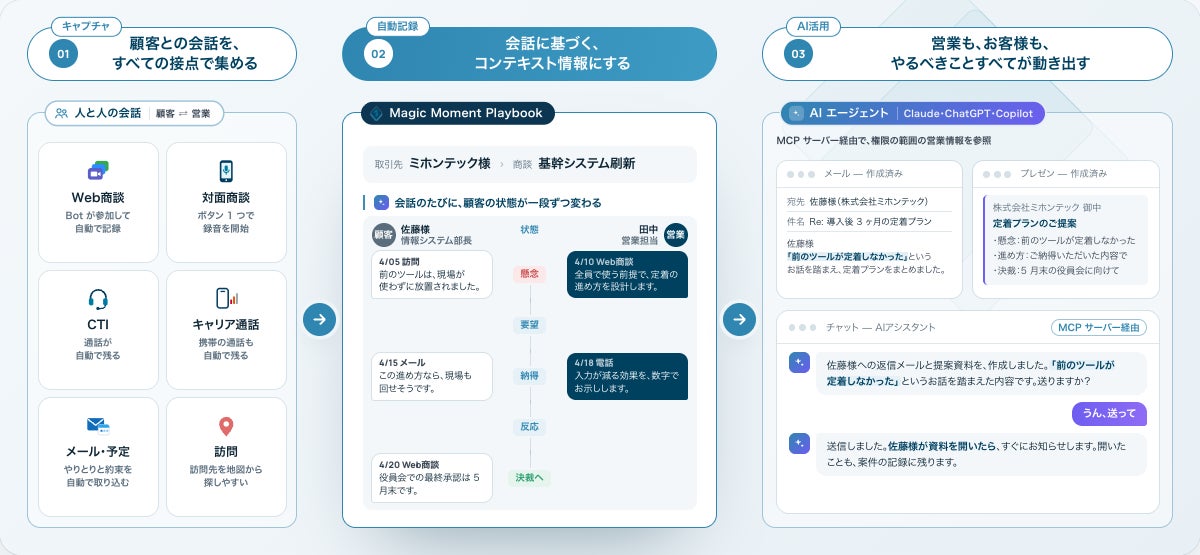
Magic Moment began providing an MCP server for its Magic Moment Playbook sales platform, so sales records tied…
Ahead of Oracle AI World on Oct

World, co-founded by Sam Altman, this week announced tools that let people link their proof of humanity to an…