What happened
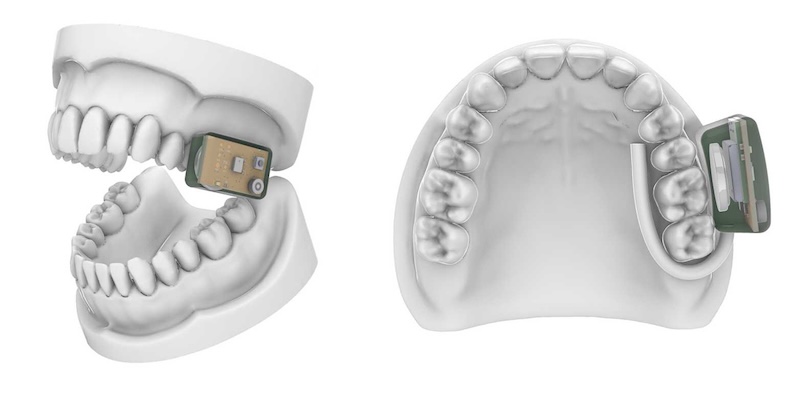
ETH Zurich researchers built InvisiSpeech, a dental-brace-sized sensor worn between a back molar and the cheek that detects tongue vibrations from silently formed words and sends them wirelessly to a smartphone, where an AI model decodes them into commands; in a 15-participant study it recognized around 90 percent of 50 predefined English commands.
Why it matters
The device needs no implants or surgery, unlike brain-computer interfaces, and background noise had little effect on recognition accuracy, offering a potential advantage over conventional microphone-based interfaces in noisy environments; applications already tested include switching electronic devices on and off and retrieving information during meetings.
WHO IT HITSPeople who want discreet, hands-free control of devices and AI assistants — such as commuters on public transport or professionals in meetings — stand to benefit, though the technology still needs work on longer sentences and movement before everyday use, according to the researchers.
Summaries like this, every morning.
InvisiSpeech emerges from ETH Zurich's Sensing, Interaction & Perception Lab, led by computer science professor Christian Holz, with contributions from researchers at Aarhus University in Denmark and Penn State University in the US. The device resembles a small dental brace and contains a sensor, a battery and electronics for wireless data transmission, distinguishing it from brain-computer interfaces that measure brain signals or require implants. Doctoral student Yijing Jiang, who works on the project, notes that the device is small enough to be worn comfortably in the mouth.
The 15-participant study found that InvisiSpeech correctly recognized around 90 percent of 50 predefined English commands, requiring only brief calibration for each individual. Background noise had little effect on recognition accuracy, which the researchers say offers a potential advantage over conventional microphone-based interfaces in noisy environments. Applications already tested include switching electronic devices on and off, retrieving information during meetings, and translating foreign-language content using AI glasses. Holz says the technology enables fundamentally new ways to interact, with invisible input of commands to an AI via natural language, and it could also provide new opportunities for accessible communication and discreet interaction with wearable computing devices.
Looking ahead, the researchers aim to move beyond predefined commands toward natural, private conversations with AI assistants, where users silently articulate questions and receive spoken responses through earphones. That would allow interaction on public transport or in meetings without being overheard. However, the team notes that further development is required before the technology becomes practical for widespread everyday use, with key challenges including longer and more complex sentences and reliable performance while users are walking or moving rapidly.
Pick your industry and the AI tools you use, and get news related to your work every day.
Free · 30 seconds with Google · unsubscribe anytimeWhat is AIToday? →
Ask AI anything about this article. The AI reads this article, earlier AIToday articles, and Wikipedia, and cites its sources. Q&As are published on this page for other readers too.
Using numpy, LightGBM and scikit-learn with no dedicated package, the author ran 100 simulations with a true e…

PanNyx 1.2.0, a 100 円 one-time purchase on Google Play for Android 12 and above, adds an 'AI app and DJ' secti…

Aevius, spun out of Mass General Brigham and led by CEO Rowland Pettit, launched on the 17th with $22 million…

iFLYTEK JAPAN AI SOLUTIONS is holding a Black Friday sale from November 27 to December 9 at 23:59, discounting…

OpenAI said GPT-6.2, working with partner Onava, designed 322 protein candidates, of which 35 bound the target…

The American Journal of Managed Care published a piece featuring Mahadi Baig, MD, on community oncology's gaps…