What happened
Using numpy, LightGBM and scikit-learn with no dedicated package, the author ran 100 simulations with a true effect of 0.5; linear regression landed at +0.5068, LightGBM achieved 91% coverage without cross-fitting and 88% with it, while the deep random forest reached only 44% and 25%.
Why it matters
The gap suggests that when a flexible model fails to capture curved confounding, the resulting bias can dominate the interval, since the correct standard error average (0.034) and actual spread (0.041) were close yet coverage collapsed.
Summaries like this, every morning.
The author's goal was to test, without a dedicated causal-inference package, how much orthogonalization and cross-fitting each contribute to Double/Debiased Machine Learning. The simulation deliberately included a curved confounder built from sine, squared and multiplied terms, so a linear adjustment could not remove it. That design is why ordinary least squares failed so starkly, while the two LightGBM setups kept the average estimate close to the true 0.5 and delivered near-nominal interval coverage.
The deep random forest tells a different story. Its average standard error (0.034) was close to the actual spread of its estimates (0.041), so the width of the interval was not the problem. Instead, the estimates were far enough from 0.5 that the interval simply missed, and coverage fell to 44% without cross-fitting and 25% with it. In that specific setup, cross-fitting made the bias larger rather than smaller, which the author attributes cautiously to each model learning on only four-fifths of the data and leaving more of the curvature unaccounted for.
The write-up also flags its own scope limits: one sample size, one number of columns, one curvature shape, and roughly ±5 percentage points of noise in the coverage rates over 100 runs, with the author speculating that more rows would shrink the forest's bias.
Pick your industry and the AI tools you use, and get news related to your work every day.
Free · 30 seconds with Google · unsubscribe anytimeWhat is AIToday? →
Ask AI anything about this article. The AI reads this article, earlier AIToday articles, and Wikipedia, and cites its sources. Q&As are published on this page for other readers too.
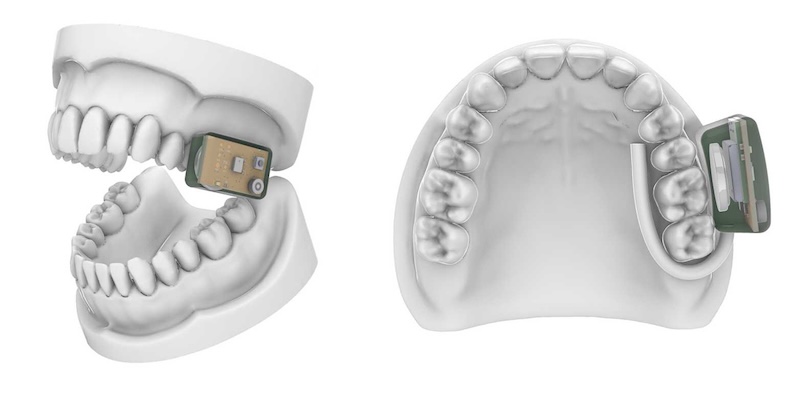
ETH Zurich researchers built InvisiSpeech, a dental-brace-sized sensor worn between a back molar and the cheek…
Aevius, spun out of Mass General Brigham and led by CEO Rowland Pettit, launched on the 17th with $22 million…
OpenAI said GPT-6.2, working with partner Onava, designed 322 protein candidates, of which 35 bound the target…

The American Journal of Managed Care published a piece featuring Mahadi Baig, MD, on community oncology's gaps…

Waystar integrated into Google Cloud's Gemini for healthcare, and Oracle debuted AI agents for clinical trials

Shanghai AI Lab's Sage-Med-Preview, a 35B-parameter medical multimodal model with 3B activated parameters, ave…


