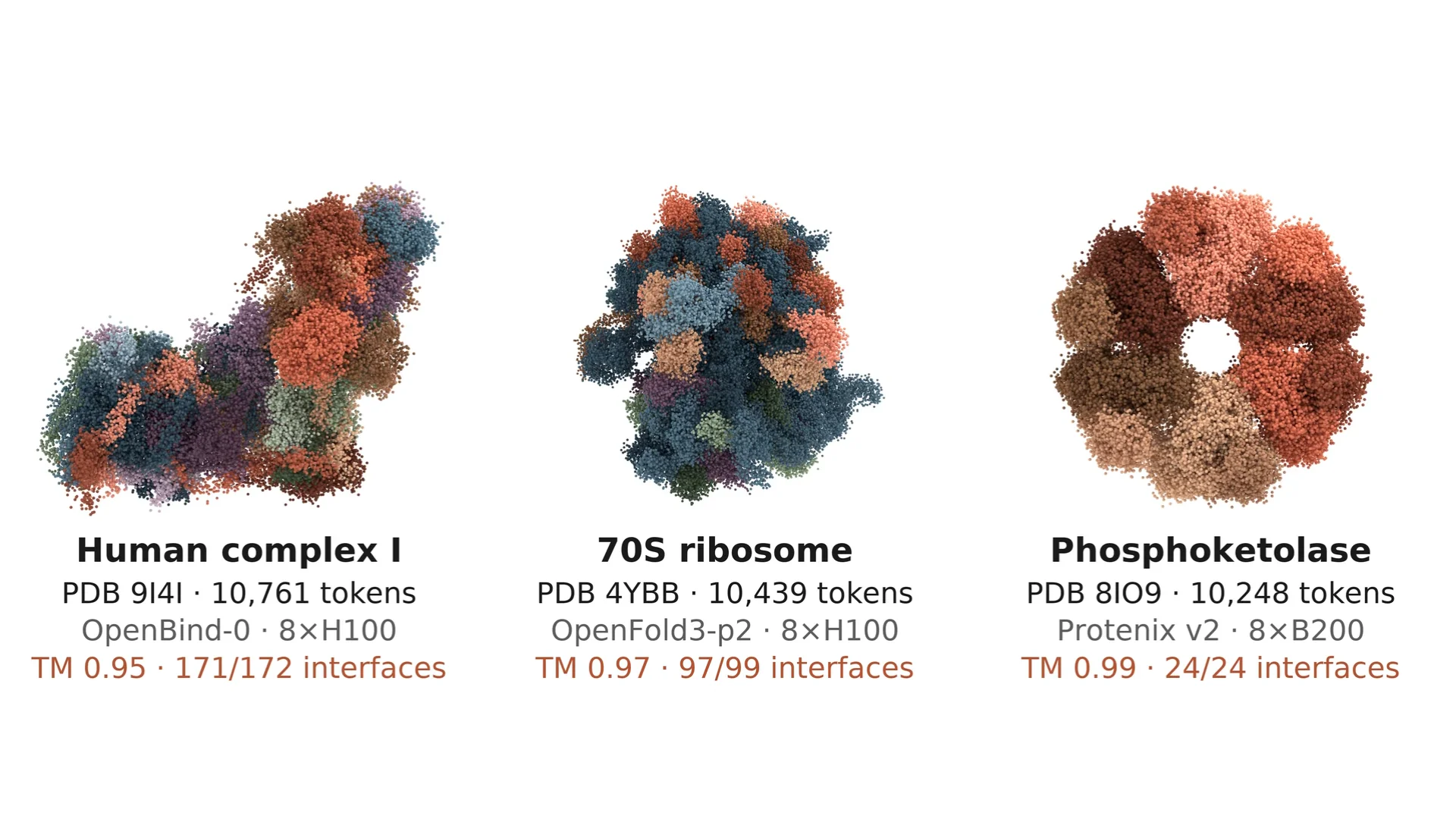
What happened
Anthropic confirmed it is operating a Bay Area lab for physical biology experiments with Claude, as reported September 18, saying drug discovery is not the facility's specific purpose.
Why it matters
The setup could tighten the loop between Claude's ideas and the experiments that test them, though whether the pieces are fully connected remains unclear.
What to watch
Lab validation still takes weeks, and Anthropic's own protein design tests showed limited hit rates, so the test is whether failed predictions feed the next round.
WHO IT HITSBiology research teams and drug-discovery scientists who rely on protein modeling could see cheaper candidate screening, but they would need to verify that faster calculations preserve enough accuracy for their own experiments.
Summaries like this, in your inbox every morning.
The Bay Area lab did not appear on its own. Anthropic introduced the Model Hardware Standard on August 27 as a research preview, connecting agents to instruments including microscopes, liquid handlers, and robotic arms. On September 17, the company reported optimizing more than 30 biomolecular models in under four weeks, and it released the resulting code on GitHub.
The company's own reporting suggests where the gaps remain. A protein design test found that about $150 in GPU computing and AI usage yielded predicted binding scores comparable to earlier campaigns allowed up to $10,000 per target. But Anthropic's MHS university case study identifies handoffs between research stages as an obstacle to automating the full cycle, and in a pilot with QuEra, Claude could not troubleshoot physical hardware failures and sometimes paused overnight for human confirmation.
How fully Anthropic has connected Claude, the Model Hardware Standard, and its own lab is not yet clear. The reading that seems supported is that the physical lab matters less as a standalone facility than as a way to test whether measurements can feed back into the next design round — with failures, such as the designs that did not bind, becoming useful input rather than dead ends.
For example, today's edition would include:
AI-summarized, only the topics you pick — one digest a day via Email, LINE, or Slack.
Free · 30 seconds with Google · unsubscribe anytimeWhat is AIToday? →
Ask AI anything about this article. Q&As are published on this page for other readers too.
Teradata is expanding its Tera AI assistant with a Context Engine, a Harness execution system and Agent Skills…
Baselayer raised $35 million in Series A funding led by M13, with Torch Capital, Picus Ventures and Afore Capi…
Heidi Health announced $340 million in new funding — a $100 million Series C led by Blackbird, with Phoenix Co…
Kantata Inc. unveiled Agent Studio, which sits inside its Expertise Engine

Meta's AI agent Muse has leapt to the top of app charts roughly two weeks after its release, helping push up c…
Meta's Muse agent, launched Sept