What happened
OpenAI has deployed GPT-Live, a new model for ChatGPT's voice mode on iPhone, replacing the previous GPT-4o era model. For complex tasks like web search or deeper reasoning, GPT-Live delegates to GPT-5.5 in the background while continuing the conversation.
Why it matters
The previous voice model had a knowledge cutoff in 2024 and was weak enough that preview users had largely stopped using voice mode. GPT-Live restores practical utility for real-time voice conversation, letting users get answers to harder questions without interrupting the flow.
What to watch
OpenAI stated it will continuously update the model powering GPT-Live as new frontier models are released, beginning with GPT-5.5 at launch.
Summaries like this, in your inbox every morning.
OpenAI's deployment of GPT-Live addresses a gap in its voice interface that had grown evident: the older GPT-4o era model was too dated and weak for serious conversational use. By introducing a new model architecture that keeps lightweight tasks local while routing harder problems to GPT-5.5, OpenAI preserves the conversational flow that makes voice interaction appealing—a user need that the previous model could not meet.
The design choice to delegate complex reasoning and web search tasks to a stronger backend model while continuing the voice conversation is notably different from simply replacing voice mode with a faster version of GPT-5.5. It suggests OpenAI is optimizing for latency and naturalness in voice, where breaking conversation to wait for a response is a worse user experience than it is in text-based chat. The commitment to continuously update the backend model as new frontier models release signals that voice mode is now treated as a first-class product surface, not a secondary feature tied to a static model version.
Pick your industry and the AI tools you use, and get news related to your work every day.
Free · 30 seconds with Google · unsubscribe anytimeWhat is AIToday? →
Ask AI anything about this article. The AI reads this article, earlier AIToday articles, and Wikipedia, and cites its sources. Q&As are published on this page for other readers too.
Cammarata reinterprets InceptionV1's cat-car neuron as a V-shape detector, not two unrelated concepts

Google Deepmind's Gemini 4 Argon scored 97.5 percent on ARC-AGI-3 at a cost of $4,800, second only to GPT-6 As…
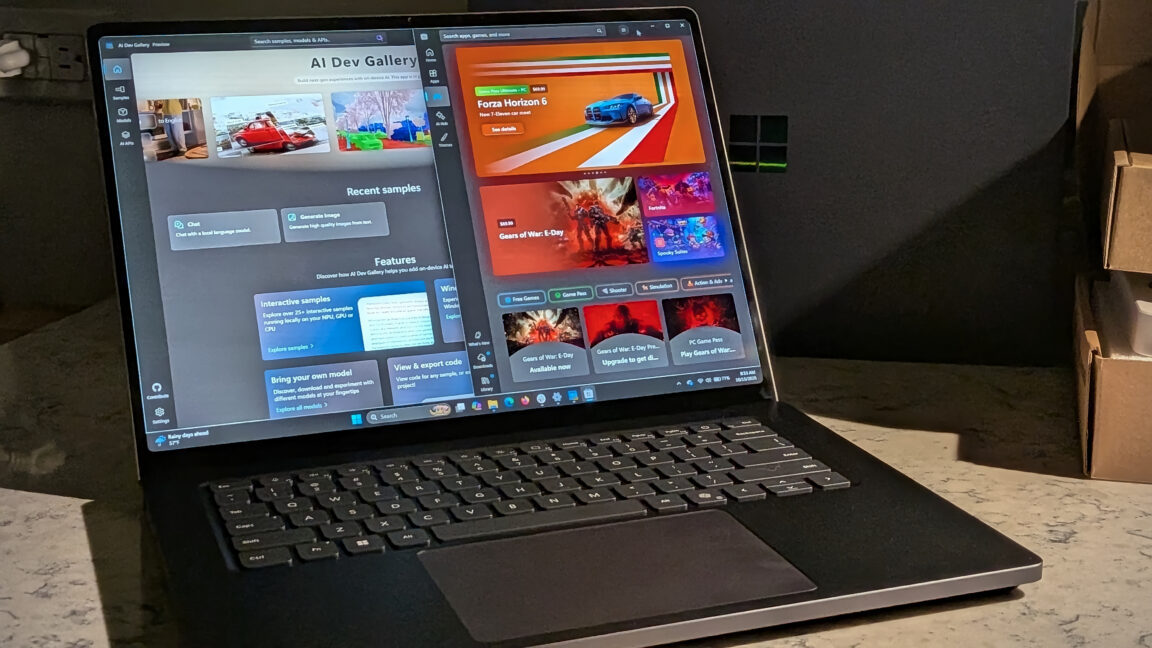
Microsoft's Surface Laptop Ultra, using Nvidia's RTX Spark platform, starts at $2,599 (up to $5,899)
Meta's new commercial terms, effective October 30th, appear to let it crawl and train AI on content from websi…
Vercel data published Thursday shows TypeSafe AI's Jev, a lightweight decision model for choosing among predet…
Reflection AI introduced Beam, an open-weight model for agentic coding and long-horizon tasks, with 501 billio…