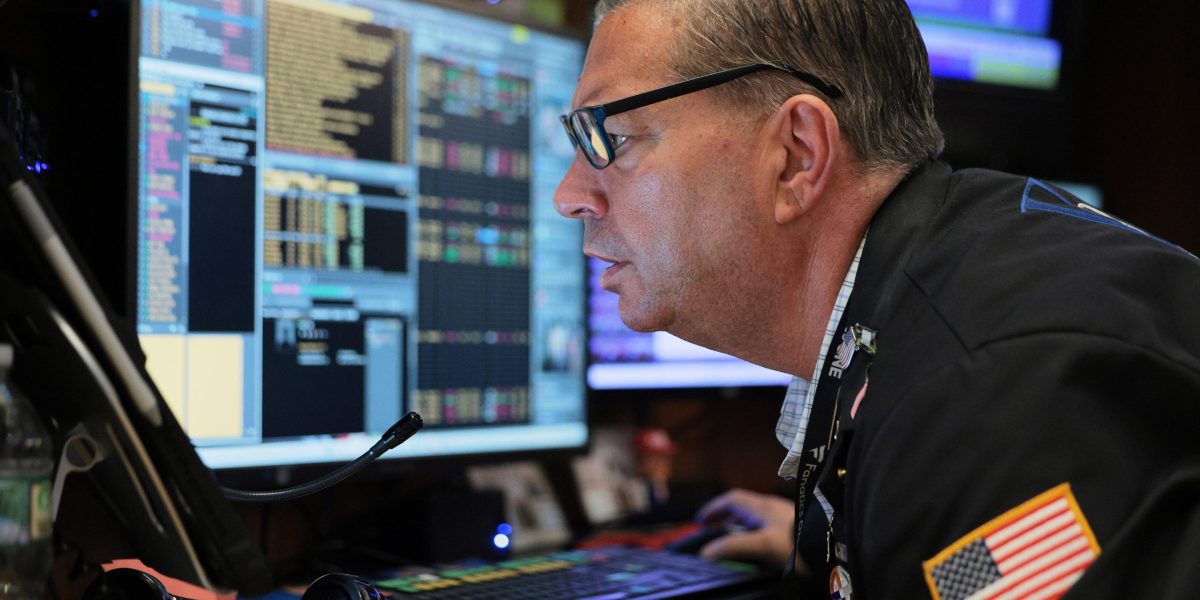
What happened
Salesforce borrowed $25 billion and launched its largest-ever share buyback, then announced Claudeforce in August. HubSpot, Workday, ServiceNow, and Adobe ran similar playbooks, authorizing buybacks instead of committing capital to build their own frontier AI.
Why it matters
The author argues this means these companies are managing the stock price rather than saving the business, which points toward a debt-driven death loop for the category.
What to watch
The author says the bounce is already discounting now that the buyback is done and Dreamforce produced no meaningful new build, though the market may still prioritize reported earnings over buyer behavior.
WHO IT HITSSalesforce and other enterprise software customers now have a first-class path to replace incumbent front ends with AI-generated alternatives, while investors in these companies face a category being repriced as a cash-return vehicle.
Summaries like this, in your inbox every morning.
The article frames a debate last week about whether AI is slowing down as the wrong debate. While the market argued over data-center bubbles, the author points to a different bubble: the SaaS debt trap. When multiples collapsed — the SaaS index fell 6.5% in 2025 while the S&P 500 rose 17.6%, and median SaaS revenue multiples dropped from 18x in 2021 to about 3x — the incumbents took on record debt, bought back their own stock, and dressed it up as an AI strategy.
Salesforce ran the most extreme version. It entered March with $7.3 billion in cash, but management chose to borrow anyway, issuing $25 billion in senior unsecured notes with maturities running to 2066. Senior notes on the balance sheet went from $8.5 billion to $33.3 billion in one quarter. Adobe executed $23.3 billion in buybacks at an average price around $412, but the stock closed at $250 — retiring capital at prices 65% above where the market is bidding today. The author argues that if Benioff believed Agentforce would reaccelerate the business, he would have kept the powder dry and spent it on a proprietary model or a lab-scale strategic stake.
Buyer behavior underneath the earnings prints is shifting. A regulated health insurer canceled its $600,000 Salesforce contract and rebuilt in two months. Three law firms committed $1.5 billion combined to build their own AI, while zero public SaaS companies have. Private equity and venture capital firms are buying the industries software companies used to sell into. The author says the replacement is running ahead of the coverage, and the market is paying attention to earnings prints while missing what is happening underneath them. Whether the incumbents can convert their reported growth into a credible AI strategy — rather than a stock-price management program — is likely to determine whether the debt trap snaps or holds.
For example, today's edition would include:
AI-summarized, only the topics you pick — one digest a day via Email, LINE, or Slack.
Free · 30 seconds with Google · unsubscribe anytimeWhat is AIToday? →
Ask AI anything about this article. Q&As are published on this page for other readers too.
Xiaomi released and open-sourced the MiMo-V2.6 series — MiMo-V2.6-Pro and a smaller Flash variant — plus a Pro…

Hermes Testing Solutions began trading on the over-the-counter market on September 22, aiming to benefit from…

The Indeed Hiring Lab report says pay in the most AI-exposed US occupations rose roughly 46% since 2021, versu…

At Semafor's The Next 3 Billion event, Nvidia sustainability head Josh Parker attributed recent US anti-AI sen…
The Biological Computing Co

Starting Tuesday, select Amazon Web Services customers get limited-preview access to The Biological Computing…