What happened
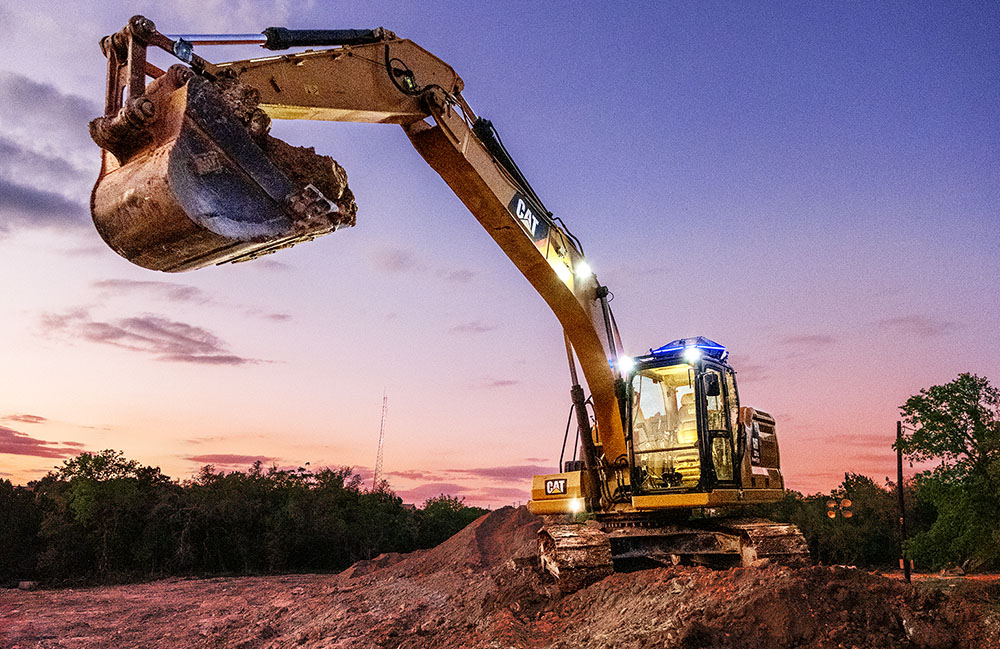
Construction startup TerraFirma closed a Series A funding round of $115 million(約180億円), led by Kleiner Perkins, with participation from Bain Capital Ventures, Glade Brook Capital Partners, and others. The Austin, Texas-based company, founded in 2024 by former SpaceX engineers Noah Schochet and Noah McGuinness, builds semi-autonomous heavy machinery and AI-enabled software to automate earthworks and site operations.
Why it matters
U.S. construction labor productivity has declined 0.6% annually since 1965, while the broader economy grew at 1.6% per year—a gap that has cost roughly $1 trillion(約160兆円) every five years, according to the U.S. Department of Commerce and Goldman Sachs. TerraFirma's system can make each operator up to 300% more effective by allowing skilled operators to orchestrate entire fleets of retrofitted excavators, dozers, and loaders from remote command centers, potentially accelerating project execution and reducing costs.
What to watch
TerraFirma is executing commercial projects in Texas (including site prep for a Starbucks in North Austin, a sports arena in Spicewood, and a power substation in New Braunfels) and working with the U.S. government on mission-critical international infrastructure projects. The company also plans to eventually apply its construction technology to space-based infrastructure on the Moon and Mars.
Summaries like this, in your inbox every morning.
TerraFirma's $115 million(約180億円) Series A funding reflects growing investor confidence in robotics-driven solutions to construction's long-standing productivity crisis. The construction industry stands apart among major sectors for its backward productivity trajectory: since 1965, labor productivity in U.S. construction has fallen at an average rate of 0.6% per year, according to the U.S. Department of Commerce and Goldman Sachs. Over the same period, broader economy productivity grew at roughly 1.6% annually, creating a compounding gap that has cost roughly $1 trillion(約160兆円) every five years. This structural problem has motivated TerraFirma's full-stack approach, which neither fully automates equipment nor leaves operators stranded—instead, it retrofits existing heavy machinery with AI and remote-control capabilities, allowing skilled operators to orchestrate entire fleets and become up to 300% more effective.
The startup's commercial traction—evidenced by projects across Texas in housing, energy, transportation, manufacturing, and education, plus government contracts for international infrastructure—suggests the model is viable at real-world scale. Kleiner Perkins' lead role and the participation of specialized infrastructure investors (Bain Capital Ventures, Glade Brook Capital Partners) and founders from SpaceX, Anduril, and other deep-tech companies signal that the capital and talent ecosystems see construction robotics as a defensible, scalable category. TerraFirma's long-term ambition to apply its technology to space-based infrastructure on the Moon and Mars, while speculative, reflects the founders' background and points to potential downstream applications if the core earthbound business succeeds.
Pick your industry and the AI tools you use, and get news related to your work every day.
Free · 30 seconds with Google · unsubscribe anytimeWhat is AIToday? →
Ask AI anything about this article. The AI reads this article, earlier AIToday articles, and Wikipedia, and cites its sources. Q&As are published on this page for other readers too.
Chunghwa Telecom president Rong-shy Lin said the shift from conversational AI to autonomous AI agents is resha…
CoreWeave fell 5% in premarket trading Friday and was on track to finish the week down 15%, after rebounding f…
Apple and Meta said they would jointly release a new open-weight AI model designed to run on high-end Macs, ai…
Investors put $38.5 billion into Asian startups in Q3, per Crunchbase data

A longtime Anthropic investor told Fortune he expects shares priced around $1.8 trillion, below the company's…
In Q2, billionaires or their funds sold six 'Magnificent Seven' AI stocks