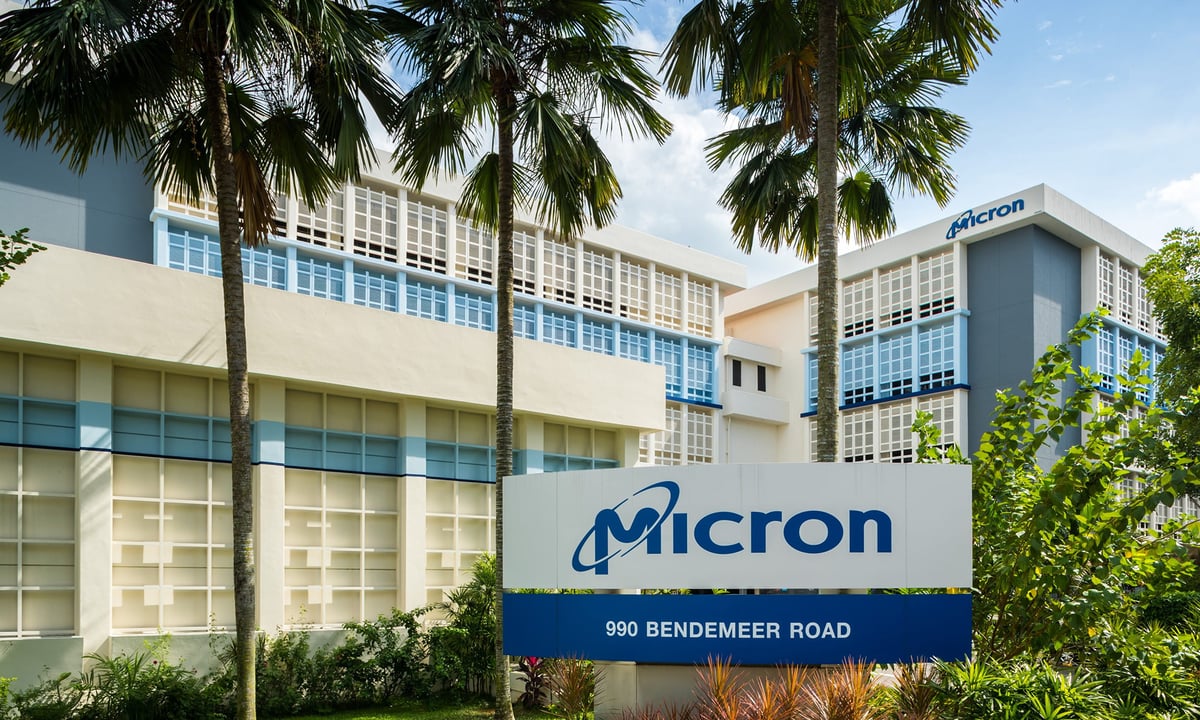
Micron Technology's CEO says memory chip demand is still in its early growth phase, driven by AI expansion across data centers, robotics, humanoids, and autonomous vehicles rather than following traditional boom-and-bust market cycles.
The overall memory market is forecast to exceed $1 trillion(約160兆円) by 2027 as AI semiconductor memory becomes a larger portion of the broader AI chip market, positioning the company for sustained long-term growth.
What happened
Micron Technology's CEO Sanjay Mehrotra told investors that the memory chip market is only in the early stages of AI-driven growth, pointing to expanding demand beyond data centers—particularly from robotics, humanoids, and autonomous vehicles that will require substantial memory for their AI systems.
Why it matters
The memory market is forecast to reach more than $1 trillion(約160兆円) by 2027, up from over $800 billion(約130兆円) this year, with AI semiconductor memory processors expected to account for nearly 30% of a $1.5 trillion(約240兆円)–$1.8 trillion(約290兆円) AI semiconductor market by 2030. Unlike past boom-and-bust cycles in memory chips, this expansion appears structural rather than cyclical, offering long-term revenue visibility for suppliers like Micron.
What to watch
Micron's sales surged 45% in fiscal Q3 2026 to nearly $41.5 billion(約6.6兆円), and adjusted earnings jumped more than 1,300% year over year to $24.67 per share. The stock trades at a P/E ratio of 23, below the tech sector average of 37, and has risen 687% over the past year.
Ask the AI about this article →
The memory chip market has historically been characterized by sharp cyclical swings—periods of surging demand and rising prices followed by oversupply and price collapses as competitors expand capacity simultaneously. Micron and investors have long grappled with the question of whether any surge in memory demand represents a durable trend or merely another up phase in this predictable cycle. What distinguishes the current AI-driven expansion, according to both McKinsey research cited in the article and Micron's management, is its structural rather than cyclical nature. CEO Mehrotra's framing is notably comprehensive: he points not only to the continuing data center buildout but also to robotics, humanoids, and autonomous vehicles as emerging technologies that will require substantial memory capacity. Morgan Stanley's projection of 1 billion humanoid robots globally by 2050 with a $5 trillion(約800兆円) market opportunity suggests the potential runway is indeed long. The market forecast—from over $800 billion(約130兆円) this year to more than $1 trillion(約160兆円) by 2027, with AI memory becoming nearly 30% of a $1.5 trillion(約240兆円)–$1.8 trillion(約290兆円) AI semiconductor market by 2030—supports the premise that memory demand faces years of sustained growth rather than a near-term peak followed by contraction.
For example, today's edition would include:
AI-summarized, only the topics you pick — one digest a day via Email, Slack, or Discord.
Free · takes 30 seconds · unsubscribe anytimeWhat is AIToday? →
Ask AI anything about this article. Q&As are published on this page for other readers too.
Israeli startup DataAgent Ltd

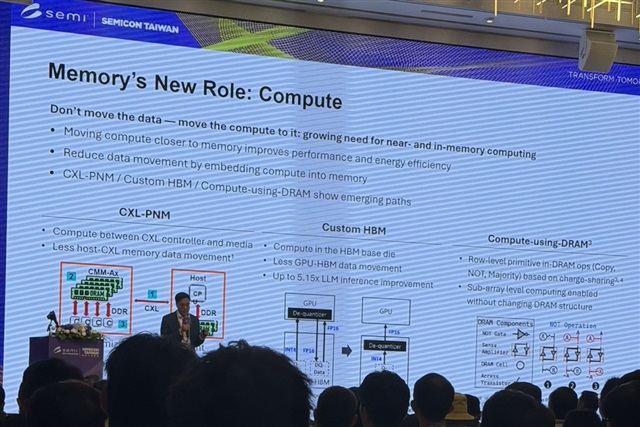
SK Hynix presented a custom HBM concept at SEMICON Taiwan 2026, where compute functions are placed in the base…
Taoyuan is positioning itself as a northern hub for AI data centers (AIDC), citing the Tatan area and an LNG c…
The U.S. Department of Defense announced on August 31 that it has deployed ChatGPT Mil, a customized version o…

Nvidia reported earnings that were both remarkable and boring, reflecting its focus on avoiding a consolidated…

Anthropic has agreed to a $35bn cloud-computing contract with Lambda, a Nvidia-backed cloud provider