What happened
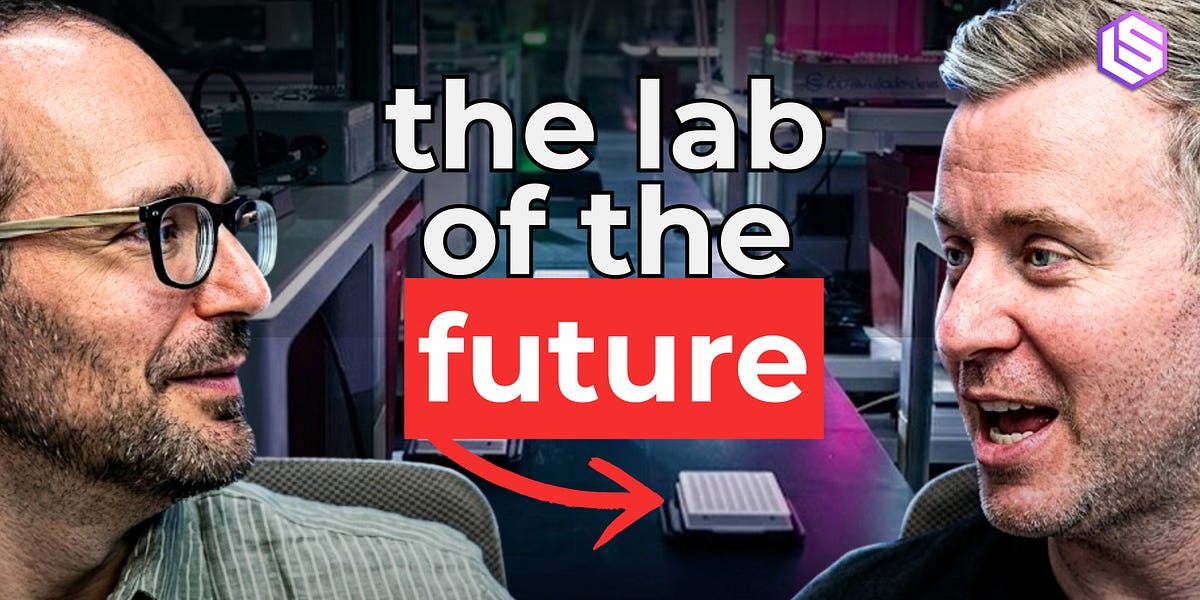
Lila Sciences is operating an automated laboratory—a warehouse of AI-guided robotics and instruments running experiments continuously—that has generated over 10 trillion experimentally validated scientific reasoning tokens. The lab treats instruments as nodes on a network, using reinforcement learning to discover new chemistry, materials, and biological insights across biology, chemistry, drug discovery, and materials science simultaneously.
Why it matters
Lila's core bet is that the scientific method, executed at scale with AI, is an untapped dataset generator—one that produces experimentally verified reasoning, which Lila argues exists on the internet in quantities that round to zero. The company optimizes for breadth and generalizability over raw throughput, building models that can transfer insights across domains (e.g., small-molecule chemistry priors applying to metal-organic frameworks). Early results include model suggestions for platinum-group-free electrocatalysts that a domain expert called the best performers they have made, and six months to in vivo CAR-T data in non-human primates (for context, AbbVie paid $2.1B for Capstan on preclinical in vivo CAR-T data).
What to watch
Lila is not an automation company—it prioritizes flexibility and generalizability, keeping humans involved wherever automating does not pay. The company rebuilt a gas sorption measurement to run roughly 2,500x faster, demonstrating gains through iteration speed rather than multiplexed screens. A key open question: how much to trust the model's latent reasoning versus the experimental verifier, especially as the model learns to optimize for physical feedback.
Summaries like this, in your inbox every morning.
Lila Sciences is betting on a hypothesis grounded in what the field calls the bitter lesson—the observation that scaling and brute-force learning often outperform hand-crafted domain knowledge. Applied to science, this thesis holds that a physical lab run by AI is an infinite generator of experimentally validated data, and that training on such data at scale will yield models that can reason across any scientific domain. The founders argue that breadth—training on chemistry, biology, materials, and drug discovery together—creates transfer that beats domain-specific models sample for sample. This flies against the conventional biotech playbook of single-asset focus.
The concrete evidence Lila offers includes a model's suggestion for platinum-group-free electrocatalysts that a 40-paper expert deemed "stupid" until they worked and became the best performers the lab has made. Similarly, the six-month path to in vivo CAR-T validation in nonhuman primates is notable because AbbVie's $2.1 billion(約3400億円) acquisition of Capstan hinged on the same milestone. Lila's architecture—instruments as graph nodes, a magnetically levitating transport layer between them, reinforcement learning with nature as the verifier—positions the lab as a data center, not a biotech facility. Rafa Gómez-Bombarelli inverts the bitter lesson for materials science: in AI, scaling is a roadmap; in materials, scaling is a filter, because only things that scale matter in the physical world. This framing suggests Lila believes the bottleneck is not discovery but manufacturability.
Pick your industry and the AI tools you use, and get news related to your work every day.
Free · 30 seconds with Google · unsubscribe anytimeWhat is AIToday? →
Ask AI anything about this article. The AI reads this article, earlier AIToday articles, and Wikipedia, and cites its sources. Q&As are published on this page for other readers too.
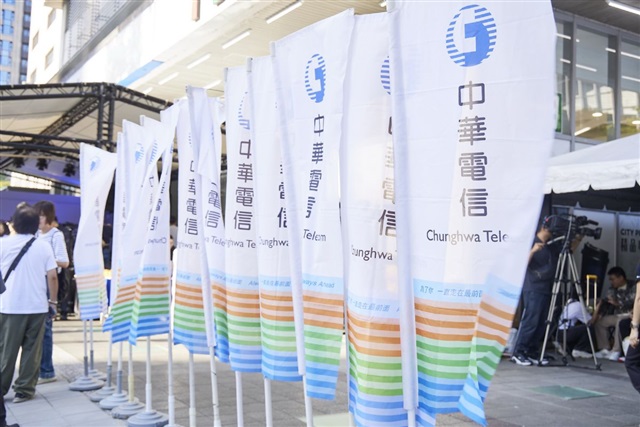
Chunghwa Telecom president Rong-shy Lin said the shift from conversational AI to autonomous AI agents is resha…
Apple and Meta said they would jointly release a new open-weight AI model designed to run on high-end Macs, ai…
A writer and entrepreneur opened his daily to-do list and found 156 items, and concluded that an AI assistant…

A Zenn contributor sorted AI use into three modes — AI as an assistant, AI running alongside people, and AI th…

The walkthrough points the CLI at a local mock via the ANTHROPIC_BASE_URL environment variable
A non-engineer operator says one person ships four smartphone apps on Google Play, three on the App Store, wit…

