What happened
Dario Amodei asked for a "narrow" antitrust waiver to allow a coordinated slowdown of AI model development, setting off debate about whether the industry is weaponizing doom.
Why it matters
An "AI OPEC" isn't really in the cards, the article argues — Mark Zuckerberg wants no part of one, and cutthroat competition seems hard-coded into tech executives.
What to watch
Whatever cartel-like behavior emerges will probably look more like the airline industry, competing on reliability and bundled extras as the underlying product commoditizes; even the real OPEC isn't especially effective these days.
WHO IT HITSFrontier-lab executives and their legal teams are the ones weighing Amodei's waiver idea, while startups and small businesses stand to benefit if AI keeps lowering the cost of starting almost any kind of business.
Summaries like this, in your inbox every morning.
The article opens with a pandemic-era parallel: in March 2020, the CEOs of General Motors, Ford, and Fiat Chrysler tried to coordinate production halts over Covid-19 fears, and their lawyers warned that doing so could violate antitrust rules. Legal concerns were swiftly dismissed, Detroit's factories went dark, and people were kept out of harm's way. Today, the author writes, the danger is swarms of malevolent AI agents, the CEOs in question run frontier labs, and legal niggling risks holding up an urgent safety conversation.
The author pushes back on the idea that AI safety talk is opportunistic. These executives have been talking about AI safety for a long time, and nobody woke up last week, looked at their IPO plans, and decided existential risk was good marketing. Still, an "AI OPEC" isn't really in the cards: Mark Zuckerberg wants no part of one, and cutthroat competition seems hard-coded into tech executives, who are rich enough not to need to win but wake up every morning trying to destroy each other anyway. Whatever cartel-like behavior does emerge will probably look less like coordinated price-fixing and more like the airline industry, which competes on reliability and bundled extras as the underlying product commoditizes — notably, airlines never compete on safety.
The author notes that even the real OPEC isn't especially effective these days: it couldn't stop the UAE from walking out, and it doesn't include three of the world's four largest oil producers. More to the point, AI looks increasingly like a pro-competitive force, lowering the cost of starting almost any kind of business. The outcome may hinge on whether legal concerns continue to stall coordination, and on whether AI's cost-lowering effect keeps outpacing any cartel-like impulse — a reading the article supports but that remains, by its own framing, a prediction rather than a settled fact.
For example, today's edition would include:
AI-summarized, only the topics you pick — one digest a day via Email, Slack, or Discord.
Free · 30 seconds with Google · unsubscribe anytimeWhat is AIToday? →
Ask AI anything about this article. Q&As are published on this page for other readers too.
OpenAI launched Astra for Law, wrapping GPT-6 Astra in a legal search index covering US case law, statutes, re…

Anthropic detailed three metrics — AI-led R&D, oversight of autonomous AI agents, and compute allocation — dis…

On September 16, NVIDIA, Google and Emerald AI launched the AI Energy Management Alliance (AEMA), joined by 18…

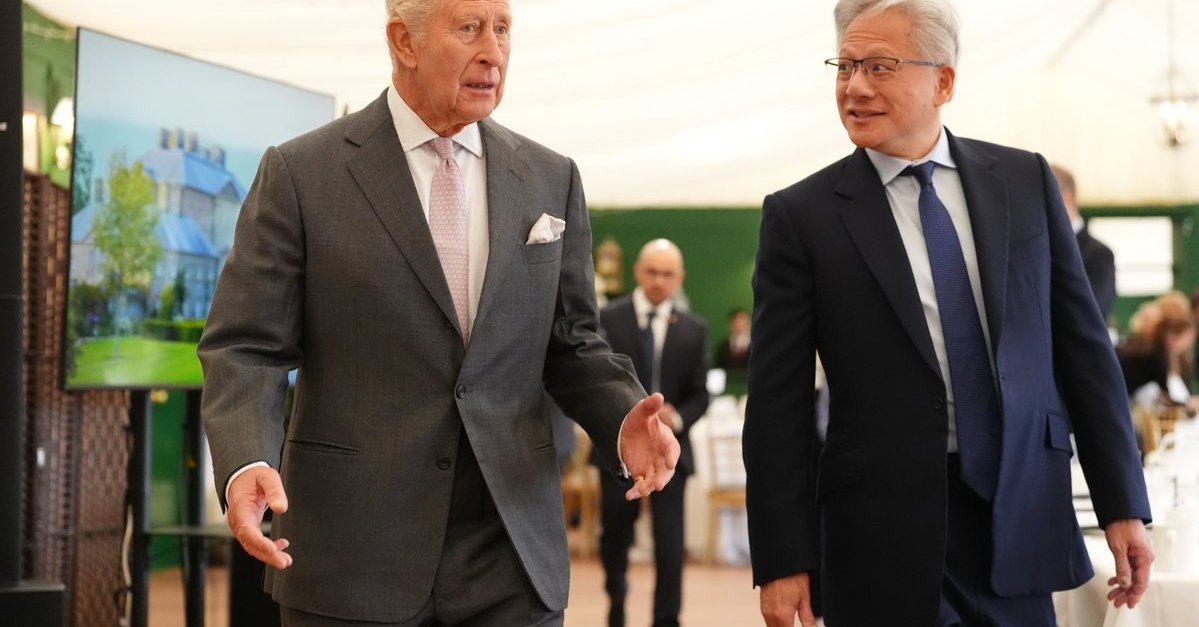
Britain's royal household announced that King Charles hosted an AI summit at Dumfries House on September 17, d…
Shiseido Japan's AI agent for ingredient discovery cut search time by 95% and increased proposed ingredient ca…

Microsoft is phasing in a consolidation of its Microsoft 365 Copilot app and experience into Microsoft Copilot…