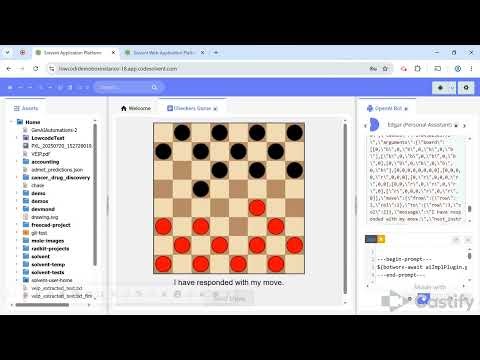
A new framework for AI and human collaboration has been introduced that uses a shared UI tool to enable tight back-and-forth interaction between humans and AI bots, rather than placing humans into AI-driven workflows. The method extends the CoPilot integration model (where AI is built into existing software) to general workflows by providing an integrated platform, allowing developers to focus on building the UI rather than managing the AI integration itself.
Summaries like this, in your inbox every morning.
Sign up free →What happened
A new approach to AI and human collaboration has been introduced that places both the AI bot and human in a tight back-and-forth loop mediated through a human tool—a UI application. Rather than inserting a human into an AI-driven workflow, this method creates bidirectional interaction through a shared interface.
Why it matters
This extends the CoPilot model (AI integrated into existing software like Excel or Adobe) to general workflows not tied to any specific product. By providing an integrated platform that handles the complexities of AI-human integration, developers can focus on building the human tool functionality itself rather than managing the integration layer.
What to watch
The approach is demonstrated via HTML-based web apps within a platform called Solvent, enabling citizen developers and others to apply CoPilot-style AI collaboration to custom workflows.
The post introduces a collaboration method that reimagines how AI and humans interact. Traditionally, human-in-the-loop systems place a human decision-maker into a process controlled by AI. This new approach reverses that dynamic by creating a true back-and-forth conversation between bot and human, with the interaction mediated through a human tool—specifically, a UI application. The framework is inspired by the CoPilot integration model used in commercial software. CoPilot, as implemented in products like Excel, Adobe, and other mainstream tools, embeds AI capabilities directly into the user experience so that AI assistance feels native to the application. The post argues that this same principle can be applied more broadly to workflows that are not tied to any specific product. Using HTML and web apps within the Solvent platform, the approach makes it possible for developers—including citizen developers—to build custom human tools and then integrate AI collaboration without having to manage the underlying AI integration themselves. The platform provides the necessary infrastructure and tooling, allowing developers to concentrate on designing the human tool functionality and the workflow logic rather than wrestling with the technical details of connecting humans and AI bots. The post includes a demo to illustrate the concept in practice.
The post presents a shift in how AI and human work together by moving away from the traditional human-in-the-loop model, where humans passively respond to AI-driven processes. Instead, it proposes a tighter, more interactive collaboration where both parties engage in real-time exchange through a shared interface. This mirrors the CoPilot strategy that has become prevalent in commercial software, where AI capabilities are woven directly into existing tools like Excel and Adobe products. The key innovation here is that the proposed framework extends CoPilot-style integration beyond proprietary software into general workflows, enabling developers to build custom AI-human interactions without having to rebuild the integration infrastructure themselves. By positioning the platform as handling the "bells and whistles" of AI integration, the approach aims to lower the barrier for developers—including those without deep AI expertise—to create collaborative tools.
AI-summarized, only the topics you pick — one digest a day via Email, Slack, or Discord.
Free · takes 30 seconds · unsubscribe anytime
No comments yet. Be the first to share your thoughts!
Log in to join the discussion




Get curated AI news from 200+ sources delivered daily to your inbox. Free to use.
Get Started FreeFree · takes 30 seconds · unsubscribe anytime
