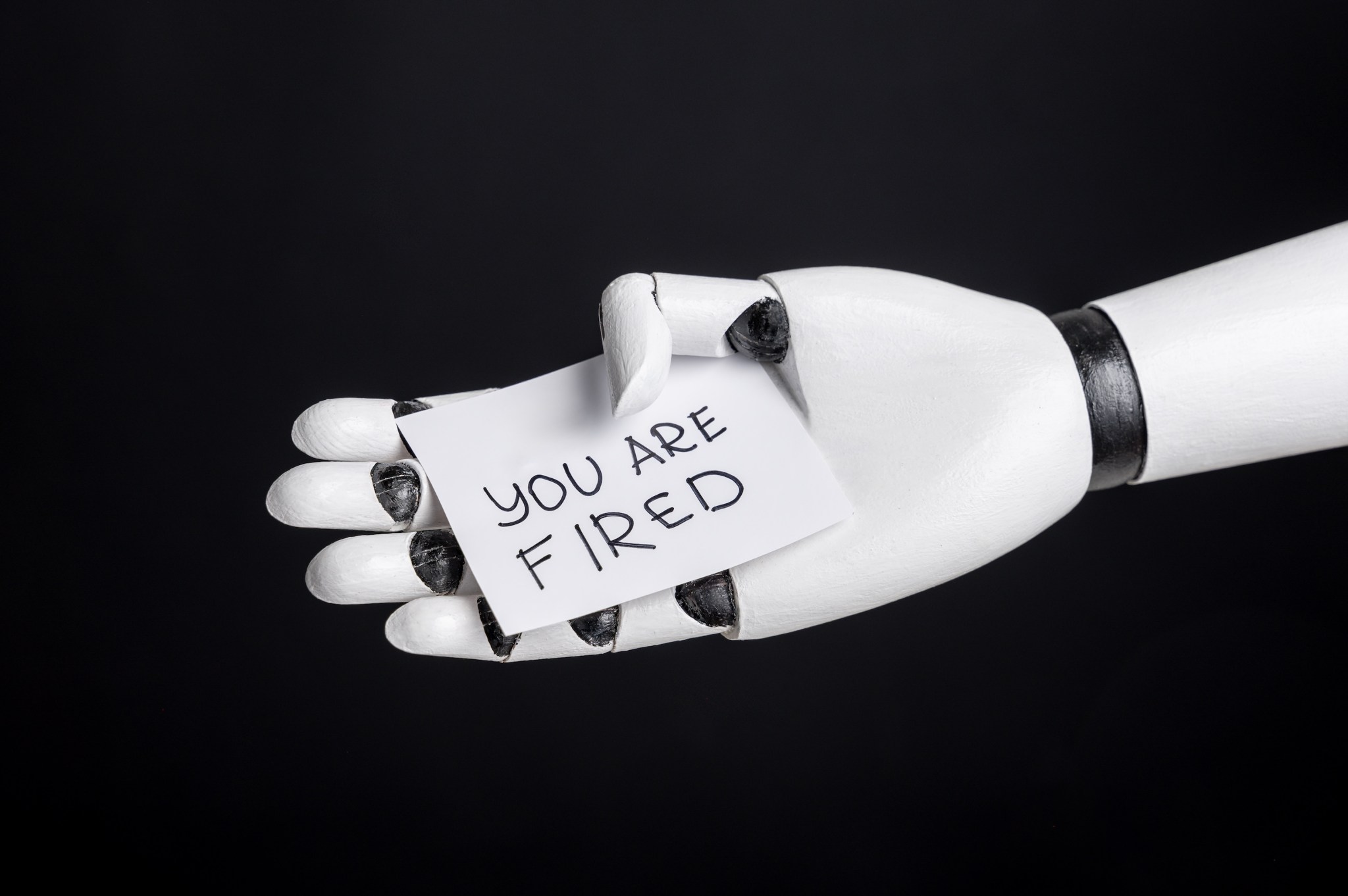
What happened
Pantheon Macroeconomics' Samuel Tombs and Oliver Allen track AI-exposed sectors and put net U.S. job losses above 10,000 roles per month, while Goldman Sachs' Joseph Briggs warns around 9% of workers could be temporarily displaced.
Why it matters
The pain is concentrated in accounting, advertising, office admin and legal services, even as data-center construction adds jobs — a lopsided shift that may hit white-collar roles hardest.
WHO IT HITSWhite-collar workers in accounting, advertising, office administration and legal services face the most exposure, while construction crews building data centers see job gains.
Summaries like this, every morning.
The two estimates arrive from different directions but point at the same labor-market pattern. Pantheon Macroeconomics' Samuel Tombs and Oliver Allen built their case by tracking job sectors exposed to AI, and the net effect they found is not good: losses above 10,000 roles per month. Goldman Sachs' Joseph Briggs reached a similar conclusion from the productivity side, telling clients that concerns of imminent AI-related job losses have cooled in the media, but recent labor market data show some signs of AI-related hiring headwinds.
The composition matters as much as the total. Construction employment has risen because tech companies are building data centers as fast as they can — a physical buildout that offsets, in part, the slow disappearance of roles in accounting, advertising, office administration and legal services. That split suggests the near-term effect is a reshuffling of where work sits rather than a uniform contraction, though the body offers no figure for how the two sides net out beyond the 10,000-plus monthly losses.
Briggs's framing leaves room for reversibility. His baseline assumes a 15% productivity increase from AI, and under that assumption the roughly 9% of workers affected could be temporarily displaced during the AI transition — a word choice that treats displacement as a phase rather than a permanent endpoint. Whether that holds depends on how the transition unfolds, a question the body raises without resolving.
Pick your industry and the AI tools you use, and get news related to your work every day.
Free · 30 seconds with Google · unsubscribe anytimeWhat is AIToday? →
Ask AI anything about this article. The AI reads this article, earlier AIToday articles, and Wikipedia, and cites its sources. Q&As are published on this page for other readers too.
Memory is the current AI bottleneck, and Micron Technology's fiscal Q4 2026 revenue jumped to $54.23 billion f…

In a federal case in the U.S
Canva launched Canva Craft, its first in-house image model, trained by Canva Research mainly on millions of de…

Anthropic launched an "Anthropic managed" version of Claude on Google Cloud on the 22nd (US time), giving main…
Robinhood Ventures disclosed a $10 million check to Cognition, maker of the Devin AI coding tool, as part of t…

Twilio's marketing team reduced account research and personalized content creation for a single campaign from…