Alphabet and Oracle, the third- and fourth-largest cloud infrastructure providers globally, are both capitalizing on AI growth but face different strategic positions. Alphabet has stronger fundamentals—it is cash-flow positive, reported 82% year-over-year Google Cloud revenue growth in Q2 2026 after launching AI video generator Omni, and benefits from integrated AI across Search, Android, and YouTube.
Oracle is investing aggressively in its AI cloud platform and rolled out over 1,000 AI agents, but must raise capital (between $45 billion and $50 billion in fiscal 2026, with another $40 billion planned for fiscal 2027) to fund its buildout.
Over a five-year horizon, Alphabet is positioned as the stronger stock because it can fund growth from operations while leveraging existing profitable businesses.
What happened
Alphabet (NASDAQ: GOOG) and Oracle (ORCL) are the third- and fourth-largest cloud infrastructure companies globally, accounting for 14% and 4% of the market respectively. Alphabet reported an 82% year-over-year increase in Google Cloud revenue in Q2 2026 and launched Gemini 3.6 Flash and the AI video generator Omni, which saw a 40% increase in daily active users creating videos since May. Oracle rolled out more than 1,000 AI agents in its second quarter and reported revenue growth of 21% year-over-year in its latest fiscal quarter, though its stock has fallen 53% from its recent high.
Why it matters
Both companies are investing heavily in AI infrastructure, but they face different financial positions. Alphabet raised capex guidance to $195 billion to $205 billion for this year (up $15 billion from prior guidance) and warned of even higher spending next year, but remains cash-flow positive with strong leverage across Search (90% market share), Android, and YouTube. Oracle, by contrast, is raising capital for its AI buildout—between $45 billion and $50 billion in fiscal 2026 and planning to raise another $40 billion in fiscal 2027—though it has a funded contract backlog (RPO) of $638 billion that increased 363% year-over-year, providing visibility into future revenue.
What to watch
Alphabet's Q2 2026 revenue growth was 24% year-over-year with an operating margin of 34%, while Oracle's latest fiscal quarter showed 21% revenue growth and 32% operating margin. Over the next five years, Oracle's management projects a 31% compound annual growth rate based on its remaining performance obligations.
Ask the AI about this article →
Both Alphabet and Oracle are major players in cloud infrastructure positioned to capture AI growth, but their financial strategies and business models differ substantially. Alphabet holds a 14% share of the global cloud market compared to Oracle's 4%, and its AI leadership rests on Gemini, a widely used large language model integrated directly into Google Search (which commands 90% search market share), Android, and YouTube. This native integration gives Alphabet immediate reach to existing user bases. Oracle, holding a 4% cloud market share, has built a platform-agnostic approach through partnerships with all major cloud providers, allowing users to toggle between platforms via a unified interface, and it is leveraging its legacy database business by deploying AI agents to enhance product value.
The capex picture reveals divergent paths. Alphabet increased its already aggressive spending plans by $15 billion to a range of $195 billion to $205 billion (with further increases planned), but it remains cash-flow positive and can absorb these outlays from operations. Oracle, by contrast, is raising capital—$45 billion to $50 billion in fiscal 2026 and another $40 billion in fiscal 2027—to fund its data center buildout. However, Oracle's management views this as manageable due to a funded contract backlog (remaining performance obligations) of $638 billion, which increased 363% year-over-year and underpins a five-year outlook of 31% compound annual growth rate. Both companies are growing at similar rates in the near term (Alphabet's Q2 2026 revenue growth was 24% year-over-year; Oracle's latest fiscal quarter showed 21%), but Alphabet's cash-generation and diversified revenue base—combining cloud growth with profits from dominant Search, mobile (Android), and video (YouTube) operations—provide it a structural advantage over the next five years.
For example, today's edition would include:
AI-summarized, only the topics you pick — one digest a day via Email, Slack, or Discord.
Free · takes 30 seconds · unsubscribe anytimeWhat is AIToday? →
Ask AI anything about this article. Q&As are published on this page for other readers too.
Phonely Ltd. launched Alma, a large language AI model built for voice agents and trained on over 10 million re…

Aranya Inc., a startup founded last year, launched today with $11 million in funding

CBTS Technology Solutions LLC launched Forge Agents, a platform that turns a plain-language job description in…

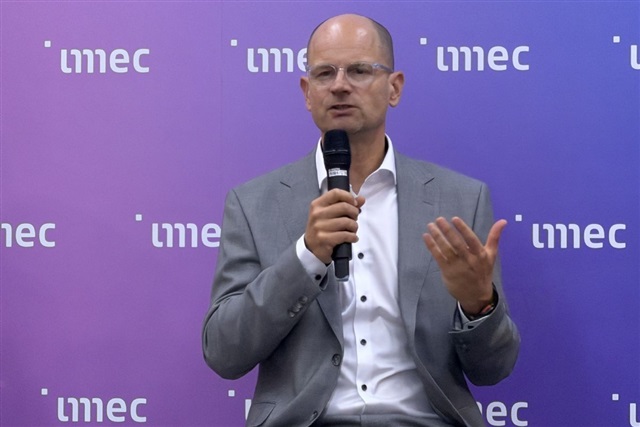
Imec CEO Patrick Vandenameele said at SEMICON Taiwan 2026 that the Belgian research center is broadening its c…
Alphabet's AI Overviews now reach over 2.5 billion monthly users through Google Search, and its ad business ge…
Sarah O’Connor's book 'We Are Not Machines' explores how mechanization and AI have transformed the workforce…