AIToday

Siléane and HBK embed tactile sensors in robot grippers for cosmetics packaging

Robotics & Automation News4h ago
Siléane and HBK embed tactile sensors in robot grippers for cosmetics packaging

Key takeaway

Siléane and HBK have embedded smart force-sensing load cells directly into a robotic gripper to solve a critical problem in high-speed cosmetics packaging: traditional robots lack the tactile feedback needed to grip lightweight, flexible components without causing damage. By placing four PW22i sensors at each contact point, the solution validates grip quality in real time and instantly detects any physical deviations, eliminating the need for separate inspection steps and delivering zero-defect handling while maintaining production speed.

Summaries like this, in your inbox every morning.

Sign up free →

3 Key Points

  • What happened

    France-based robotics firm Siléane partnered with Hottinger Brüel & Kjær (HBK) to integrate four factory-calibrated PW22i smart load cells—one at each contact point—directly into a robotic gripper for a global cosmetics manufacturer. The sensors, equipped with IO-Link connectivity, enable the robot to validate grip quality in real time during high-speed packaging of lightweight, flexible components like thermoformed trays.

  • Why it matters

    Traditional industrial robots lack tactile feedback, so imbalanced grips can cause product loss or tray deformation in fast-moving packaging lines. By embedding force measurement at the point of interaction rather than relying on external inspection, Siléane delivers zero-defect grip validation without slowing production—significantly reducing scrap and improving system reliability in highly regulated cosmetics manufacturing.

  • What to watch

    The integration delivered immediate operational benefits including reduced product scrap, faster commissioning times, and improved repeatability across installations, ultimately leading to a faster return on investment according to the project details.

In Depth

Siléane, a France-based advanced robotics specialist, partnered with Hottinger Brüel & Kjær (HBK) to solve a persistent problem in high-speed cosmetics manufacturing: how to safely grip and handle lightweight, flexible components—such as thermoformed trays—at production pace without causing product loss or deformation.

The core challenge stems from a limitation inherent in traditional industrial robotic systems. While robots are renowned for execution speed and repeatability, they lack tactile feedback. In cosmetics packaging lines moving at high volume, an imbalanced or poorly calibrated grip on a flexible component can result in silent failures: imperceptible tray deformation or product damage that compromises both the product and brand integrity. Existing validation methods—relying on simple position tracking or binary detection signals—offer minimal insight into the actual quality of physical contact, leaving manufacturers unable to guarantee confidence in every cycle without slowing production or adding costly external inspection steps.

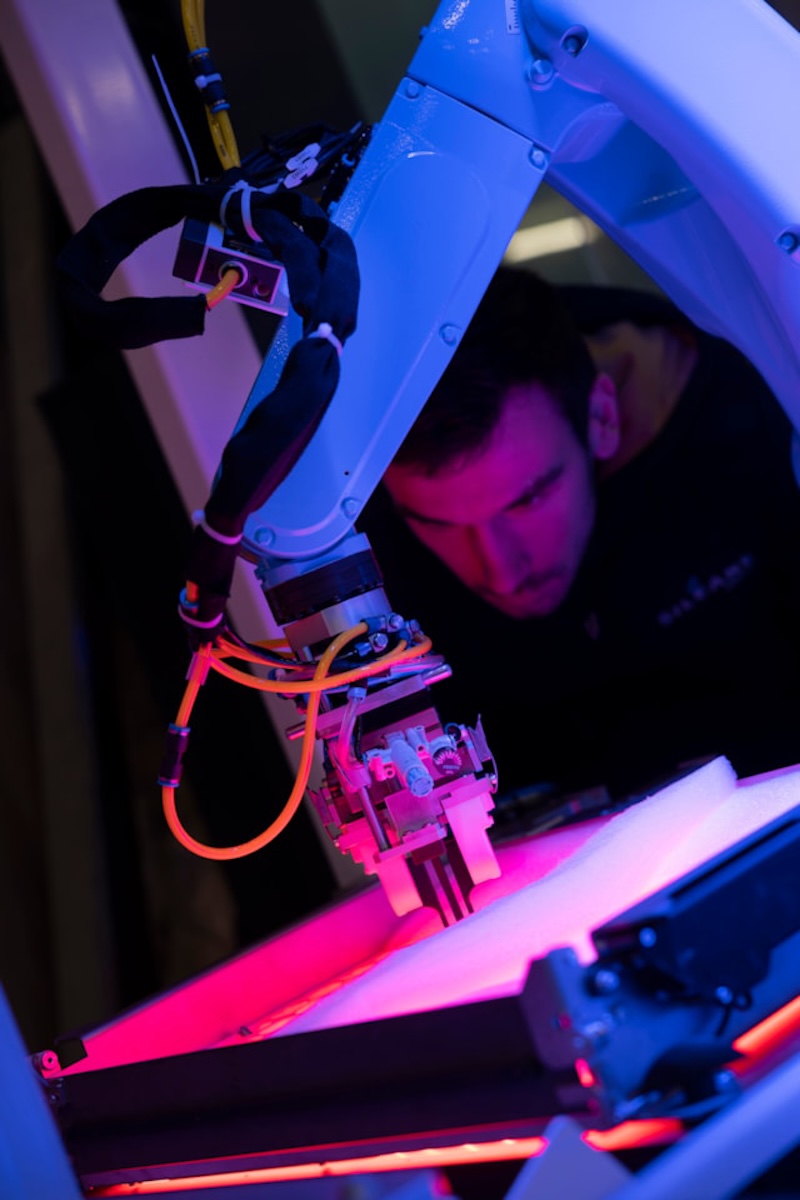
Siléane's solution embeds force measurement directly at the gripper's contact points, eliminating the need for separate validation infrastructure. Working with HBK, Siléane integrated four factory-calibrated PW22i smart load cells into the robotic gripper, positioning one sensor at each contact point. The PW22i—an evolution of HBK's proven PW22 load cell, originally developed for high-speed dynamic weighing applications like checkweighing and filling—was enhanced with IO-Link connectivity to meet modern automation integration demands. This Industry 4.0 configuration allows the robot to capture real-time force data, validate grip quality instantly at the source, and respond immediately to any physical deviations during the gripping cycle, all while integrating seamlessly into existing automation architectures via simplified cabling.

HBK product manager Simon Kleefeldt underscored the significance of the development: "This project reflects a fundamental shift in automation: embedding intelligence at the sensor level, to build systems that are more reliable, more autonomous and easier to deploy." For the cosmetics manufacturer, the integration delivered measurable operational benefits: zero-defect grip validation across all contact points in real time, significant reductions in product scrap and tray deformation, simplified system architecture with reduced cabling, faster commissioning times, and improved repeatability across installations—ultimately resulting in a faster return on investment.

Context & Analysis

The challenge addressed by this partnership reflects a fundamental limitation in conventional industrial automation: while robots excel at speed and repeatability, they operate without physical sensation—a critical gap in industries handling delicate, lightweight components under tight tolerances. In cosmetics manufacturing, where product quality and packaging integrity directly affect brand reputation and regulatory compliance, this gap creates real operational risk. Traditional solutions relying on simple position tracking or binary detection provide minimal visibility into actual grip quality, leaving manufacturers vulnerable to hidden failures that downstream inspection may catch too late.

Siléane's approach—embedding measurement intelligence directly at the point of interaction rather than bolting on external validation stages—represents a shift toward what HBK's Simon Kleefeldt calls a "fundamental shift in automation: embedding intelligence at the sensor level." By integrating four IO-Link-enabled load cells into the gripper itself, the system achieves what earlier solutions could not: real-time, per-cycle visibility into grip force at every contact point, with immediate feedback to correct deviations before they become defects. This design choice has practical merit: it avoids the complexity, cost, and latency of external inspection systems while simplifying the cabling and integration challenges that have historically slowed deployment of advanced sensing in production environments.

FAQ

How many sensors were integrated into the gripper, and where are they placed?
Four factory-calibrated PW22i smart load cells were integrated directly into the robotic gripper, with one sensor placed at each contact point.
What connectivity technology enables these sensors to integrate into modern automation systems?
The PW22i load cells are equipped with IO-Link connectivity, which simplifies system architecture and reduces cabling while enabling seamless integration into Industry 4.0 automation architectures.
What problem does this solution solve in cosmetics packaging?
Traditional robotic handling systems lack tactile feedback, so imbalanced grips can lead to product loss or tray deformation when handling lightweight, flexible components like thermoformed trays; the embedded sensors provide real-time grip quality validation to prevent these failures.

Get the latest Robotics news every morning

AI-summarized, only the topics you pick — one digest a day via Email, Slack, or Discord.

Free · takes 30 seconds · unsubscribe anytime

Discussion

No comments yet. Be the first to share your thoughts!

Log in to join the discussion

Related Articles

Stay ahead with AI news

Get curated AI news from 200+ sources delivered daily to your inbox. Free to use.

Get Started Free

Free · takes 30 seconds · unsubscribe anytime

1 minute a day. The AI essentials.

200+ sources · Email / LINE / Slack

Get it free →